

GRAB MY FREE TRAINING
The No Leaks Funnel


GRAB MY FREE APP
Morning Brief Claude AI Prompt
Set-up your custom morning brief for Claude
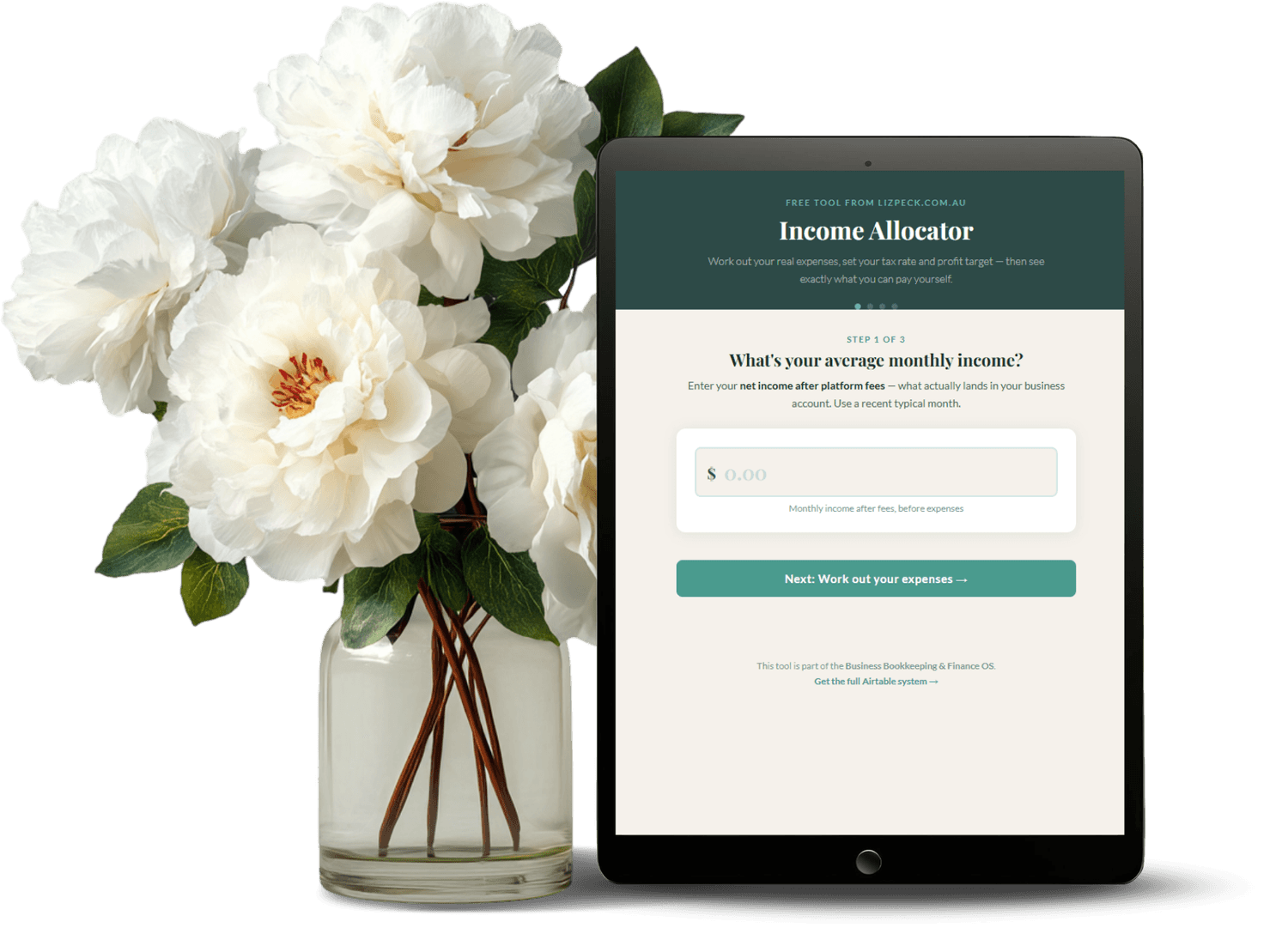
GRAB MY FREE APP
Income Allocator
Work out how to break down your income properly with percentages
How to Write Sales Emails That Feel Natural (Not Pushy) Using Claude AI
Most people who feel uncomfortable with sales emails don't actually have a selling problem. They have a tone problem. The emails they're imagining are the ones they hate receiving, the fake urgency, the pressure tactics, the "this offer expires in 10 minutes" countdowns. So they avoid writing them at all, which means their audience never hears about what they sell.
Writing sales emails with Claude AI can help you find a tone that sounds like you and works for your audience, without having to sit staring at a blank screen trying to find the right words. But there's a difference between using AI as a drafting tool and just asking it to "write me a sales email" and hoping for the best.
This guide walks through how to actually use Claude to write emails that feel natural, not like something generated by a robot with a quota.
Why Sales Emails Feel Awkward (And It's Not Your Fault)
The emails most people learned from are the ones in their inbox from big brands with aggressive marketing budgets. The tactics work at scale but feel wrong at a personal level. When you're a solo business owner with real relationships with your audience, that approach doesn't fit.
The emails that work for small online businesses tend to be more personal, more direct, and less polished. They tell a real story first, then mention the product. They don't pretend urgency is higher than it is. They assume the reader is a capable adult who can make their own decision.
That's actually a much easier email to write once you let go of the template you think you're supposed to use.
What to Give Claude Before It Can Write Anything Good
The biggest mistake people make when using Claude for email is giving it almost no context and expecting a great result. Claude can't read your mind, and it doesn't know your audience, your voice, or what you actually sell.
Before you ask Claude to write anything, give it: who your reader is, what problem they have, what you're promoting, what's true about it (not a pitch, just the facts), and how you naturally talk. The more specific you are, the better the output.
If you use Claude regularly for your business, giving Claude your brand voice properly makes a big difference. Not just "write in a conversational tone" but actual examples of phrases you use, language you avoid, and your honest opinions about the thing you're selling.
The Structure of a Sales Email That Doesn't Feel Like a Sales Email
The emails I write that get the best responses start with something true, not something designed to hook people. It might be a thing I noticed, a mistake I made, a question someone asked me. Then I connect that to a problem my reader probably has. Then I mention what I sell, briefly and honestly. Then a link.
That's it. No countdown timers. No "you don't want to miss this." No fake scarcity unless there's actual scarcity.
The structure works because it respects the reader's time and intelligence. They know you're selling something. You don't have to pretend you're not. You just have to make it worth their time to read.
How to Prompt Claude to Write in Your Voice
Ask Claude to write a draft, then edit it. Don't try to get a perfect email in one go. The first draft is raw material, not finished work.
A prompt that works well: "Here's the story I want to tell: [paste your story in rough notes]. The product I'm mentioning is [product name]. Here's what's true about it: [two or three honest sentences]. Write this as a short email in a conversational, plain-spoken tone. No urgency language, no pressure. Max 200 words."
Then read what comes back. Does it sound like you? If not, tell Claude what's off. "That phrase feels too formal" or "I wouldn't say it like that." Claude can use real-world use cases from your business once you start training it on how you actually communicate.
Common Mistakes Claude Makes in Sales Emails (And How to Fix Them)
A few things Claude tends to do that need editing: it often makes the product sound more transformative than you'd want ("change your life" territory), it sometimes adds a call to action that's too enthusiastic, and it can default to a slightly formal tone even when you ask for casual.
The fix is always to edit out the overstatements and replace them with something specific. Instead of "this system will transform your business," try "this is the system I use to keep my content moving every week." Specific is more believable than hyperbolic.
Also watch for overly smooth transitions. Real emails have a bit of roughness to them. Don't over-polish.
Sending Frequency and What to Email When You're Not Promoting Anything
A lot of the discomfort around email comes from people who only email their list when they're selling something. Then every email feels like a pitch, because it is.
The way around this is to have a regular email that isn't about selling. A story, an observation, something useful. If your list hears from you consistently with content that's worth reading, then when you do mention a product, it doesn't feel like the only reason you showed up.
How automation reduces mental load applies to email too. If you have a system for writing and scheduling your emails, it becomes a habit instead of a thing you stress about. Systeme.io handles email campaigns, funnels, and automation in one place, which makes keeping a consistent email schedule a lot more manageable.
How to Ask Claude to Improve an Email You've Already Written
You don't have to ask Claude to write from scratch. Sometimes it's more useful to paste in an email you've written and ask it to improve a specific thing.
"This email feels too long. Cut it down to 150 words without losing the main point." Or "The opening feels weak. Rewrite just the first two sentences to be more direct." Or "This CTA doesn't feel natural. Suggest three alternatives that are less pushy."
That approach uses Claude as an editing partner rather than a ghostwriter, which often produces better results because you're starting with your own voice and refining it.
Testing What Works in Your Own Email List
There's no universal formula for sales emails that works across all audiences. What works for a high-energy brand won't work for a calm, practical one. The only way to know what resonates with your readers is to test.
Send two different email openings to segments of your list and see which gets better open rates. Try a short email and a long email and compare click rates. Pay attention to which emails get replies, because replies are one of the strongest signals that something landed.
Claude can help you draft variations quickly once you have the core content. "Write me three different opening lines for this email" is a useful prompt when you're not sure where to start.
Building a Repeatable Email System So You Actually Send Consistently
The hardest part of email marketing is consistency. Not the writing part. If you sit down every week and have to figure out what to say, it takes too long, and it becomes easier to skip it.
Having a system solves this. One place to capture ideas as they come up, a template for your email structure, and a scheduled block of time each week to write and schedule. That's the whole system.
The Content System Starter is built for exactly this. It's a done-for-you Airtable content planning system that includes email tables, a Voice Bank, and a Claude skill that writes emails in your voice. Once you've set it up properly, writing your weekly email takes minutes, not hours.
FAQ
Can Claude write my entire sales email from scratch?
Yes, but you'll get better results if you give it your rough notes, context about the product, and examples of how you write rather than just asking it to write a sales email with no input.
Does AI-written email get flagged as spam?
Not automatically. Spam filtering is based on technical factors like sender reputation, list hygiene, and certain trigger words, not on whether AI wrote the email. A well-written AI email goes to the inbox the same as a human-written one.
How long should a sales email be?
Shorter than you think. 150 to 250 words is plenty for most sales emails. People are busy. Make your point and get out.
Do I need a special tool to use Claude for email writing?
No. Claude.ai on the free plan is enough to draft emails. If you want Claude to read from your brand voice notes and product details automatically, you need Claude Pro and a setup like the Content System Starter.
What's the best way to start the email if I don't have a story?
Start with a question or an observation. "Have you noticed that..." or "The most common thing I hear from [your audience] is..." Both work as openers that don't feel sales-y from the first line.
Disclaimer: This website may contain affiliate links. If you click a link and make a purchase, I may receive a small commission at no extra cost to you.
Disclaimer:
This website may contain affiliate links. If you click a link and make a purchase, I may receive a small commission at no extra cost to you.

About Liz Peck
Liz Peck helps online business owners build the backend that runs without them - using Airtable for operations, Systeme for sales, and Claude AI for the work you hate doing twice. lizpeck.com.au
Disclaimer:
This website may contain affiliate links. If you click a link and make a purchase, I may receive a small commission at no extra cost to you.