

GRAB MY FREE TRAINING
The No Leaks Funnel

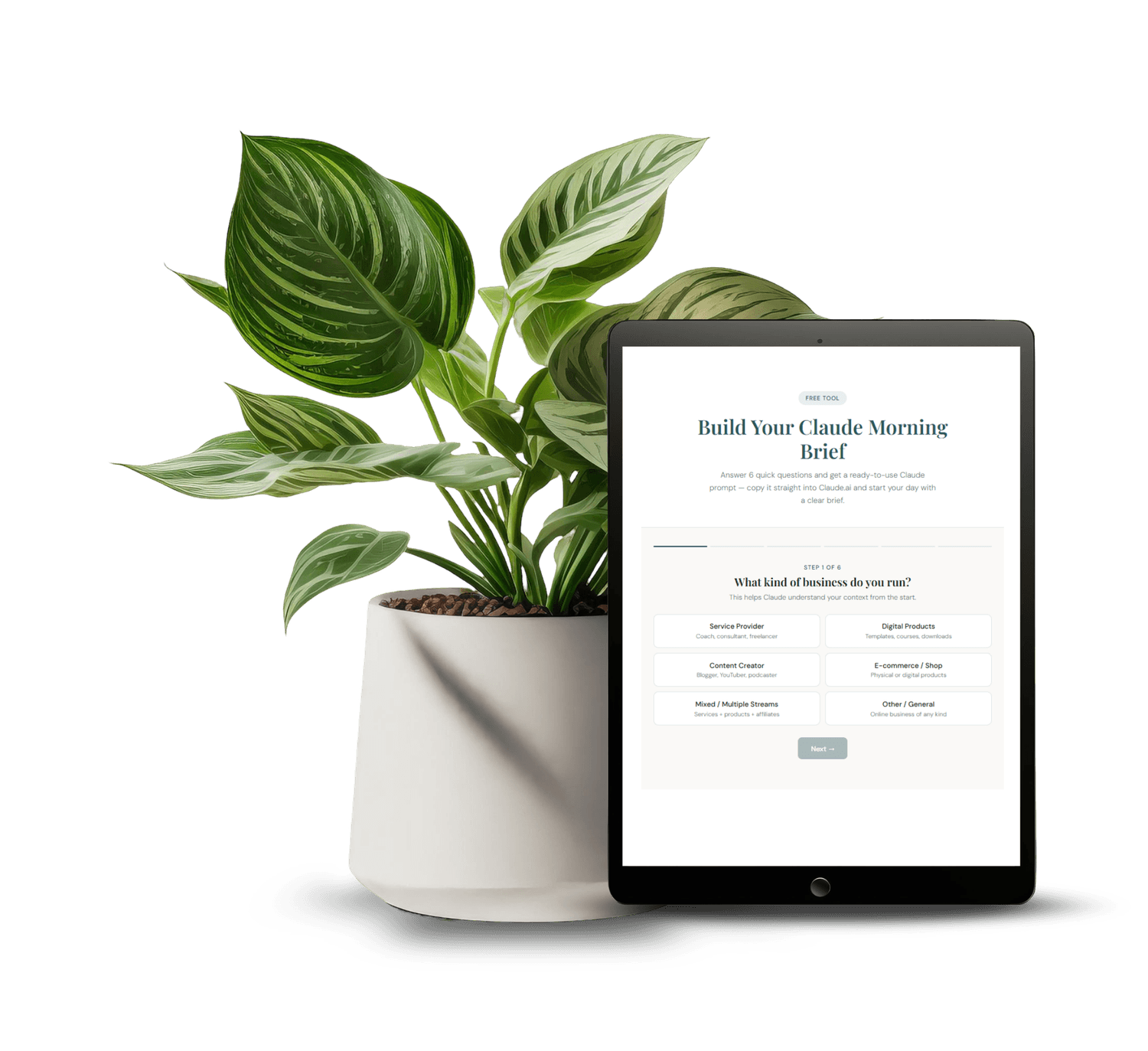
GRAB MY FREE APP
Morning Brief Claude AI Prompt
Set-up your custom morning brief for Claude
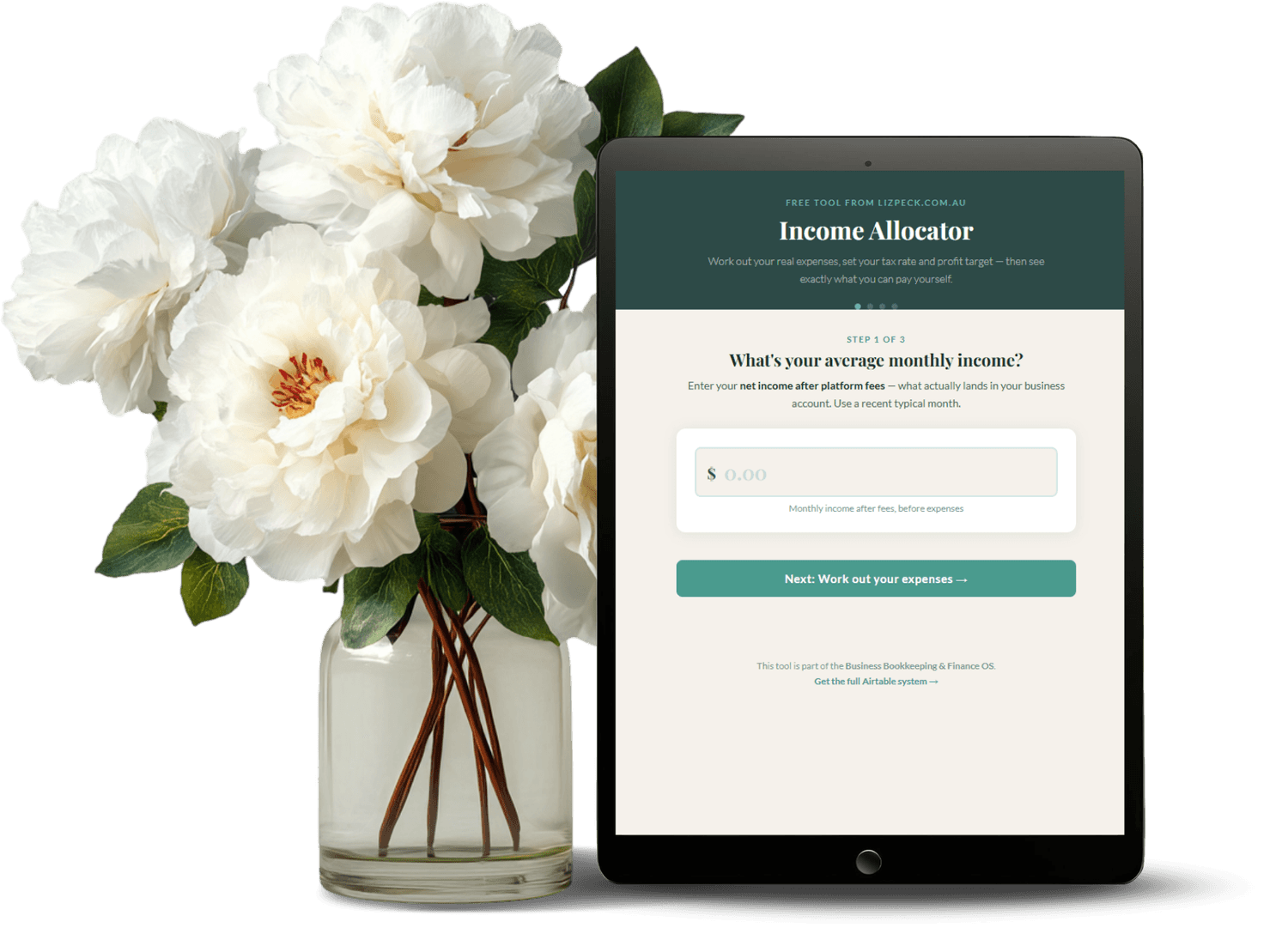
GRAB MY FREE APP
Income Allocator
Work out how to break down your income properly with percentages
How to Build a CEO Dashboard in Airtable (So You Actually Know What's Happening in Your Business)
A CEO dashboard in Airtable is a single view that shows you everything happening in your business right now. Revenue this week, active tasks, content due, open support tickets. Whatever matters most to how you run things.
Most people don't realise how much energy goes into piecing together that picture when it lives in five different places. You open your task manager, then a spreadsheet, then Notion, then your email. By the time you've got a rough sense of where things stand, 20 minutes have disappeared.
If you've ever wanted a proper bird's-eye view of your business without building something complicated, Airtable makes this very doable. Here's how to set one up that you'll actually use.
What a CEO Dashboard Is (and What It's Not)
A CEO dashboard is not a task list or a project board. It's one level above that. It answers the question: what is happening in my business today without you having to dig through multiple tools.
When I built mine I wanted to see three things at a glance. What I was working on this week, how revenue was tracking, and whether anything important was getting missed. Nothing more.
The point is to make your morning check-in take two minutes, not twenty.
Why Airtable Works Well for This
Airtable works for a CEO dashboard because your business data can actually live there. Tasks, revenue, projects, content, clients. Instead of duplicating everything into a separate dashboard tool, you're building a view on top of what's already in your base.
The Interface Designer feature in Airtable is what makes this possible without any coding. You drag in elements, connect them to your tables, and end up with something that looks and functions like a real business command centre.
I spent years in Notion tweaking layouts instead of actually using my system. Airtable feels more like infrastructure. You set it up once and it stays put.
What to Include on Your Dashboard
Start with five sections. Today's focus (top three tasks), active projects, revenue this week, content due soon, and any open support tickets.
If you try to include everything, you'll end up ignoring most of it. Every stat on your dashboard should connect directly to a decision you make regularly. If it doesn't, leave it out.
Once you're in a rhythm with the basics, you can add more. But the first version should be something you can scan in under two minutes.
Setting Up the Interface in Airtable
Open Interface Designer from the left sidebar in your base. Click New Interface and start with a blank canvas rather than a template, especially if you have existing data you want to pull from.
Each element you add connects to a table. For tasks, use a list element filtered to show only what's due this week. For revenue, a number summary works well. For projects, a linked record list sorted by status.
Keep the layout to one or two columns. More than that and it starts to feel cluttered rather than calming.
Connecting Your Dashboard to a Weekly Review
The real value of a CEO dashboard comes from using it in a consistent weekly review. Once a week, you sit down and ask: did I do what I planned, what happened with revenue, where did things get stuck.
Without this habit, the dashboard is just decoration. It's the regular looking-at-it that makes it useful.
I do mine on Friday morning. It takes about 15 minutes. I check all five sections, write a few notes about the week, and set the focus for the next one. You can read about how to run a weekly CEO review in detail if you want a full framework.
Adding Claude AI to the Mix
If you connect Claude AI to your Airtable base, the dashboard becomes a starting point rather than an endpoint. Claude can read your data and give you a summary, flag what looks off, and help you plan the week ahead in a conversation.
This is different from using AI as a writing tool. It's AI sitting inside your operations, reading your actual business data and doing something useful with it.
You can set this up through Claude's Cowork mode, which connects to Airtable via MCP. Once it's connected, you just tell Claude what you want and it pulls from your base directly.
Common Mistakes When Building a CEO Dashboard
The biggest mistake is building something that looks good instead of something you'll use. This happens more than people admit, especially if you enjoy working on systems.
The second mistake is tracking metrics that don't connect to decisions. There's no point monitoring something if you won't change your behaviour based on what you see.
The third is building it once and never opening it again. A CEO dashboard needs to become a daily and weekly habit to earn its place in your business.
What You Start to Notice Over Time
Once you've been using a CEO dashboard consistently for a month or two, you start to spot patterns you'd never have seen otherwise. Revenue dips after you stop publishing content. Certain tasks keep getting pushed back week after week.
This is the part most people don't talk about. It's not just visibility in the moment. It's building a data trail you can actually learn from.
Three months of weekly data in Airtable, paired with a proper business operating system, tells you more about your business than any planning session.
Getting Started Without Overthinking It
Start with one table you already use in Airtable. Probably your Tasks table. Open Interface Designer, create a new interface, add a list of this week's tasks. That's your first dashboard.
Add sections over the next few weeks as you figure out what you actually want to see. The goal in the first session is just to have something that replaces one of the five apps you open every morning.
If you'd rather start with a done-for-you version, the CEO Control Centre includes the full Airtable system, the interfaces, and the Claude skills that run the weekly review automatically. It's the setup I use myself.
FAQ
What is a CEO dashboard in Airtable?
It's a custom interface that gives you a high-level view of your business in one place. You connect it to existing tables in your base and it shows you what matters most without having to look in multiple places.
How long does it take to build?
A basic version takes about an hour if you already have data in Airtable. A more complete version with AI skills connected takes a few hours spread over a few sessions.
Do you need a paid Airtable plan?
The Interface Designer works on the free plan for basic use. A paid plan gives you more flexibility with sharing and advanced features.
Can Claude AI work with my CEO dashboard?
Yes. Claude can connect to your Airtable base through Cowork mode and read from your dashboard data directly.
What's the difference between a CEO dashboard and a regular Airtable view?
A regular view shows you the data in one table. A dashboard pulls from multiple tables and shows you a summary designed for decision-making rather than data entry.
Disclaimer: This website may contain affiliate links. If you click a link and make a purchase, I may receive a small commission at no extra cost to you.
Disclaimer:
This website may contain affiliate links. If you click a link and make a purchase, I may receive a small commission at no extra cost to you.

About Liz Peck
Liz Peck helps online business owners build the backend that runs without them - using Airtable for operations, Systeme for sales, and Claude AI for the work you hate doing twice. lizpeck.com.au

Disclaimer:
This website may contain affiliate links. If you click a link and make a purchase, I may receive a small commission at no extra cost to you.