

GRAB MY FREE TRAINING
The No Leaks Funnel

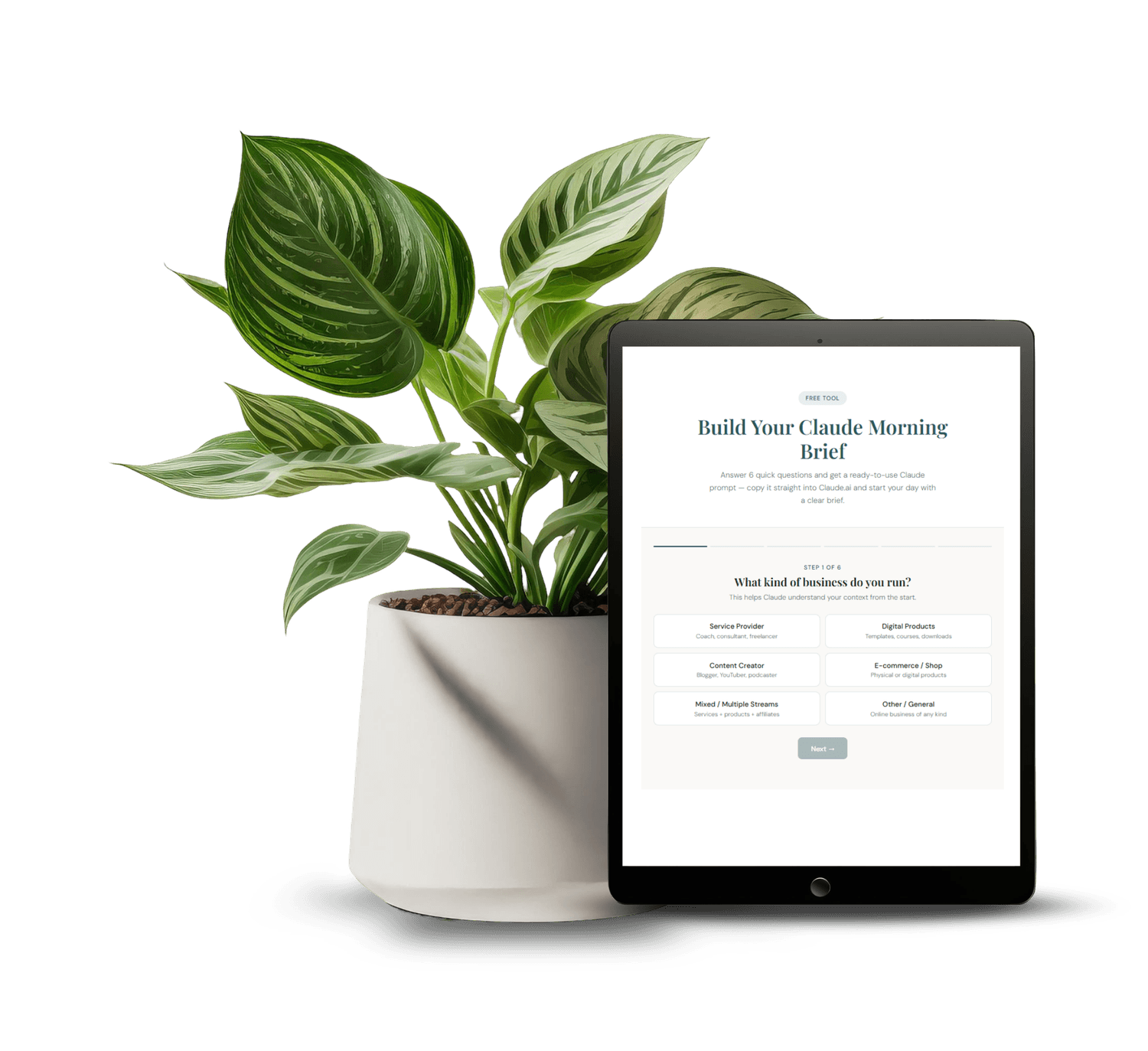
GRAB MY FREE APP
Morning Brief Claude AI Prompt
Set-up your custom morning brief for Claude
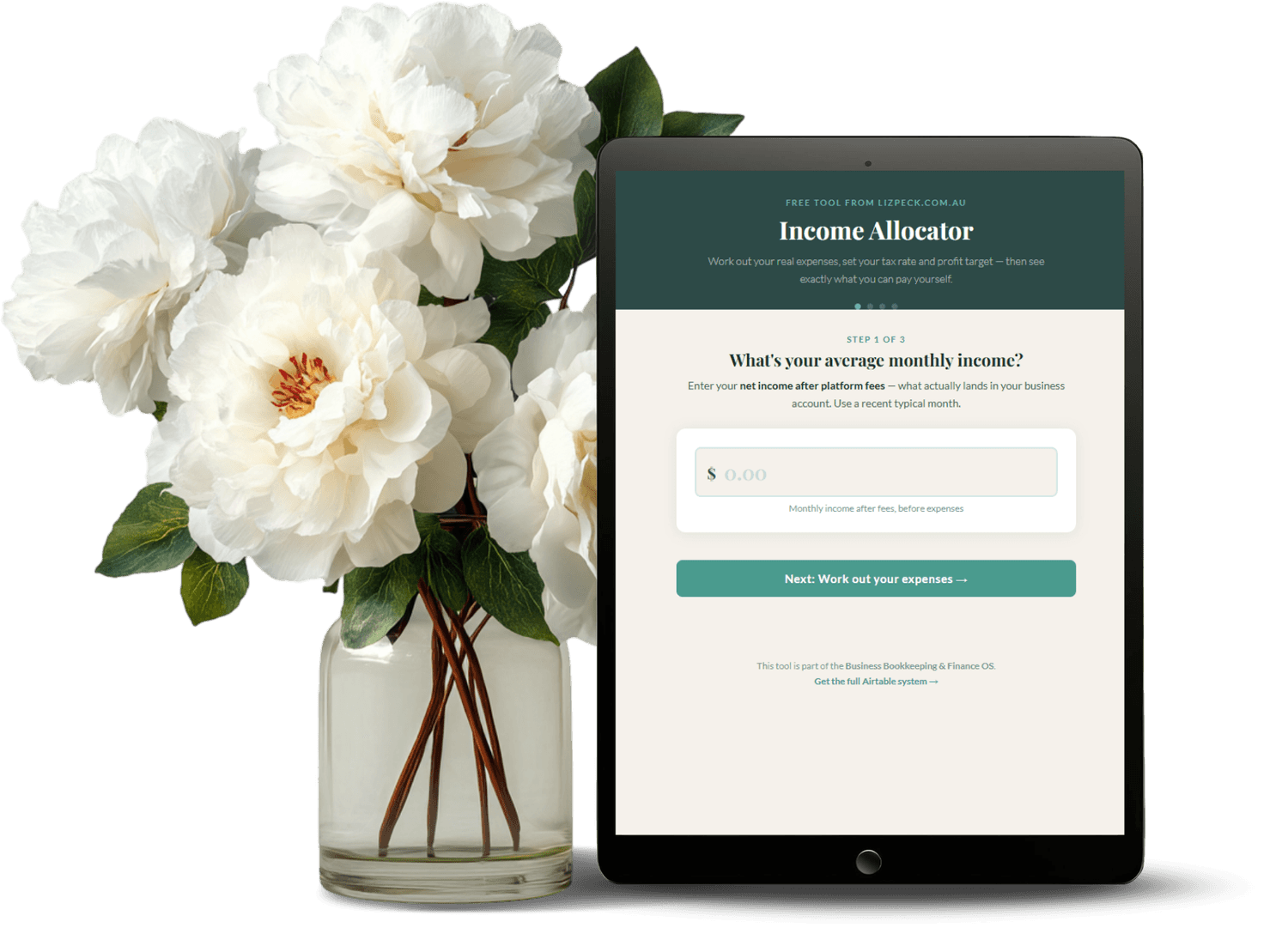
GRAB MY FREE APP
Income Allocator
Work out how to break down your income properly with percentages
How to Build a Business Operating System in Airtable
If you're building an online business and wondering where to put everything, a business operating system in Airtable is the answer. The short version: you create a set of linked tables that hold your knowledge, products, projects, and tasks. Everything lives in one place, connects to everything else, and you can bring AI in to help you manage it all.
Here's how I built mine and what I'd recommend starting with.
What a Business Operating System Actually Is
A business operating system isn't fancy software. It's just a set of systems that help you run your business without relying on your memory or a pile of disconnected spreadsheets.
Most online business owners I talk to have their tasks in one app, their product info in another, their SOPs scattered in various Google Docs, and their project notes somewhere they can't remember. When your business data is fragmented, you end up making decisions with incomplete information.
Airtable gives you a relational database to bring it all together. Once your tables are linked, pulling up a product and seeing every related blog post, support ticket, and revenue record is just a click away.
The Tables to Start With
When I was setting mine up, I tried to build too much at once. The better approach is to start with four core tables and add from there.
The four I'd recommend starting with: Knowledge and Resources, Products, Projects, and Tasks. These cover the information you need to access regularly, what you sell, what you're working on, and what needs to get done.
Knowledge and Resources
This is your internal library. Every standard operating procedure, product guide, template, tutorial video link, or process note goes here.
In my Airtable, this table replaced a mess of bookmarked pages, saved Google Docs, and "I'll remember this" decisions. Now when I need to find out how to do something in my business, I search one place.
The fields that matter most: a title, the category, a description or link, and the date you last updated it.
Products
If you sell digital products, templates, courses, or services, this table is essential. List everything you sell with the name, price, sales page URL, checkout link, and any deliverable links.
The reason this matters beyond just having a list is the linking. When I look at a product in my Airtable, I can see every blog post that promotes it, every support ticket related to it, and the total revenue from it.
If you want to try Airtable for this, you can sign up using my affiliate link and get started on the free plan.
Projects and Tasks
Projects are anything that involves more than one task. Launching a new product, building a course, running a collaboration. They have a start and an end, even if the end date changes.
Tasks are the actual work. Each task links back to a project. When you look at a project, you can see every task underneath it, what's done, what's outstanding, and what's blocking something else.
The critical thing here is not to over-engineer it. Start simple. A task needs a name, a status, a due date, and a link to the project it belongs to. That's it.
How I Use AI With My Airtable BOS
Once your data is in Airtable, you can connect an AI tool like Claude to interact with it. I use Claude through the Airtable MCP connection. It can read my tasks, prioritise based on due dates and importance, update statuses, and take notes during working sessions.
Claude can also link records together, add context to projects, and flag when something important is overdue. The combination of Airtable storing the data and an AI acting on it is what makes a business operating system actually useful day to day.
If you use Make for automations, you can also trigger automated actions when records change.
Start Simple and Add On
The biggest mistake I see is trying to build the full system before you use it. You'll build something that looks impressive but doesn't reflect how you actually work.
Start with the four core tables. Use them for a week. You'll naturally notice what's missing. Add tables when the need becomes obvious, not before.
Airtable's free tier gets you started, but the 1,000 record limit fills up faster than you'd think once you're tracking tasks, products, content, and support tickets. The paid plan is worth considering once you're past the testing phase.
What Works Well and What to Watch Out For
Works well: the linking between tables genuinely changes how you see your business. Once your products connect to your blog content, tasks, and revenue, decisions become easier because you have the full picture.
Works well: Airtable's interfaces let you build clean views of your data without background tables cluttering the view.
The catch: Airtable requires upfront thinking. You need to decide how to structure your data before you start entering it.
The other catch: it's a bit of a learning curve if you've only used spreadsheets. Give yourself a week before deciding it's not for you.
FAQ
Do I need to be technical to use Airtable?
No. If you can use a spreadsheet, you can use Airtable. The main thing to learn is linking records between tables.
Can Airtable replace my project management tool?
For most solo business owners, yes. Airtable can handle tasks, projects, and basic workflows without needing a separate app.
How many tables should I start with?
Four. Knowledge and Resources, Products, Projects, Tasks. Add more as the need becomes obvious.
Is there a free version of Airtable?
Yes. Sign up here to get started on the free plan.
Can I connect Claude AI to Airtable?
Yes. Claude can read, write, and update your records, which turns it from a database into something closer to an operating assistant.
Disclaimer:
This website may contain affiliate links. If you click a link and make a purchase, I may receive a small commission at no extra cost to you.

About Liz Peck
Liz Peck helps online business owners build the backend that runs without them - using Airtable for operations, Systeme for sales, and Claude AI for the work you hate doing twice. lizpeck.com.au
Disclaimer:
This website may contain affiliate links. If you click a link and make a purchase, I may receive a small commission at no extra cost to you.