

GRAB MY FREE TRAINING
The No Leaks Funnel

GRAB MY FREE APP
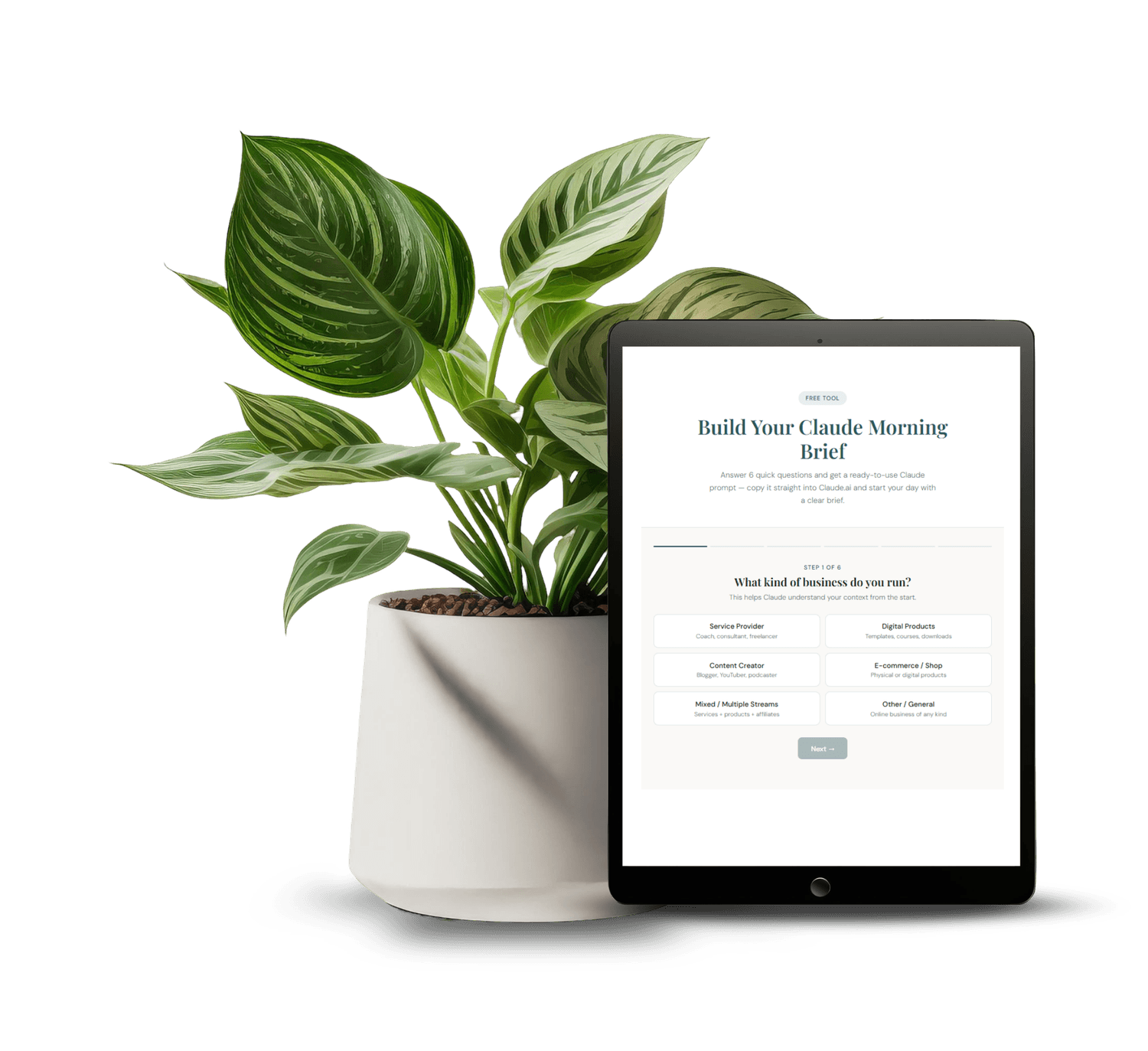
Morning Brief Claude AI Prompt
Set-up your custom morning brief for Claude

GRAB MY FREE APP
Income Allocator
Work out how to break down your income properly with percentages
How to Run a Weekly CEO Review (Even When You're a Team of One)
A weekly CEO review is a short session where you look at what happened in your business that week, what worked, what didn't, and what you're focusing on next. Even if you're a team of one, this practice keeps you making decisions based on data instead of feelings.
I started doing weekly reviews about a year ago and it changed how I run my business. Before that, I'd finish a week with no idea whether I'd actually made progress or just stayed busy.
Why most solo business owners skip this
It feels like extra work. When you're already doing everything yourself, sitting down to review the week feels like one more thing on the list. Most people think reviews are for teams and managers, not for someone running a business from their home office.
But that's exactly why it matters more when you're solo. There's no one else watching the numbers. No one flagging when something isn't working. If you don't check in with your own business regularly, small problems become big ones before you notice.
What I actually review each week
My weekly review covers three things: what worked, what didn't, and what I'm focusing on next week. That's it. I also log a few key metrics so I can spot trends over time.
The metrics I track are: total revenue, email list size, blog traffic, and any platform-specific numbers like Etsy views or YouTube subscribers. I don't track everything. Just the numbers that tell me whether the business is moving forward.
I keep all of this in Airtable. I have a CEO Reviews table where each record is one week. The fields are simple: week, what worked, what didn't, lessons, top 3 outcomes, and a link to that week's metrics.
The 15-minute framework that works
My review takes about 15 minutes. I open my Airtable CEO Dashboard, look at the week's tasks and projects, then answer three questions:
1. What were the top 3 outcomes this week?
2. What worked well and should I keep doing?
3. What didn't work or caused friction?
Then I set my focus for the next week. Usually that's one main outcome I want to achieve and the top 3 tasks that will get me there. Writing it down forces clarity. It's hard to stay vague when you have to type it out.
Why tracking metrics matters more than you think
Without numbers, you're guessing. I used to think I knew how my business was doing based on how it felt. Some weeks felt productive and some didn't. But when I started tracking actual data, I realised the feeling didn't always match reality.
Some of my best revenue weeks were weeks that felt quiet. Some of my busiest weeks produced almost nothing measurable. The numbers don't lie, and they give you something to compare against week over week.
You don't need complicated analytics. A simple table with 5 to 10 numbers, updated weekly, is enough to see trends and make better decisions.
How I use Airtable for my CEO reviews
I have a dedicated CEO Reviews table in my Airtable base. Each record is a week. The fields are: Week (text), What Worked (long text), What Didn't (long text), Lessons (long text), Top 3 Outcomes (long text), Notes (long text), and a link to the Weekly Metrics table.
The Weekly Metrics table tracks the numbers: revenue, email list size, blog traffic, YouTube stats, and any ad spend. Each record links back to the CEO Review for that week.
This setup means I can look at any week and see both the qualitative notes and the quantitative data in one place. Over time, the pattern becomes clear. If you want to try Airtable for this, you can sign up using my link.
The CEO Dashboard that ties it all together
I also have a CEO Dashboard record that I update at the start of each week. It has: today's date, this week's outcomes, today's top 3 tasks, current constraints, and links to active projects and due tasks.
The dashboard is my landing page when I open Airtable. It tells me exactly what I should be working on without having to think about it. You don't need more motivation, you need fewer decisions. This is the bottleneck most people miss.
I built a system called the CEO Control Centre that includes all of these tables pre-built and linked. If you want the structure without building it from scratch, that's what it's designed for.
What changes when you do this consistently
After a few weeks of reviews, you start noticing patterns. Maybe you consistently underestimate how long content takes. Maybe your revenue spikes correlate with email sends, not social media posts. Maybe you keep putting off the same task week after week.
These patterns are invisible when you don't write things down. Once you can see them, you can actually do something about them. Systems protect creative energy and reduce burnout. When sellers remove repetitive admin, they enjoy creating again and stay consistent longer.
The mistakes I made when I started
I made it too complicated at first. I tried to track every metric, review every project, and plan every hour of the next week. It took over an hour and I dreaded it. So I stopped doing it.
When I simplified it to 15 minutes and three questions, I actually stuck with it. The review became something I looked forward to because it gave me clarity instead of stress. A system that only works on your good days isn't a system. It needs to be simple enough that you'll do it even when you're tired.
How to start this week
Pick a day and time. Friday afternoon works well because the week is fresh. Block 15 minutes. Open a doc, spreadsheet, or Airtable base. Answer the three questions: what worked, what didn't, what am I focusing on next week. Log 3 to 5 key metrics. Done.
You don't need a fancy system to start. You need the habit first. Once you've done it for a month, you'll naturally want to improve the process. That's when a proper system like Airtable becomes useful.
If you use Make for automations, you can even set up a reminder that pings you every Friday to do your review. The automation side is optional, but it removes the friction of remembering.
FAQ
How long should a weekly CEO review take?
15 minutes is enough for most solo business owners. If it takes longer than 30 minutes, you're overcomplicating it.
What day should I do my review?
Friday afternoon is ideal because the week is still fresh. Some people prefer Sunday evening to plan the week ahead. Pick whatever works and stick with it.
What metrics should I track?
Start with 3 to 5 numbers that matter most to your business. Revenue, email list size, and traffic are good starting points. Add more only if they help you make better decisions.
Do I need Airtable for this?
No. You can start with a Google Doc or even a notebook. Airtable is useful when you want to track metrics over time and link reviews to other parts of your business system.
What if I don't have any metrics to track yet?
Start with what you have. Even tracking hours worked, tasks completed, and products listed gives you data to review. The habit matters more than the metrics.
Disclaimer:
This website may contain affiliate links. If you click a link and make a purchase, I may receive a small commission at no extra cost to you.

About Liz Peck
Liz Peck helps online business owners build the backend that runs without them - using Airtable for operations, Systeme for sales, and Claude AI for the work you hate doing twice. lizpeck.com.au

Disclaimer:
This website may contain affiliate links. If you click a link and make a purchase, I may receive a small commission at no extra cost to you.