

GRAB MY FREE TRAINING
The No Leaks Funnel


GRAB MY FREE APP
Morning Brief Claude AI Prompt
Set-up your custom morning brief for Claude
GRAB MY FREE APP
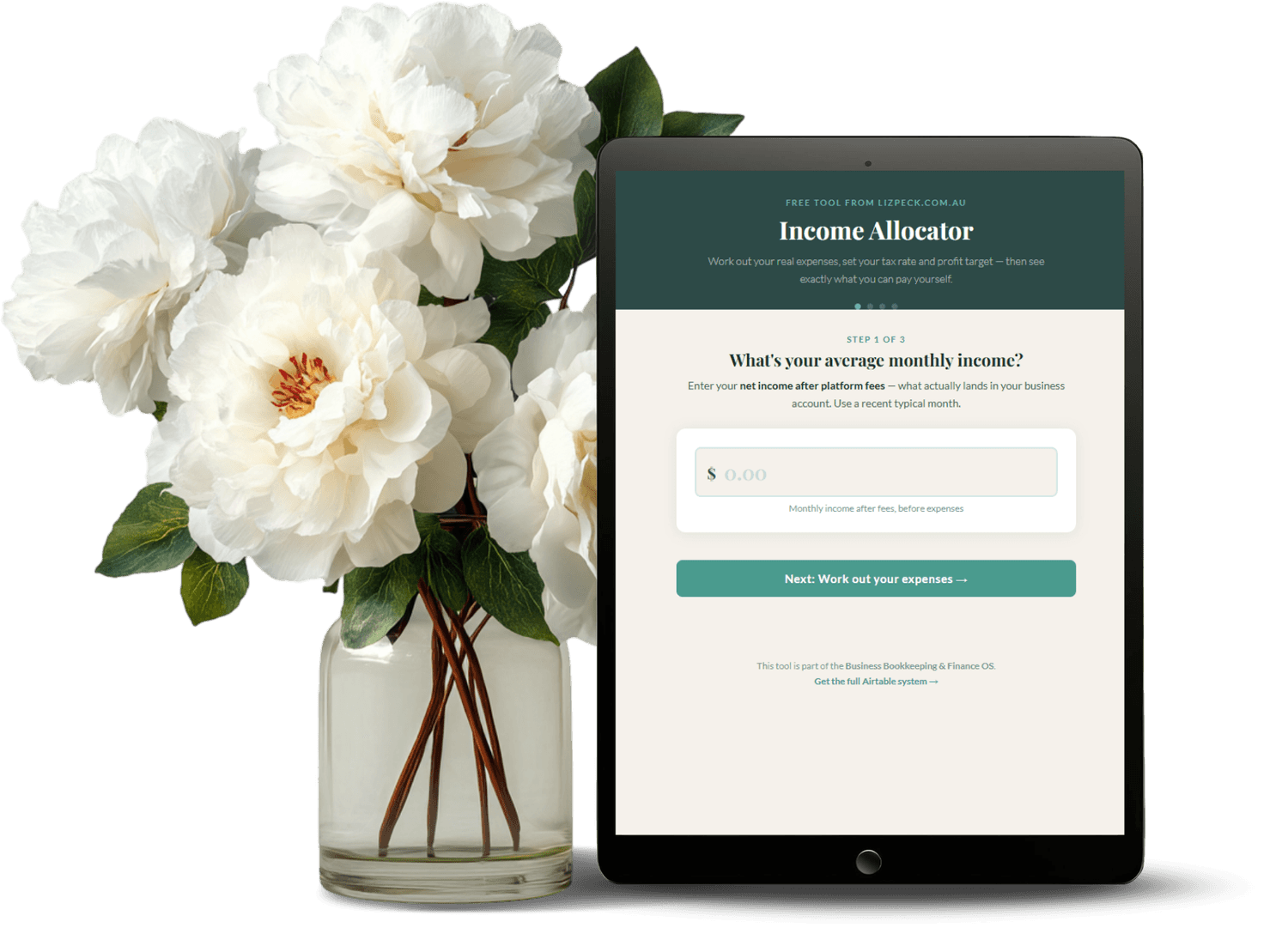
Income Allocator
Work out how to break down your income properly with percentages
The Quarterly Zoom-Out: The Half-Day Every 12 Weeks That Stops Your Business From Drifting
If you don't do a review and a plan, it's like setting sail on a journey without a map. You're not going to reach your destination easily.
When you do a review, you know exactly where you're at right now. Then you can make a plan for where you want to be. Then you map the journey to get you there. Don't just run on autopilot.
This is the half-day I block every 12 weeks. Four questions, four artefacts, four outputs. That's the format.
Why Weekly Reviews Are Not Enough
Weekly reviews keep the wheels turning. They're about what shipped, what didn't, what's on deck for the next seven days.
They're not designed to ask whether the wheels are pointed in the right direction. That's a different question, and it's not one you can answer in the middle of an ordinary week.
A quarterly review is when you stop and check whether you're still on the journey you set out on. Sometimes you are. Sometimes you've drifted three points off without realising it. That's what this half-day is for.
Why a Half-Day Is Enough
I used to think a strategic review had to be a full off-site day with a journal and a bottle of wine. It doesn't.
A focused three to four hours, with the right artefacts in front of you and the right questions, gets you 90 percent of the value. Anything longer and you start making things up to fill the time.
Block it on the calendar. Phone in another room. Coffee on the desk. That's all you need.
The Four Questions
These are the only four questions I ask. Anything else is a sub-question of one of these.
What's working that I should double down on. What's not working that I should kill. What needs a pricing or positioning reset. What's the one big thing I'm building this quarter.
That's it. Four questions. They sound simple. The work is being honest about the answers.
Question 1: What's Working That I Should Double Down On
Look at the last 90 days. What actually moved the needle? Which products sold? Which content brought in the most leads? Which marketing channel earned the most attention for the time spent?
Most solo operators have one or two things that are quietly carrying the business. The quarterly review is when you notice them and decide to put more energy into them.
Doubling down doesn't mean spending more money. It often means just doing more of what's already working before chasing the next shiny thing.
Question 2: What's Not Working That I Should Kill
This one is harder. Most of us have products, processes, or channels we've been running on autopilot that aren't actually earning their keep.
A product that hasn't sold in three months. A weekly newsletter that nobody opens. A platform you keep posting on out of habit. A service offer that's costing you more time than it earns.
The quarterly review is when you give yourself permission to kill these. Not pause. Not iterate. Kill. The capacity you free up is what makes the doubling down in question one possible.
Question 3: Pricing and Positioning Reset
Your pricing should not stay the same forever. Neither should how you describe what you do.
Look at what you charge. Does it reflect the value you're delivering and the time you're spending? Look at how you talk about yourself online. Is it still accurate? Has the business changed since you wrote that bio?
A quarterly review is the natural moment to nudge pricing up, to update the about page, to retire an old offer and bring in a new one. Doing this every 12 weeks means small adjustments instead of giant overhauls.
Question 4: The One Big Thing for the Quarter
Pick one. Just one.
The biggest mistake I see solo operators make in their quarterly planning is picking five big things and not finishing any of them. One big thing, properly resourced, beats five half-finished ones every time.
Mine for this quarter might be launching a new product. Or rebuilding a system that's been creaking for months. Or shipping a content series I've been putting off. One thing that, if I do nothing else of note this quarter, would still make the quarter a win.
The Artefacts I Bring to the Table
These are the things I have in front of me when I sit down for the review.
Ninety days of metrics from my Airtable CEO Command Centre. Revenue, list growth, content output, top selling products.
My Strategy Reports folder. Any notes I've made about the business over the quarter that didn't fit anywhere else.
My CEO Dashboard view. A single screen with the key metrics, current goals, and active projects.
A list of any products I've retired or thought about retiring during the quarter. This feeds straight into question two.
This is the same approach as the weekly CEO review, just zoomed out three months instead of seven days.
The Outputs and Where This Sits
By the end of the half-day, I have four things written down.
The one big thing I'm building this quarter. The list of products, channels, or offers I'm retiring. The pricing reviews I'm putting through. The positioning shifts I'm making.
Everything else flows from there. The weekly reviews check progress against this list. The Daily Three points back to whatever the one big thing is.
This ritual is part of system 1, the CEO Command Centre, one of the 11 systems I teach inside The Solo Operator System. It's one piece of a bigger framework. If you only adopt one thing from this post, block the half-day in your calendar for the end of this quarter.
FAQ
Q: When should I run my quarterly review?
A: Usually the last Friday of the quarter, or the first Monday of the next one. Whatever fits your calendar. The timing matters less than the consistency.
Q: What if I only have an hour?
A: An hour is enough to answer the four questions roughly. A half-day is when you do the work properly. Better an hour every quarter than nothing.
Q: Do I need a fancy template?
A: No. A notes doc with the four questions as headings is enough. The discipline is in answering them honestly, not in the document looking pretty.
Q: What if I'm not hitting my goals?
A: That's exactly what the review is for. Adjust the goal or adjust the plan. Either is fine. Drifting without acknowledging it is not.
Q: How does this fit with annual planning?
A: The annual plan sets the destination. The quarterly review is a course correction. Four quarterly reviews and one annual plan is a complete strategic rhythm.
Disclaimer: This website may contain affiliate links. If you click a link and make a purchase, I may receive a small commission at no extra cost to you.
Disclaimer:
This website may contain affiliate links. If you click a link and make a purchase, I may receive a small commission at no extra cost to you.

About Liz Peck
Liz Peck helps online business owners build the backend that runs without them - using Airtable for operations, Systeme for sales, and Claude AI for the work you hate doing twice. lizpeck.com.au

Disclaimer:
This website may contain affiliate links. If you click a link and make a purchase, I may receive a small commission at no extra cost to you.