

GRAB MY FREE TRAINING
The No Leaks Funnel

GRAB MY FREE APP
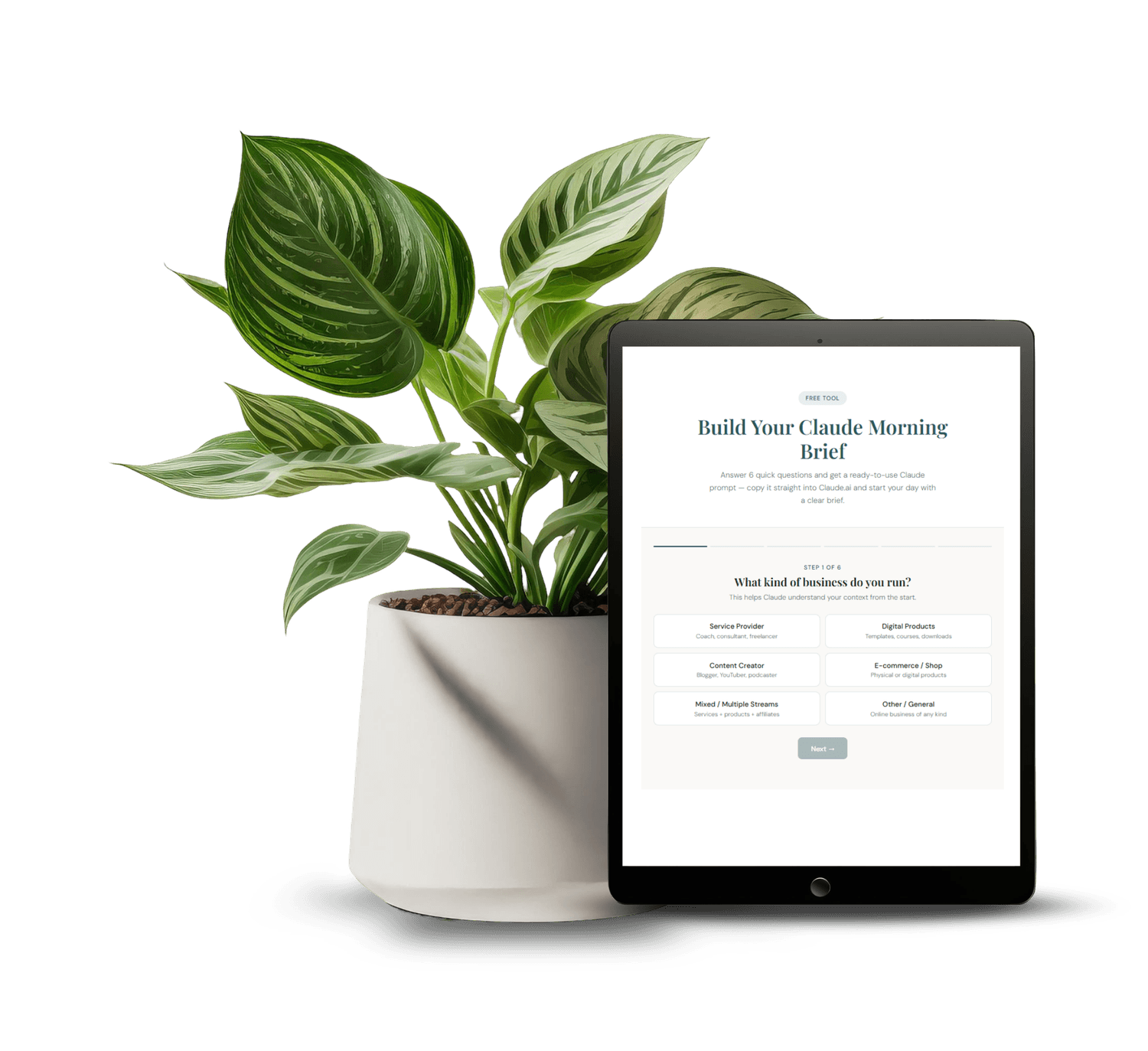
Morning Brief Claude AI Prompt
Set-up your custom morning brief for Claude
GRAB MY FREE APP
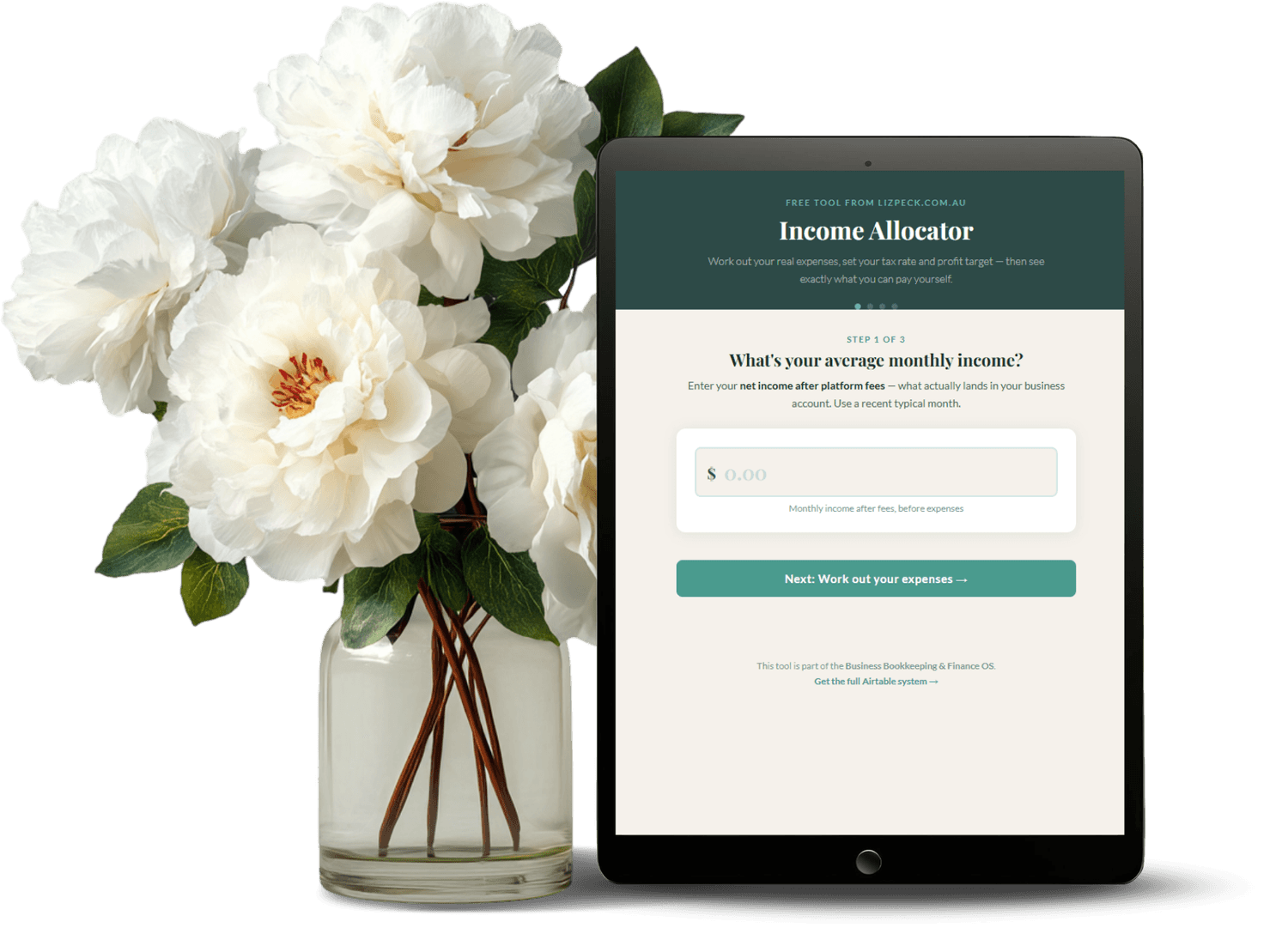
Income Allocator
Work out how to break down your income properly with percentages
Manual vs Automated Etsy Shops - What Actually Scales Long Term
Every digital product Etsy shop starts out manual.
You do everything yourself:
Create the product
Design the mockup images
Create the download instructions
Write the title, description, and tags
Fill out every field in the listing
Publish… and hope you didn’t forget anything
At the beginning, this feels normal. Even manageable.
But over time, something subtle starts to shift.
Not because you don’t like your business - but because the way you’re running it quietly stops supporting growth.
This post is about the real difference between manual and automated Etsy shops, and what actually scales long term without killing creativity, energy, or consistency.
What a manual Etsy shop really looks like day to day
In a manual Etsy shop, everything depends on you.
You are:
The product creator
The designer
The SEO researcher
The copywriter
The listing manager
The quality checker
Every new product requires you to walk through the same steps again.
And while most digital product sellers genuinely enjoy creating their products, very few enjoy creating listings.
The problem is that listing work sits between the fun parts.
You might have a great product idea, but before it can earn you money, you still need to:
Create a download instructions page
Upload mockups
Fill out every listing field
Decide on keywords
Format descriptions
So the time you do have available often gets eaten up by admin, not creativity.

When listing takes longer than creating
One of the biggest frustrations I hear from sellers is this:
“Listing takes longer than creating the product.”
That’s a red flag.
Your time should be spent:
Creating better products
Improving mockups so people actually click
Learning and refining your design skills
Instead, you’re stuck:
Filling in the same listing fields
Copying and pasting
Double-checking details
As your shop grows, this doesn’t get easier - it gets heavier.
Why manual systems feel “fine” at first
Manual listing works… until it doesn’t.
In the early stages:
You’re excited
You’re learning
You don’t have many products yet
So the admin feels tolerable.
But then:
You want to create more
You have more ideas than time
You start seeing traction and want to move faster
That’s when manual processes begin to break.
Not all at once - but gradually.
The moment manual listing becomes unsustainable
There isn’t one universal tipping point.
For some sellers, it happens after their first few listings.
For others, it happens after a few hundred.
But the feeling is always the same.
You start to notice:
A physical cringe when you think about listing
Avoidance, even when you want to grow
Designs piling up on your computer
A sense of “groundhog day”
Creating starts to lose its sparkle because it’s always followed by listing.
That’s when you know manual isn’t working for you anymore.

Why most sellers think they need an assistant
At this stage, many sellers think:
“I need help.”
And sometimes that’s true.
But more often, what they actually need is a system.
Hiring an assistant means:
Ongoing cost
Training
Managing someone else
Relying on their availability
Automation, on the other hand:
Is set up once
Runs consistently
Doesn’t need managing
Frees up your time without adding payroll
For many digital product sellers, automation is the smarter first step.
The biggest myths about Etsy automation
There are a few beliefs that stop people from even considering automation.
“Automation is only for big shops”
Not true.
Automation is for sellers who:
Want to create and list a lot of products
Want consistency
Want to protect their energy
Small shops benefit just as much - sometimes more.
“Automation is risky”
Also not true.
Etsy provides API access and third-party integrations.
Automation tools like Make include options to list digital products directly.
If automation wasn’t allowed, Etsy wouldn’t support these connections.
What’s not allowed is spammy behaviour - not backend efficiency.
“Automation is lazy”
This one always makes me smile.
Saving time on boring admin so you can:
Create more products
Improve quality
Learn new skills
…isn’t lazy. It’s strategic.
Automation doesn’t remove effort - it redirects it to the parts that matter.

What actually scales an Etsy shop long term
Here’s what matters more than most people think:
Consistency
Volume of relevant products
Speed in responding to trends
Energy and enjoyment
And what matters less than people think:
Perfect SEO formulas
Constant tweaking
Over-analysing every listing
SEO isn’t some mystical make-or-break thing.
It’s simply describing your product in a way that allows it to be found.
Long-term growth comes from:
Creating products people want
Getting them into your store quickly
Building inventory consistently
Low-competition trends reward fast action - not perfection.
Why systems beat willpower every time
Manual shops rely heavily on motivation.
Automated shops rely on systems.
When you remove friction from the listing process:
You don’t rely on “feeling like it”
You don’t lose momentum when life gets busy
You don’t waste limited time on admin
Even if you only have 30 minutes here and there, you can still move products through your system.
That’s the difference.
How automation changes the experience of running a shop
This is the part people don’t talk about enough.
Automation doesn’t just save time - it changes how your business feels.
Once set up:
Listing no longer feels heavy
Decision fatigue disappears
SEO stops being something you stress over
Creating becomes enjoyable again
It almost starts to feel like a game.
You work from a product plan, move products through the stages, and let the system handle the admin.
The dread disappears.

Automation protects creativity
Creativity thrives when:
Energy is protected
Admin is reduced
Decisions are simplified
Automation removes:
The need to think about SEO tools constantly
The need to manually create download instruction files
The repetitive listing steps
And replaces them with:
Confidence
Consistency
Focus
You get to spend your time on the parts of your business you actually love.
Manual vs automated - the real difference
Manual shops:
Depend on motivation
Stall when life gets busy
Accumulate unlisted products
Burn energy on admin
Automated shops:
Depend on systems
Stay consistent
Move faster on trends
Protect creativity
Neither is “right” or “wrong”.
But only one scales sustainably.
So here's my thoughts
If you enjoy creating but dread listing…
If you feel like listing drains your energy…
If you’ve thought about hiring help just to keep up…
Those are signals.
Automation isn’t about doing less.
It’s about doing the right things more consistently.
Long-term growth comes from systems that support you - not processes that wear you down.
After experiencing these exact frustrations, I built a backend system called Digital Product Etsy Shop Automated.
It’s designed to remove the manual listing friction by taking products from a product plan and handling the repetitive listing steps for you.
It doesn’t replace creativity - it protects it.
Disclaimer:
This website may contain affiliate links. If you click a link and make a purchase, I may receive a small commission at no extra cost to you.

About Liz Peck
Liz Peck helps online business owners build the backend that runs without them - using Airtable for operations, Systeme for sales, and Claude AI for the work you hate doing twice. lizpeck.com.au

Disclaimer:
This website may contain affiliate links. If you click a link and make a purchase, I may receive a small commission at no extra cost to you.