

GRAB MY FREE TRAINING
The No Leaks Funnel

GRAB MY FREE APP
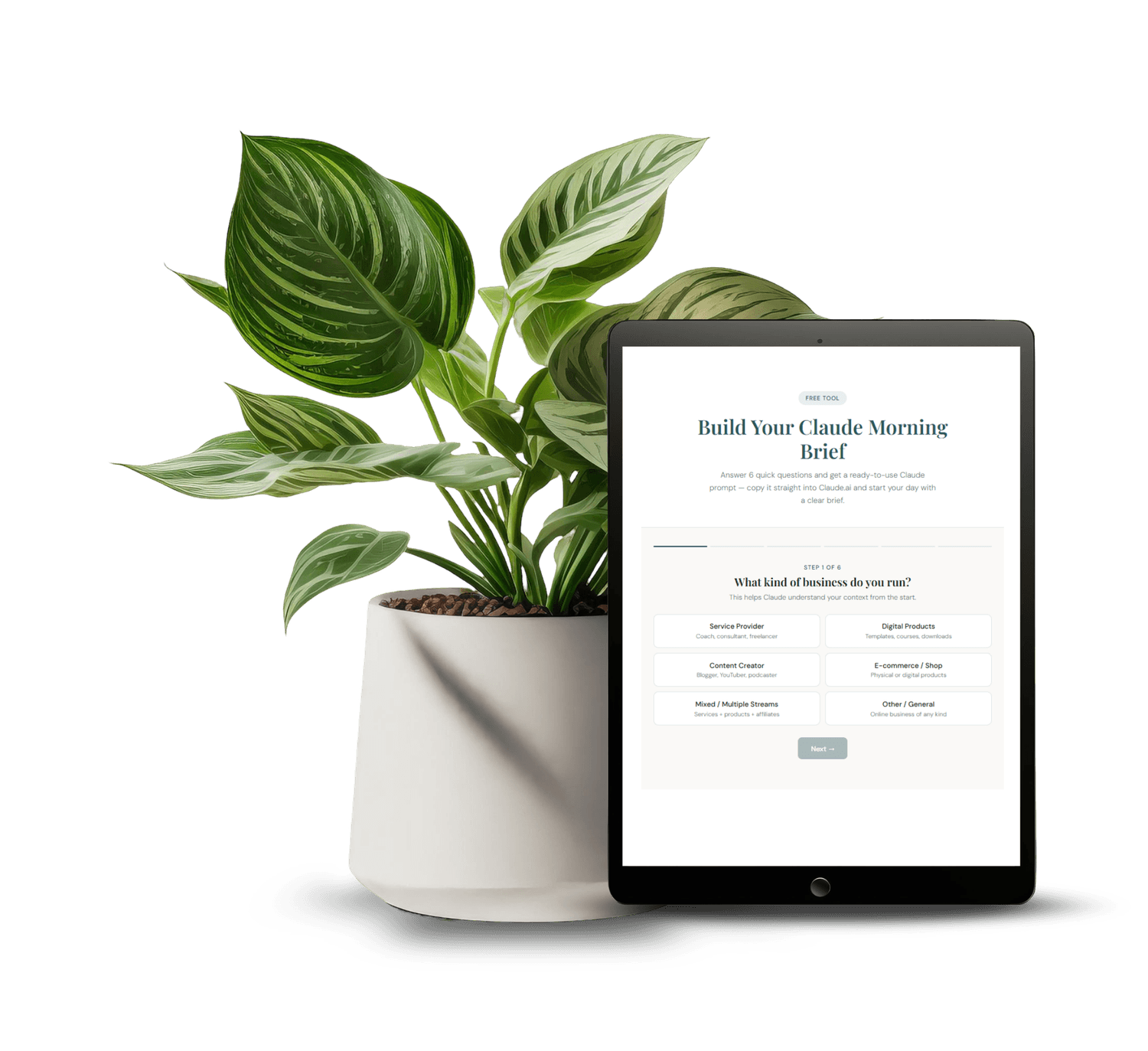
Morning Brief Claude AI Prompt
Set-up your custom morning brief for Claude
GRAB MY FREE APP
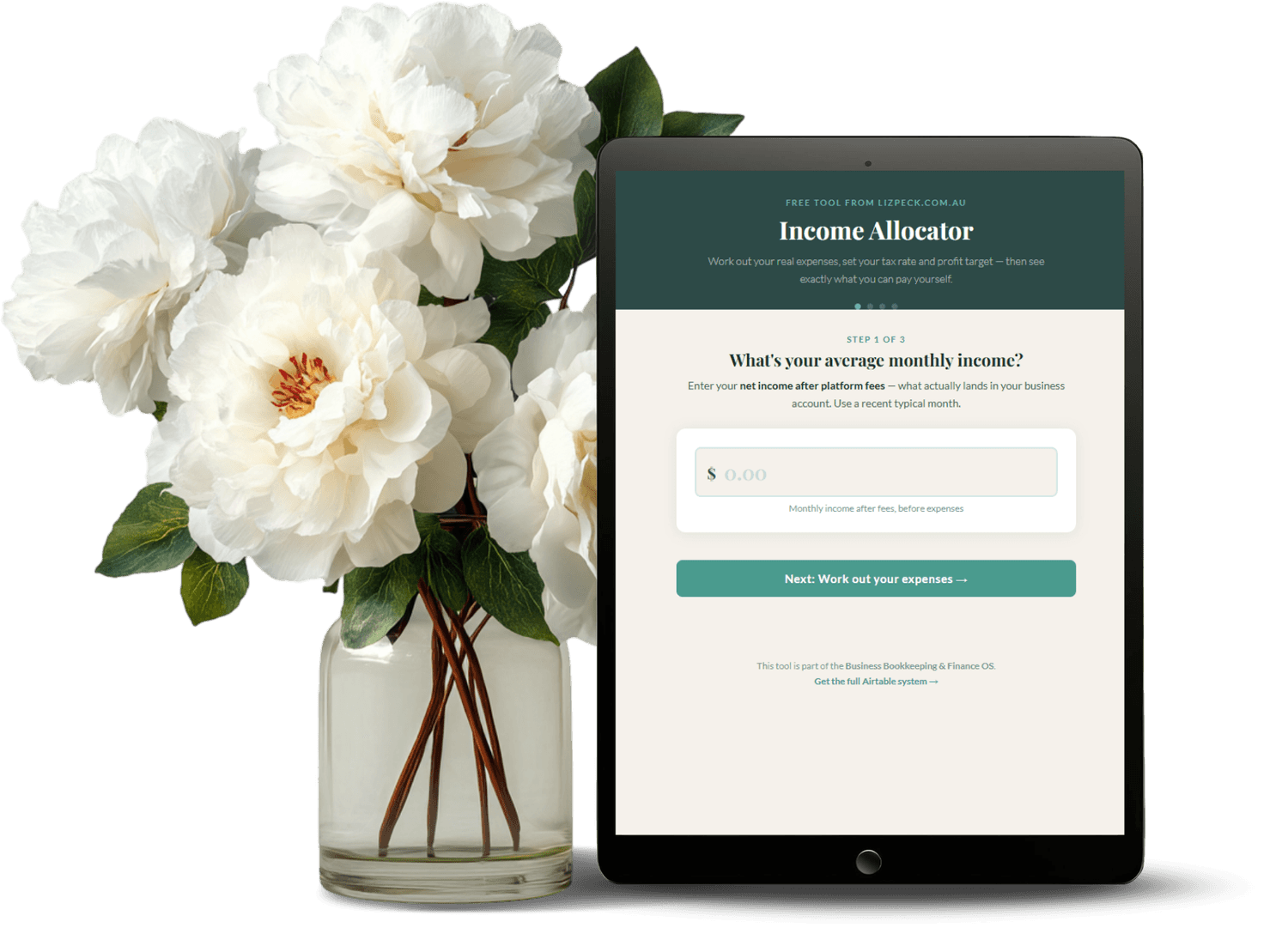
Income Allocator
Work out how to break down your income properly with percentages
The Real Etsy Listing Process for Digital Products (And Why It Stops You Scaling)
If you’ve ever felt like listing a product on Etsy takes longer than creating the product itself, you’re not imagining it.
For many digital product sellers, the listing process quietly becomes the biggest bottleneck in their business. Not because it’s hard, but because it’s repetitive, mentally draining, and easy to avoid when life gets busy.
This post is about the real Etsy listing process for digital products – not the simplified version people talk about, but what actually happens behind the scenes. More importantly, it’s about why this process stops so many sellers from scaling, even when they already have great products ready to sell.

What the real Etsy listing process actually looks like
On paper, creating a listing sounds straightforward.
In reality, listing a digital product often involves far more steps than people expect, and those steps add up quickly.
For many sellers, the process looks something like this:
Researching keywords, often across multiple tools
Comparing keyword suggestions and second-guessing choices
Deciding which keywords to prioritise
Writing a title that fits character limits
Writing a description that feels “SEO friendly”
Creating or updating a download instruction file
Uploading mockup images
Filling out the same listing fields again and again
Deciding whether to publish or save to drafts
Half the time, this takes longer than creating the product itself.
And the mental cost is often higher than the time cost.
The keyword research spiral that stops momentum
One of the first places sellers get stuck is keyword research.
They open multiple apps or tools, each showing slightly different data. Suddenly the simple question of “what keywords should I use?” turns into:
Which tool is more accurate?
Why are the results different?
Should I choose high volume or low competition?
Instead of clarity, sellers end up more confused than when they started.
This often leads to decision paralysis.
Listing gets delayed.
The product sits unfinished.Keyword research is important, but when it becomes a blocker instead of a support, it starts hurting growth.
What if I choose the wrong one?
Repetition fatigue is real (and it’s not laziness)
Once keyword research is done, the actual listing begins.
Even if you duplicate a similar listing to speed things up, you’re still:
Updating titles
Editing descriptions
Changing tags
Uploading files
Double-checking everything
It’s the same fields, every time.
This repetition creates a very real physical response for a lot of sellers. I see it constantly.
People don’t just procrastinate – they cringe at the thought of listing.
Not because they don’t want to grow, but because the task feels heavy.
Why so many designs never make it into Etsy
This is one of the biggest patterns I see:
Sellers have hundreds of designs saved on their computer…
But only 10 or 20 listings in their Etsy shop.
The designs exist.
The creativity is there.
The intent is there.
What’s missing is the energy to list.
And here’s the painful truth:
If a product isn’t listed, it can never sell.
Not tomorrow.
Not next month.
Not ever.
Unlisted products don’t contribute to:
Search visibility
Momentum
Sales data
Store traction
They’re just potential – and potential doesn’t pay bills.

Overwhelm compounds when life gets busy
Listing doesn’t happen in a vacuum.
People are:
Working jobs
Raising families
Managing households
Dealing with curveballs
When life throws something unexpected into the mix, listing is usually the first thing to go.
And because listing already feels mentally heavy, it’s easy to push it off with:
“I’ll do it later.”
“I’ll do it when I have more time.”
“I’ll do it when I feel more confident.”
Later often never comes.
The tweaking trap that stalls growth
Another common pattern is going backwards instead of forwards.
Sellers look at older listings and think:
“These aren’t good enough anymore”
“My skills have improved”
“I should update everything”
While improvement is important, this can quickly turn into a trap.
Instead of:
Creating new products
Expanding inventory
Increasing surface area in search
Sellers end up:
Tweaking titles
Rewriting descriptions
Adjusting tags
Looping endlessly on the same products
The result?
No new listings.
No momentum.
No growth.
Especially in the early stages, this is a mistake.
What actually creates traction for digital product shops
From what I’ve seen, traction comes from volume and relevance, not perfection.
New and growing shops benefit most from:
Creating products people are currently looking for
Listing them quickly
Letting the marketplace test demand
Jumping on trends while competition is still low is one of the most effective ways to grow a digital product shop.
But trends get competition fast.
If listing takes too long, the opportunity often passes before the product ever goes live.
That’s why speed matters – not rushed speed, but efficient speed.
The importance of a product plan (with or without automation)
Every seller should be working from a product plan.
A product plan is your system for tracking:
Product ideas
Creation status
Mockups
Files
Listing progress
It takes an idea from:
“I should make this”
to
“This is published and live in my store”
Whether you automate or not, a product plan gives structure and clarity.
Without it, listing feels scattered and overwhelming.
Where manual listing stops being reasonable
Manual listing can work in the beginning.
But at a certain point, it becomes unsustainable.
If you:
Don’t enjoy repetitive tasks
Love creating but hate listing
Feel like listing drains your energy
Feel like you “need an assistant” just to keep up
That’s usually a sign that the process needs a system – not more willpower.
Why systems protect energy (not just time)
Automation isn’t just about speed.
It’s about:
Consistency
Sustainability
Protecting your energy for creative work
When you remove the friction from listing:
You stop dreading it
You stay consistent
You don’t lose momentum when life gets busy
You can work from a single place, like a product plan, and let the system handle the repetitive steps.
Change a status.
Move to the next product.
No blank thoughts.
No admin dread.
Automation vs hiring help
When sellers feel overwhelmed, they often think they need help.
But hiring someone means:
Ongoing costs
Training
Communication
Management
Automation, on the other hand:
Is a one-time setup
Runs consistently
Doesn’t need supervision
Frees up time without adding payroll pressure
For many digital product sellers, a system makes more sense than an assistant – especially in the early and growth stages.
Why consistency beats perfection every time
The sellers who grow aren’t the ones with the most perfect listings.
They’re the ones who:
Keep creating
Keep listing
Keep showing up in search
Consistency builds:
Data
Momentum
Confidence
Perfection often builds hesitation.

The Etsy listing process isn’t failing you – it’s just not designed for scale when done manually.
If you:
Love creating
Hate repetitive admin
Have products waiting to be listed
Feel stuck despite having good ideas
The issue isn’t your ability.
It’s the system (or lack of one) supporting your business.
Protect your energy.
Prioritise product creation.
And build processes that help you stay consistent instead of burning out.
After experiencing these frustrations firsthand, I built a backend system called Digital Product Etsy Shop Automated. It’s designed to remove the manual listing friction by connecting your product plan to a repeatable listing process.
It doesn’t replace creativity – it protects it.
Disclaimer:
This website may contain affiliate links. If you click a link and make a purchase, I may receive a small commission at no extra cost to you.

About Liz Peck
Liz Peck helps online business owners build the backend that runs without them - using Airtable for operations, Systeme for sales, and Claude AI for the work you hate doing twice. lizpeck.com.au

Disclaimer:
This website may contain affiliate links. If you click a link and make a purchase, I may receive a small commission at no extra cost to you.