

GRAB MY FREE TRAINING
The No Leaks Funnel

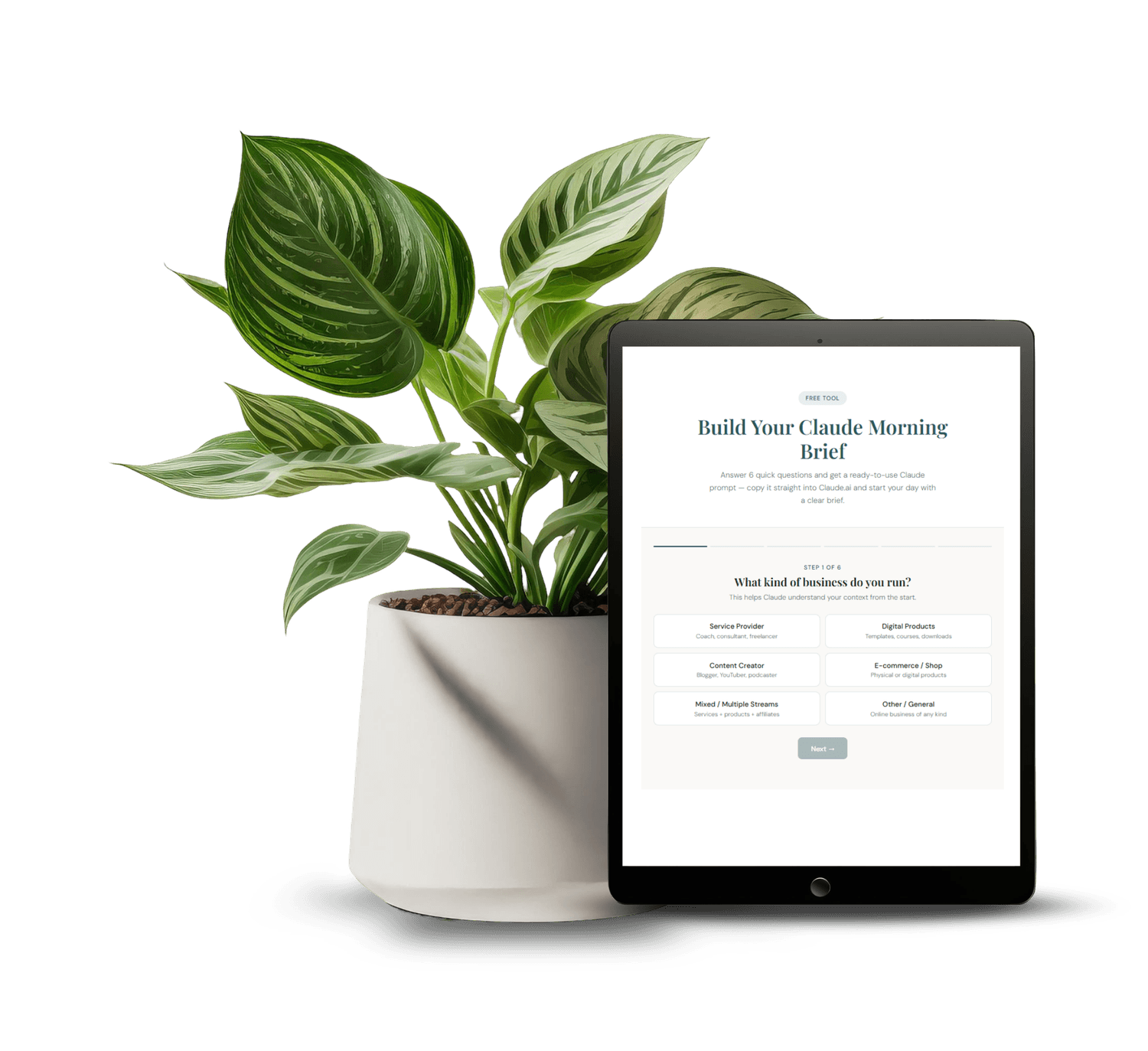
GRAB MY FREE APP
Morning Brief Claude AI Prompt
Set-up your custom morning brief for Claude
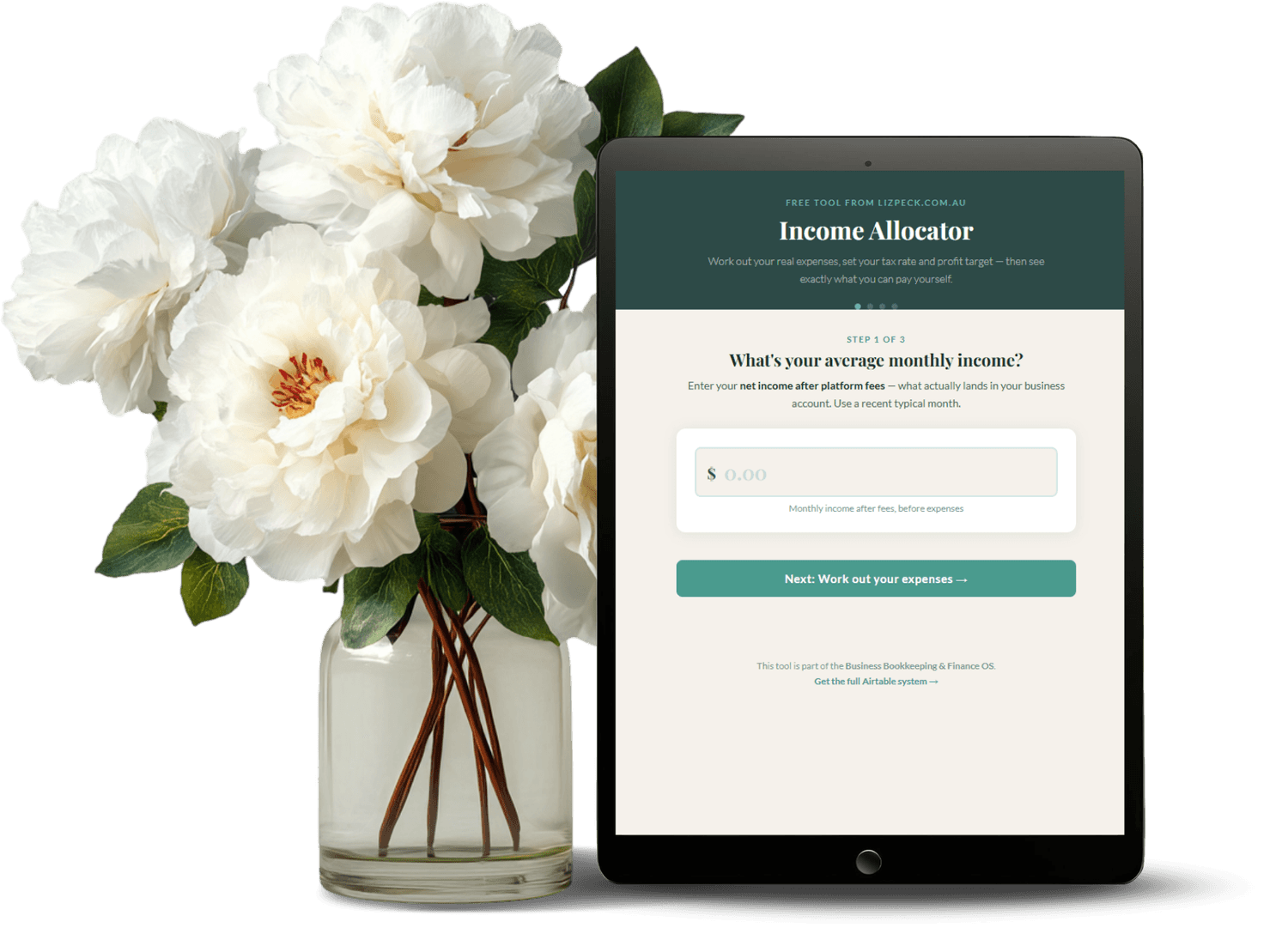
GRAB MY FREE APP
Income Allocator
Work out how to break down your income properly with percentages
Stop Trying to Hire Your Way Out of Burnout (The Real Fix Is Infrastructure)
Most people at the five-figure mark hit the same wall. Everything is working, but you are doing everything. The obvious answer seems to be: hire someone. That is usually the wrong move at this stage.
Hiring adds management overhead. It does not remove the fact that your business runs on memory rather than process. If the process lives in your head, someone else cannot do it without constant hand-holding from you. You end up doing the work plus managing the person doing the work.
Why Hiring Feels Like the Answer
When you are overwhelmed, handing something off to someone else feels like the immediate solution. If you have five people waiting on responses and three projects stalled because you cannot get to them, the instinct is to bring in another person.
The problem is that the bottleneck is rarely the number of people. It is the system. Or more accurately, the absence of one. You are the system. Every decision routes through you because nothing is written down, no process runs without your input, and no one else can make a call without checking with you first.
The Real Cost of Hiring Without Infrastructure
A VA costs money every month. It is a fixed overhead that immediately affects your margins. If the business is not generating consistent revenue above your operating costs, a VA makes the math harder before it makes it easier.
Beyond the cost, there is the time cost of managing someone. Briefing, reviewing, correcting, re-briefing. If you spend three hours a week managing a VA who saves you three hours a week, you have broken even. You have not freed up your time.
This is why people hire VAs and then quietly let them go three months later. The VA was not the problem. The missing infrastructure was.
What Infrastructure Actually Means
Infrastructure means your processes are documented in a format that lets someone else (or a tool) follow them without you. It means the decisions about how things get done are captured somewhere outside your head.
It does not need to be complicated. A standard operating procedure for how you onboard a new client. A template for your weekly content. A checklist for what happens when a payment fails. These are infrastructure.
When you have infrastructure, hiring becomes optional rather than essential. You can bring on a VA and they can actually function without you managing every step. Or you can use AI tools to handle the repetitive parts, because the process is clear enough for a tool to follow it.
The Overlap Between AI and VA Work
A lot of what people hire VAs for is repetitive, rule-based work. Inbox management. Scheduling posts. Repurposing content. Sending invoices. These are exactly the kinds of tasks that automation handles well.
If you have a clear process for those tasks, a tool can do them consistently, without needing briefing, re-briefing, or days off. The output is not perfect, but it is consistent, which is often more valuable than perfect.
This does not mean you should never hire. It means that before you spend money on a person, it is worth spending a few hours figuring out which of those tasks can come off your plate without another human doing them.
When Hiring Is the Right Answer
Hiring becomes the right answer when the task genuinely requires human judgment, relationship management, or creative input that a system cannot provide. Client calls. Strategic decisions. High-touch creative work. These are things a person needs to handle.
Hiring also makes sense when you have a documented process that you simply do not want to do, and the revenue is there to justify the cost. A VA doing a documented task is a different situation from a VA doing an undocumented task you are going to have to explain every time.
The sequence matters: document first, automate what you can, hire for what remains. That order means you hire fewer people for more valuable work, rather than many people for tasks that a clear process could have handled.
The Specific Tasks Worth Automating Before You Hire
Email processing and filtering, social media scheduling, invoice sending and follow-up, client onboarding sequences, lead tracking, and content repurposing are all strong candidates for automation.
If you want a practical starting point, tools like Make let you connect your apps and automate repetitive tasks without code. It is not as overwhelming as it looks once you have a clear process written down first.
For more
detail on which tasks to start with, readWhat to automate first in an online business.
How to Document What You Do
Start with the task you do most often and hate the most. Open a document, do the task step by step, and write down what you are doing as you go. That is a process. It does not need to be formal.
From there, turn each key process into a checklist or a short standard operating procedure. Keep them somewhere you can actually find them: a shared folder, a Notion database, an Airtable base.
Once something is written down, you can test it. Give it to someone else and see if they can follow it without asking you questions. If they can, you have documentation that works. See How to Document Your Business So You're Not the Bottleneck for a step-by-step approach.
What Calm Looks Like After You Build Infrastructure
When the processes are in place and automation is handling the repetitive work, the experience of running your business changes. You stop firefighting. You stop scrambling to remember where things are. You stop feeling like you have to be available for every small task. The business still requires your input, but your input goes toward the things that actually need you: strategy, relationships, and product quality. Everything else runs.
The CEO OS Is Infrastructure Built Out for You
Building this from scratch takes time. The CEO OS is an Airtable system designed to give you the operational infrastructure without spending months building it. It comes with the core tables, views, and Claude integrations pre-built for a solo business. The goal is to reduce the daily management overhead so you are not drowning in admin before you can do the actual work. See what the CEO OS includes. And if you are also looking at managing content workload specifically, the Content OS handles the content side of the same problem.
FAQ
Q: Is hiring a VA ever worth it?
A: Yes, but not before infrastructure is in place. Hire for high-skill tasks where you genuinely need judgment and expertise. Use AI and automation for repetitive execution tasks.
Q: How do I know if my burnout is an infrastructure problem?
A: If you are constantly doing the same tasks over and over and feel like you cannot step away without things falling apart, it is an infrastructure problem. The business runs on your presence rather than a process.
Q: How long does it take to build proper infrastructure?
A: A few months of consistent effort. The first documented process takes the most time. Each one after that is faster. By the time you have 10 processes documented, most of your execution work can be handled without you being the bottleneck.
Q: What if I genuinely need help right now?
A: Short-term help is fine. Just be honest that it is a stopgap, not a solution. Continue building the infrastructure alongside it so that when the contract ends, you are not back where you started.
Disclaimer:
This website may contain affiliate links. If you click a link and make a purchase, I may receive a small commission at no extra cost to you.

About Liz Peck
Liz Peck helps online business owners build the backend that runs without them - using Airtable for operations, Systeme for sales, and Claude AI for the work you hate doing twice. lizpeck.com.au
Disclaimer:
This website may contain affiliate links. If you click a link and make a purchase, I may receive a small commission at no extra cost to you.