
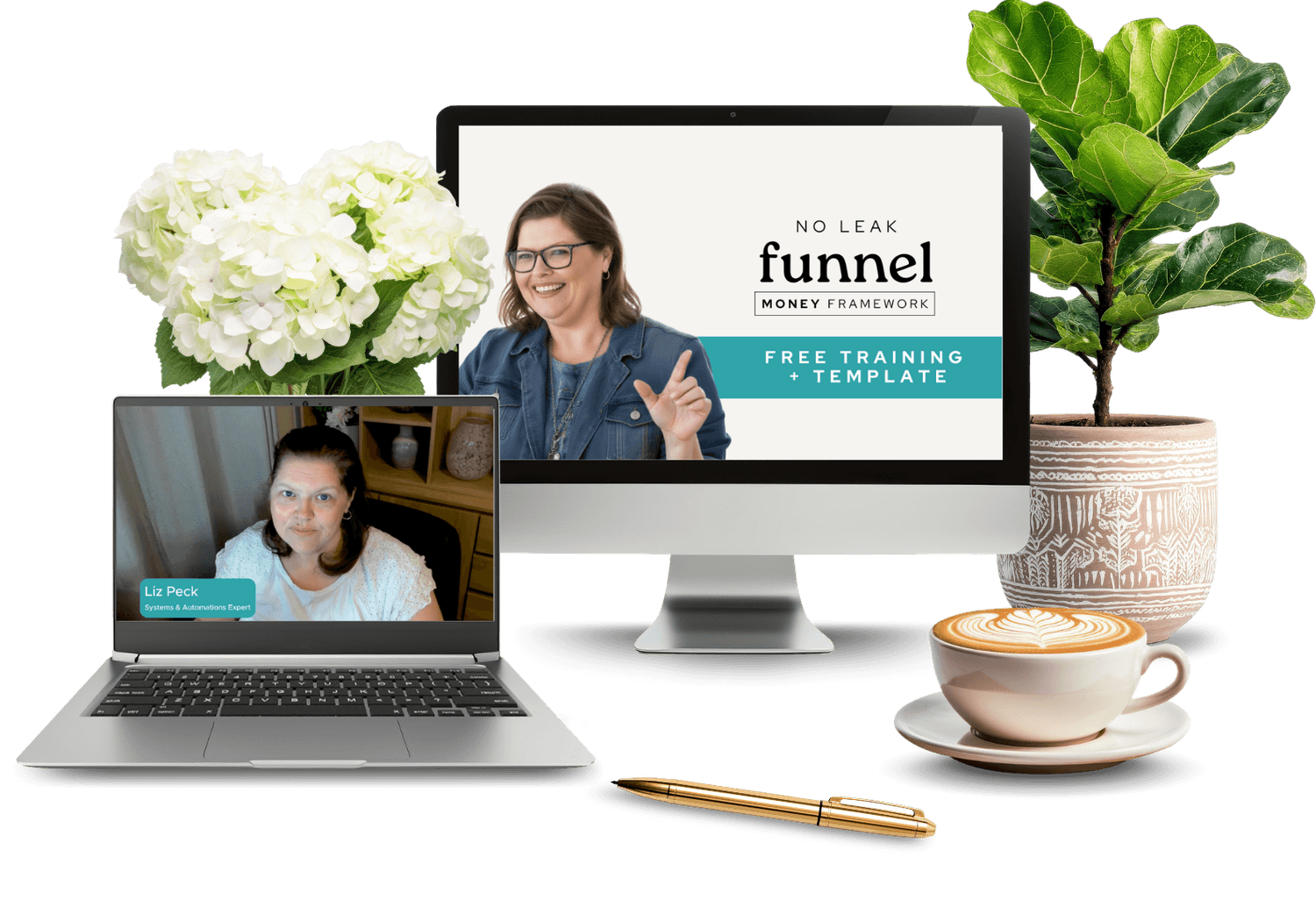
GRAB MY FREE TRAINING
The No Leaks Funnel
GRAB MY FREE APP
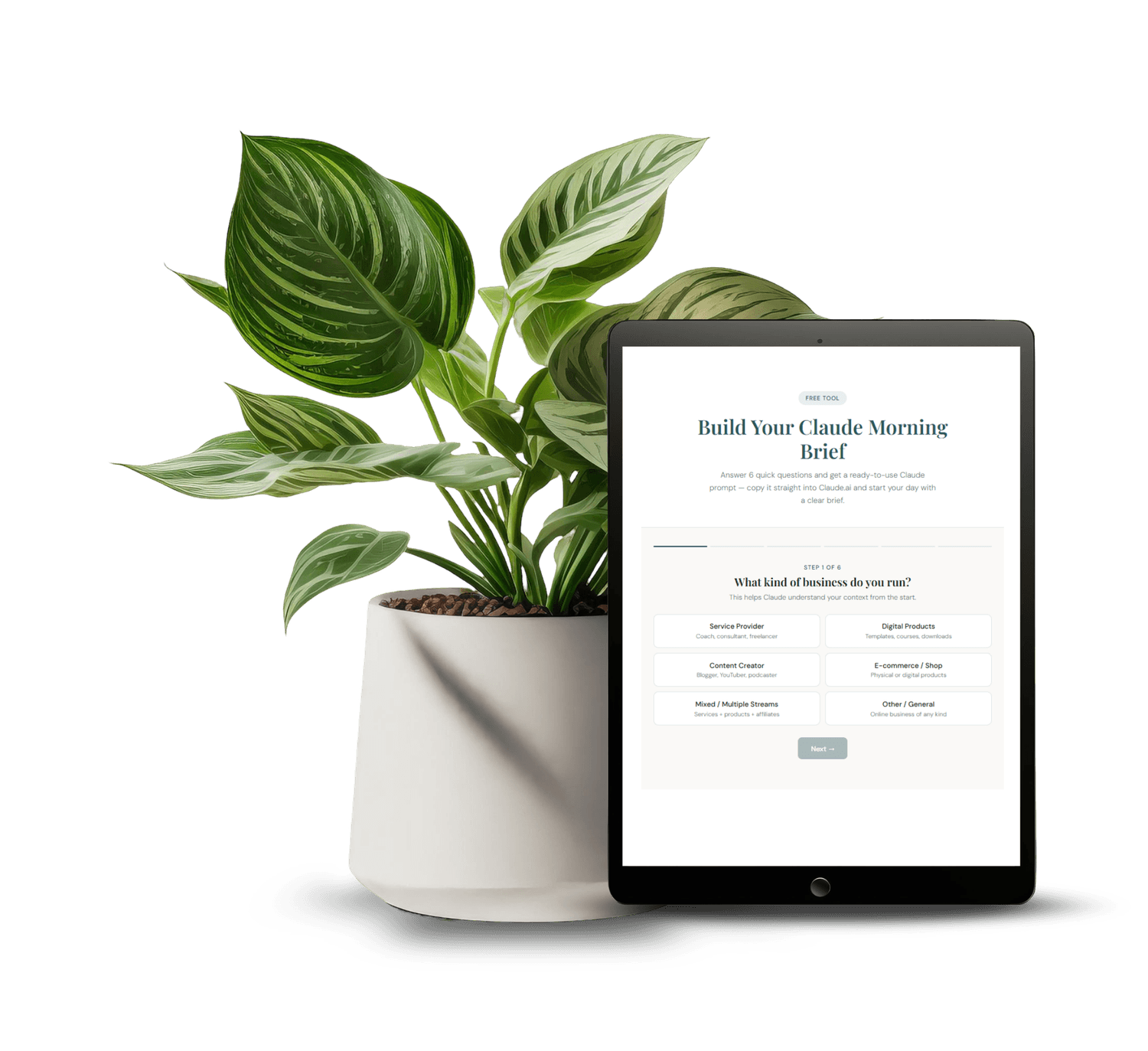
Morning Brief Claude AI Prompt
Set-up your custom morning brief for Claude
GRAB MY FREE APP
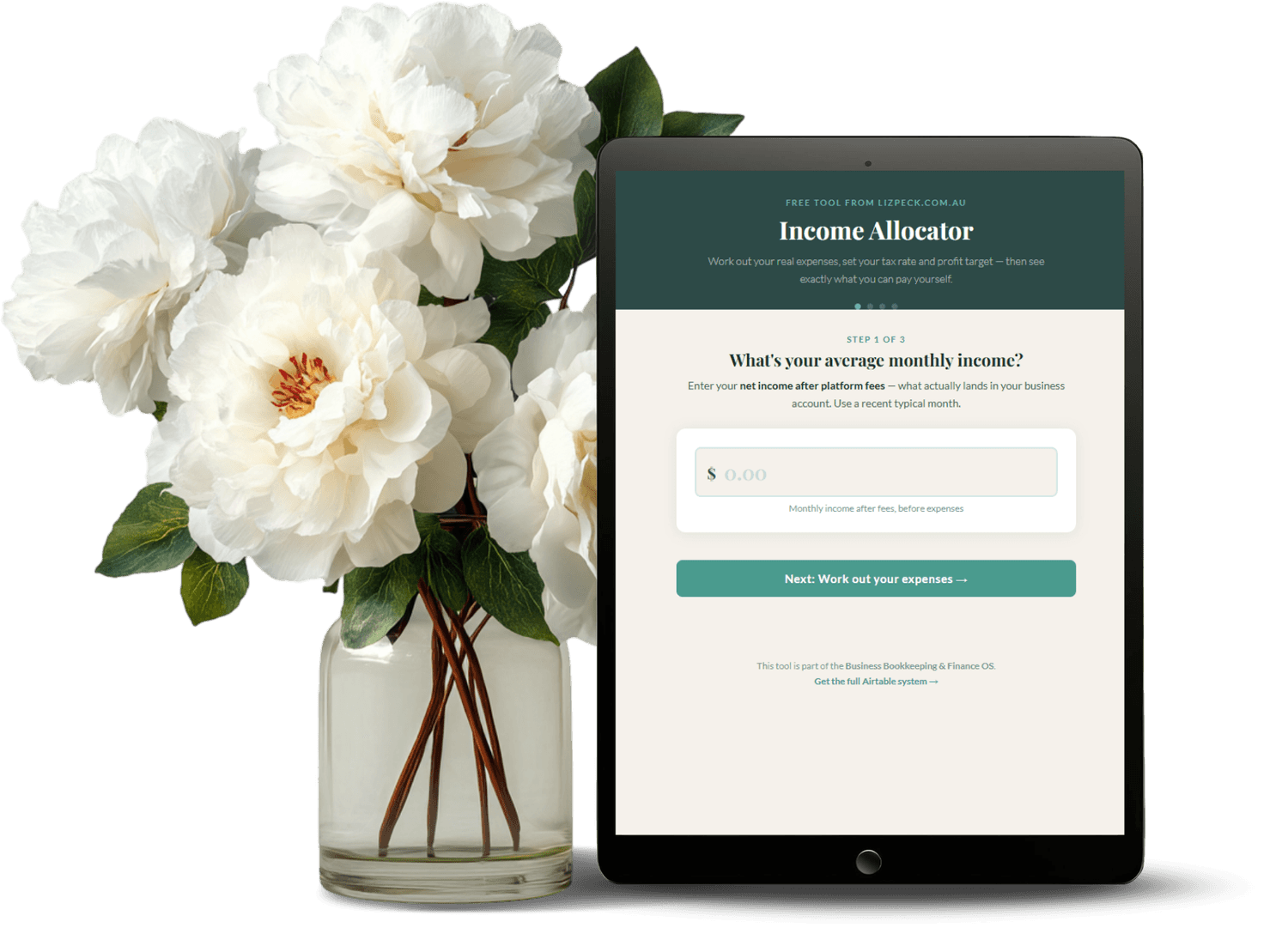
Income Allocator
Work out how to break down your income properly with percentages
The 11 Systems Every Solo Operator Needs (The Framework I Run My Business On)
I love systems. I like having a proven process to follow so I'm not making the same decisions over and over. For a long time I couldn't find one that covered every area of a small online business, which was genuinely frustrating.
I worked in quality assurance before I moved online, and I've spent years as an online business manager looking at how other people run things. So I decided to build the framework I couldn't find. I ended up with 11 systems that cover every area of my business.
The full framework is what I walk people through inside my membership. This post is the overview, so you can see the shape of it and decide what to build first.
Why I Ended Up Building My Own Framework
QA taught me to look for the gaps. Online business management taught me how often those gaps live in the same places. Email that doesn't get answered. Customers who fall off the radar. Numbers no one checks until tax time.
Most of the system frameworks I read about online covered one slice. A content system. A funnel system. A CRM. None of them covered the whole business.
What I needed was something I could run as a solo operator. Eleven areas. One framework. Built so each piece talks to the next.
System 1: CEO Command Centre
This is the room I walk into first thing every morning. Tasks, priorities, the week ahead, the metrics that actually matter.
Mine lives in Airtable and it's the spine of everything else. It's not a fancy dashboard. It's a place where the truth of the business lives so I'm not making decisions from memory.
If you don't have this, you're running the business in your head. That works until it doesn't. Running a weekly CEO review is what keeps this layer honest.
System 2: Lead Capture
How does a stranger become someone who hears from you regularly? That's lead capture.
For me it's a freebie, a landing page, a tag, and a welcome sequence. Four pieces. Nothing fancy. The work is making sure the same path runs every time someone shows up.
Most solo operators have bits of this scattered across tools that don't talk to each other. That's the bit that breaks.
System 3: Email Marketing
Once someone is on the list, they need a reason to keep reading. That's the email system.
A welcome sequence. A nurture rhythm. A way to write to the list without it feeling like another job. I write a daily email Monday to Friday and it's tied to whatever product I'm promoting that week.
This is where most solo operators leak revenue. They have a list but no consistent rhythm with it.
System 4: Sales
Sales isn't a sales page. It's the whole path from a person noticing a product to a person buying it.
The page. The checkout. The order bump. The thank you page. The receipt email. Every piece either reduces friction or adds it. The system is what makes sure friction stays low without me babysitting it.
I run mine through Systeme because it's the only platform I've found where the price stops going up as the business grows.
System 5: Delivery of Products and Services
What happens after someone pays. Where do they go to access what they bought? How do you know if it landed? What happens if they can't find it?
This is usually where I see solo operators duct tape three tools together and then wonder why customers get confused. One platform that handles delivery, one process for follow up, and a place to check it actually worked.
Keep it simple. The fewer steps between purchase and access, the fewer support tickets you handle later.
System 6: Content Creation (The Daily Three)
This is the marketing system. An Instagram reel or carousel, a daily story, and a daily email. Monday to Friday. Done first thing before anything else.
I tested this after watching what was working for a 7-figure business behind the scenes and noticing the same pattern in other businesses doing well online. Three things, daily, every weekday. Each one points back to a product.
This is the engine that keeps the rest of the business moving.
Systems 7-11: Customer Service, Finances, CRM, Automations, Metrics
The last five systems are the operational layer.
Customer service runs through a helpdesk in Airtable so nothing slips. Finances and bookkeeping live in their own table with tagged income and expenses. Customer records sit in a CRM where every purchase, ticket, and status change is logged. Automations and integrations connect Make and Claude so the boring work runs itself. Metrics get reviewed weekly so I know what's working before something breaks.
This is what people mean when they talk about a calm backend. It's not magic. It's eleven systems, each doing one job properly.
Where to Start If You're Building This
Don't try to build all 11 at once. You'll burn out and abandon it.
Start with the CEO Command Centre because every other system feeds into it. Then add the Daily Three so you're producing consistent content while you build the rest. Then layer in lead capture, sales, and delivery. The operational systems come last because they're easier to set up once the front end is moving.
This is exactly what I walk through inside The Solo Operator System. Foundation training, then one new build a month, in the same order you'd actually need them.
FAQ
Q: Do I need all 11 systems before I'll see results?
A: No. The first three to four will change how the business feels almost immediately. The rest are about removing the work that's still on you.
Q: How long does it take to build all of them?
A: It took me about a year of iterating. I don't recommend trying to compress that. One system at a time, properly built, holds up better than eleven half-built ones.
Q: Can I use tools other than Airtable, Claude, Systeme, and Make?
A: Yes. The framework is the systems, not the tools. The tools are what I happen to use because they cover the most ground for the least money.
Q: Is this only for online businesses?
A: It's built for online businesses but most of it applies to any solo operator. Service providers, coaches, creators, product sellers.
Q: What if I don't have a team?
A: This framework is designed for people who don't have a team. That's the whole point.
Disclaimer:
This website may contain affiliate links. If you click a link and make a purchase, I may receive a small commission at no extra cost to you.
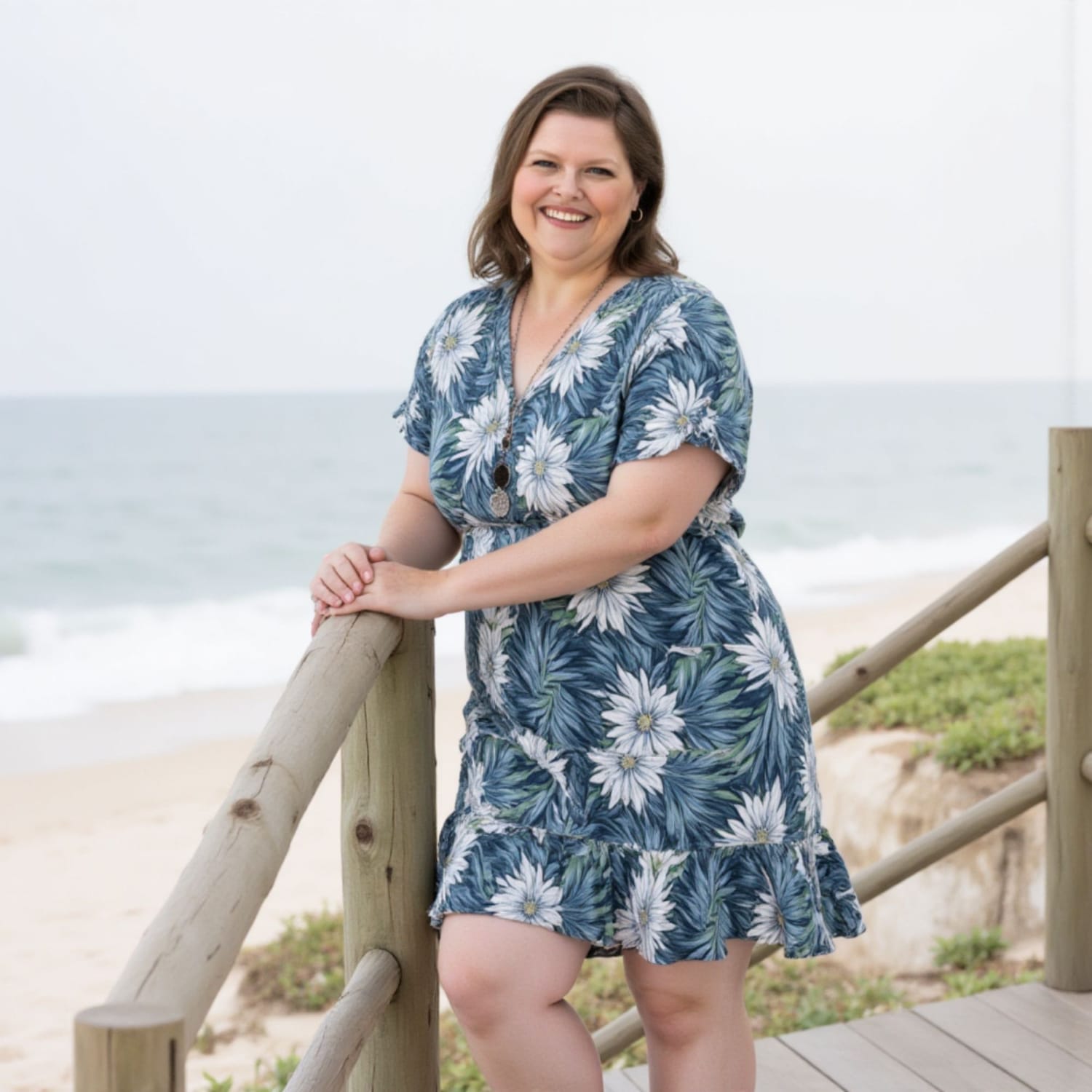
About Liz Peck
Liz Peck helps online business owners build the backend that runs without them - using Airtable for operations, Systeme for sales, and Claude AI for the work you hate doing twice. lizpeck.com.au
Disclaimer:
This website may contain affiliate links. If you click a link and make a purchase, I may receive a small commission at no extra cost to you.