

GRAB MY FREE TRAINING
The No Leaks Funnel

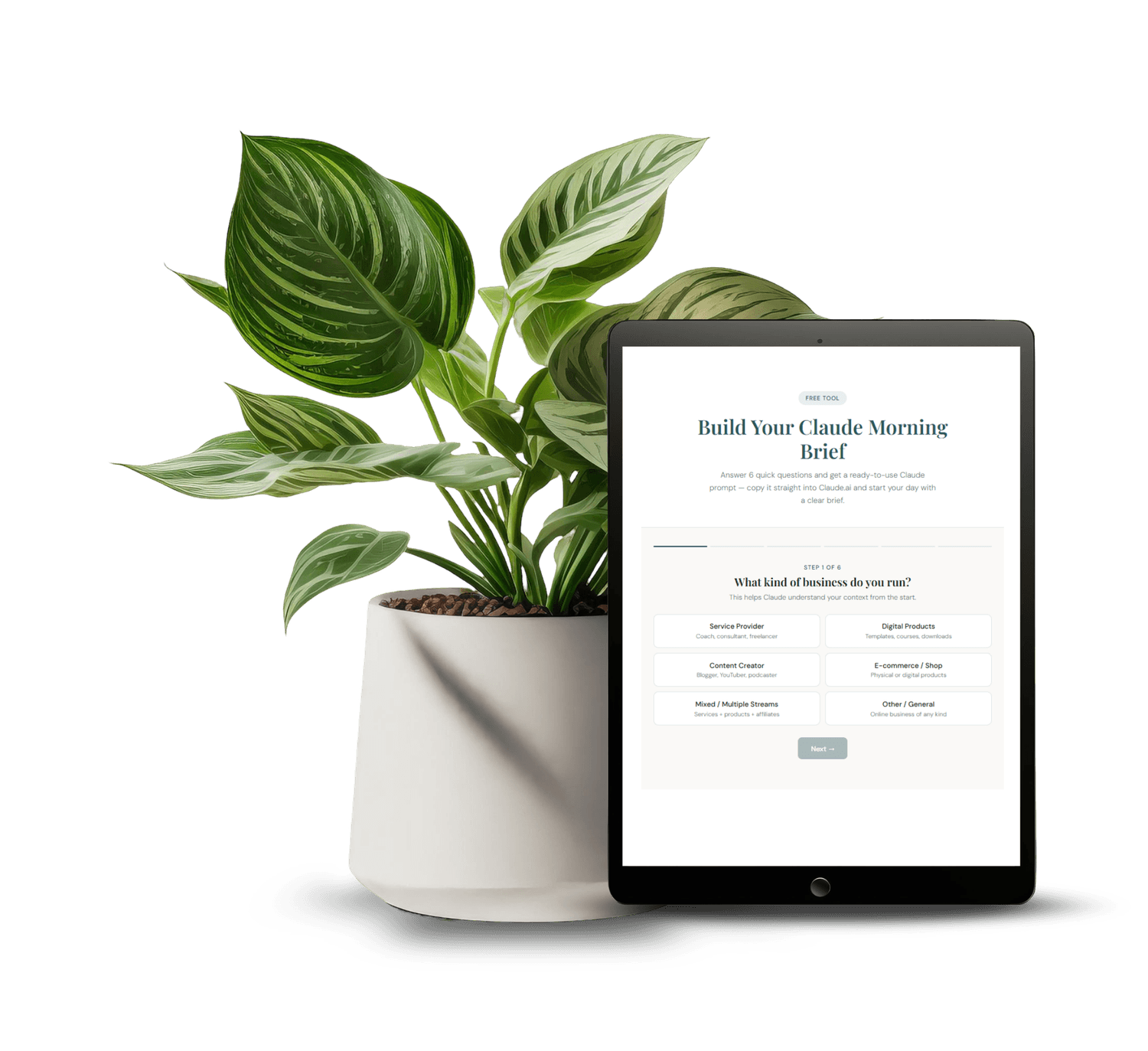
GRAB MY FREE APP
Morning Brief Claude AI Prompt
Set-up your custom morning brief for Claude
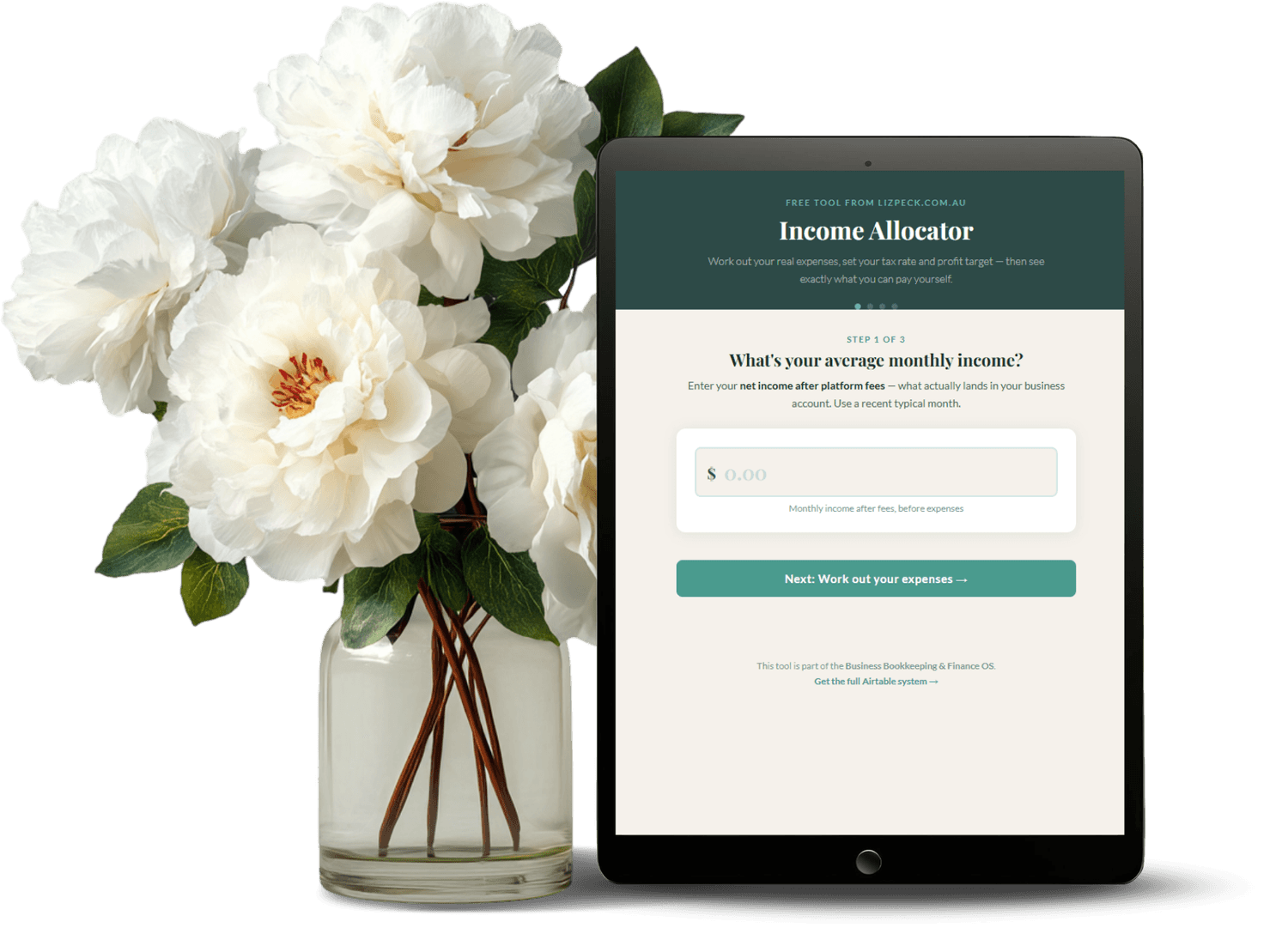
GRAB MY FREE APP
Income Allocator
Work out how to break down your income properly with percentages
Stop Trying to Hire Your Way Out of Burnout (The Real Fix Is Infrastructure)
Most people at a certain point in their online business hit the same wall. Everything is working, things are growing, and you're doing everything. The obvious next step feels like bringing in help.
That instinct is understandable. But if you hire before fixing the infrastructure, you'll spend time managing someone else rather than solving the actual problem.
What Capacity Actually Means
When you feel like you're at capacity, the first question worth asking is: at capacity doing what? Most of the time, it's not the actual work that's filling every hour. It's the admin, the repetition, the manual tracking, the same tasks done slightly differently each week.
Hiring someone to help with that gives you a collaborator in the chaos. It doesn't fix the chaos.
The Problem With How Most Online Businesses Are Built
Most solo online businesses run on memory. The process for listing a product, sending an invoice, following up with a customer. It exists in one place: your head.
If a task exists only in your head, you can't delegate it. You can't automate it either. When you bring someone in to help, you end up having to explain it verbally every time rather than having a documented process they can follow. Why most business systems fail gets into this pattern specifically.
What Infrastructure Actually Means
Infrastructure isn't a fancy word for software. It's documented processes running on reliable systems.
At its most basic: each recurring task has a written process, that process lives somewhere retrievable, and someone or something follows it consistently. When that exists, you can delegate. When it doesn't, delegation creates more overhead than it saves.
How AI Changes the Calculus
Where AI has changed things is that it's now possible to have documented processes executed automatically, not just stored somewhere. When I connect Claude to my Airtable tasks and tell it to handle my morning briefing, that's not a task that needs a person. It's a process running on infrastructure.
The tasks worth automating are the repetitive ones that follow a predictable pattern and don't require judgment. Most of the admin in an online business fits that description. The [CEO Control Centreis the Airtable system I use to keep that infrastructure visible and maintained.
When Hiring Actually Makes Sense
Hiring makes sense when you have documented processes that a person can follow, when the work genuinely requires human judgment, and when you have enough volume to justify the cost and management overhead.
The mistake most solo business owners make is hiring before they have systems. They bring someone in and then spend their time managing that person because there's no documentation, no process, and no way to hand things over cleanly. Good infrastructure means that when you do hire, onboarding is fast and the work is actually delegable.
Starting With a Systems Audit
Before either hiring or automating, map out what you're actually doing each week. Every recurring task, how long it takes, whether it requires your judgment, and whether it's documented anywhere. Most business owners who do this audit are surprised by how many hours go to tasks that could either be automated or handed to a VA with a clear process.
This is what how to document your business covers in detail. The audit is where you start seeing your business as a system rather than a collection of things only you know how to do.
Automation as the Middle Layer
Between doing everything yourself and hiring a team, there's a middle layer that most solo business owners skip: automation. Done well, automation handles the repetitive, rule-based work so you're only spending time on things that genuinely need you.
Make is the tool I use to connect my apps and run automated workflows — from publishing content to logging expenses to triggering emails. It sits between your tools and handles the handoffs so you don't have to.
What Changes When Infrastructure Exists
When I started documenting processes and automating the predictable work, the first thing I noticed was that I stopped losing things. Decisions got made faster because the information was actually findable. Tasks got done consistently because there was a process, not just a vague intention.
The second thing was that I stopped feeling like the business only worked because I was holding it together manually. That's the real shift infrastructure creates. The [Online Business Starter Stack](https://www.lizpeck.com.au/online-business-starter-stack) is the resource I built to help other business owners get there without the trial and error.
The Actual Order of Operations
This is usually where people want a simple answer. Hire first or automate first? The answer depends on your situation, but for most solo online business owners, the order looks like this: document first, automate second, hire third.
Document what you're actually doing. Automate the repetitive parts. Hire once you have real processes a person can follow and enough volume to justify it. Skipping steps one and two means hiring becomes a management job rather than a leverage play. Infrastructure first isn't a philosophy. It's just the order that actually works.
FAQ
Should I hire or automate first?
For most solo online business owners, automation comes before hiring. Automation handles the repetitive, rule-based work. Hiring is for tasks that require human judgment and relationship. If you hire before you automate, you'll spend your time managing rather than growing.
What is business infrastructure?
Business infrastructure is the combination of documented processes, reliable systems, and automation that allows your business to function predictably without everything running through your head. It's the difference between a business that works because of you and one that works around you.
How do I know if I need better systems?
If you find yourself re-explaining the same things, losing track of tasks, unable to delegate effectively, or feeling like the business only runs because you're holding it together, you need better systems. The good news is that documenting your processes is the first step and doesn't require any tools.
What automation tools do you recommend?
I use Make for connecting apps and running automated workflows, Airtable for my operations database, and Claude for AI-powered tasks. The specific tools matter less than having a clear process first. Automation is just a documented process running automatically.
What is the CEO Control Centre?
The CEO Control Centre is my Airtable-based operating system for solo online business owners. It keeps your tasks, projects, metrics, content, and automations in one place so you can run your business with clarity rather than chaos. It's the infrastructure layer that makes everything else work.
Is this approach only for established businesses?
No. Getting your infrastructure right early saves significant pain later. The sooner you document your processes and start automating the repetitive work, the less you'll have to untangle when you want to grow. Even a business with a handful of clients benefits from having clear systems.
Affiliate disclaimer: Some links in this post are affiliate links. If you click and make a purchase, I may earn a small commission at no extra cost to you. I only recommend tools I use and trust.
Disclaimer:
This website may contain affiliate links. If you click a link and make a purchase, I may receive a small commission at no extra cost to you.

About Liz Peck
Liz Peck helps online business owners build the backend that runs without them - using Airtable for operations, Systeme for sales, and Claude AI for the work you hate doing twice. lizpeck.com.au
Disclaimer:
This website may contain affiliate links. If you click a link and make a purchase, I may receive a small commission at no extra cost to you.