

GRAB MY FREE TRAINING
The No Leaks Funnel

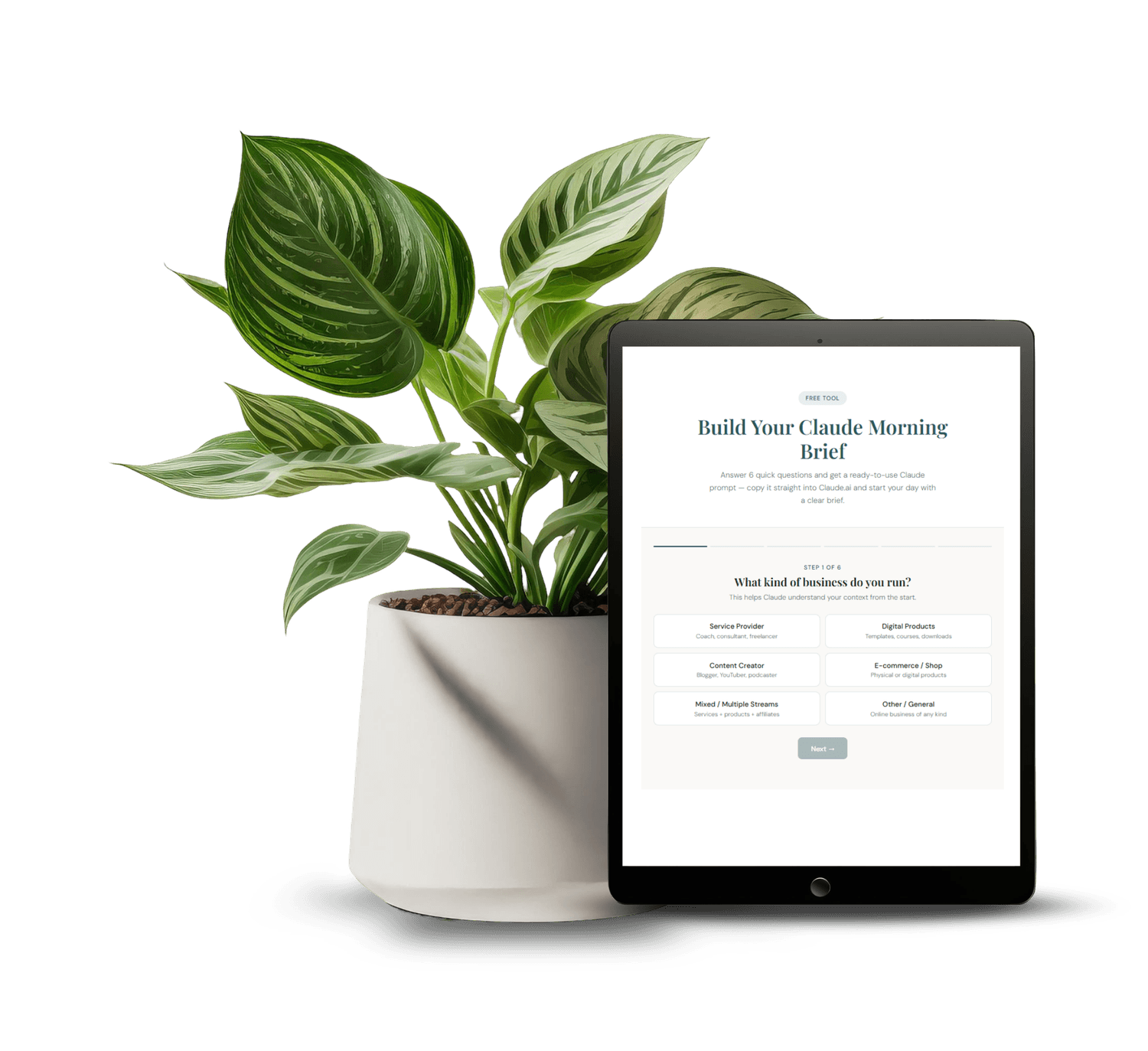
GRAB MY FREE APP
Morning Brief Claude AI Prompt
Set-up your custom morning brief for Claude
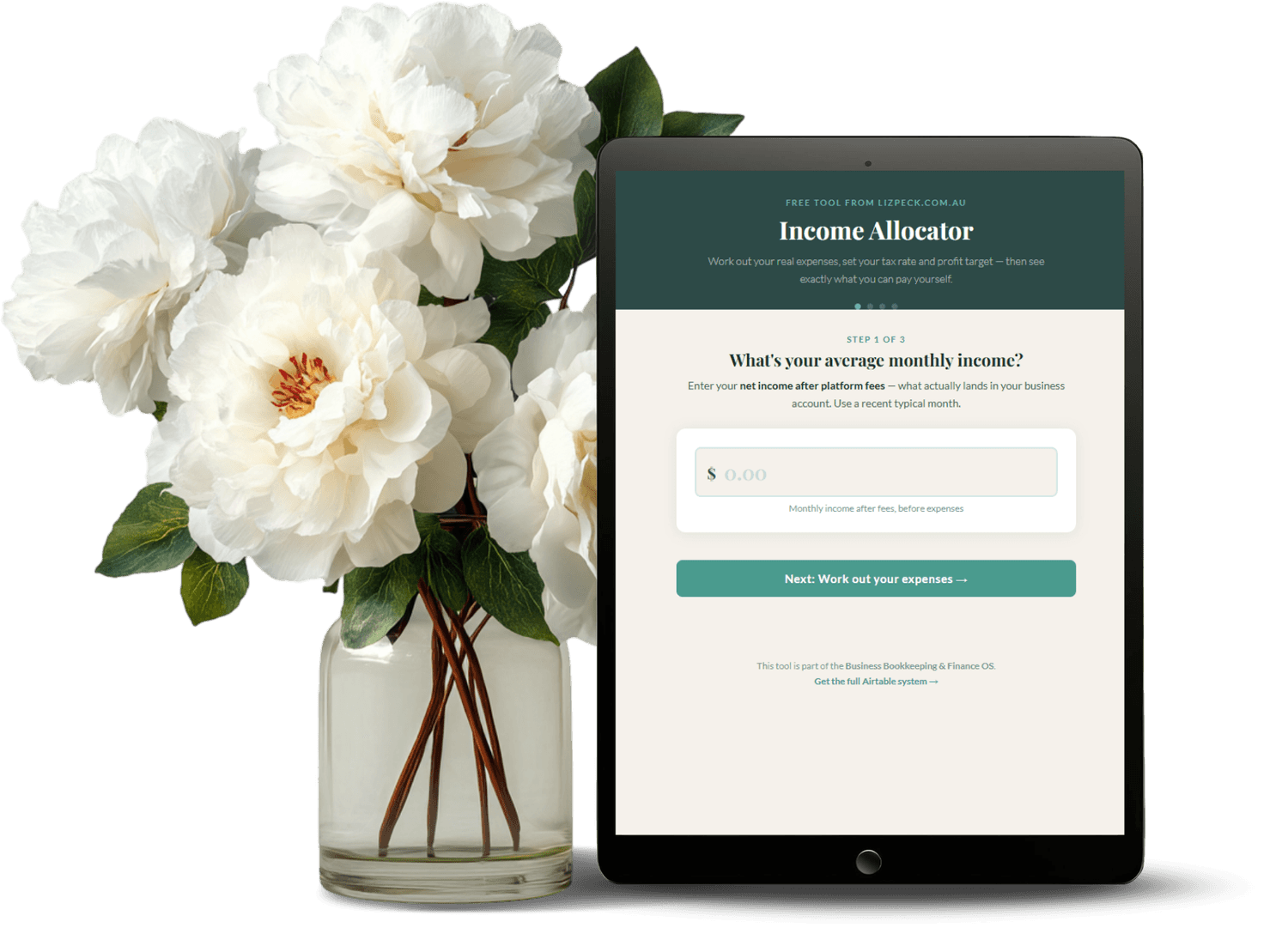
GRAB MY FREE APP
Income Allocator
Work out how to break down your income properly with percentages
I Replaced My 40-Minute Morning Scramble With a 10-Minute AI Brief (Here's the Setup)
Every morning used to start the same way. Open laptop. Open email. Check task list. Try to remember what was urgent from yesterday. Cross-reference projects. Figure out what the priority actually is. That process took 30 to 40 minutes and I still was not confident I had caught everything.
Now I open Claude and the brief is already there. It takes 10 minutes to read it and decide what to focus on. I did not check email. I did not open multiple apps. I did not try to remember anything. Here is exactly how that works.
What the Scramble Actually Costs
The morning scramble is not just slow. It also sets a reactive tone for the rest of the day. When you start by processing information rather than deciding where to focus, you tend to respond to whatever is loudest rather than whatever is most important. The first decision you make each morning influences your focus for the rest of the day. When that first decision is reactive, the whole day can follow. It is not a motivation problem. It is a process problem.
What the Brief Contains
The morning brief is a short document generated by Claude each morning before I start work. It tells me: tasks due today, tasks overdue, the top priority, revenue from the previous day, content published yesterday, anything flagged as urgent in my Airtable base. It is a single-screen summary. I read it in under 5 minutes, decide on my first task, and start. That is the whole process.
Where the Data Comes From
Everything in the brief comes from Airtable. Tasks, projects, content schedule, revenue records. When Claude runs the brief, it reads those tables and formats a summary. The critical piece is that Claude is reading your actual data, not guessing. A generic prompt to help me plan my day is based on nothing. A brief that pulls from live records is based on the truth of your business right now.
How to Set Up the Airtable Connection
In Claude Cowork mode, you connect your Airtable base through the Connectors settings. You give Claude access to the specific tables it needs to read: tasks, projects, content, revenue. Then you build a morning brief skill that tells Claude what to look for, how to format the brief, and what to include. Once the skill is saved, Claude runs the same brief every morning using the same logic. You do not write a prompt. You do not do anything. It just runs.
The Actual Skill Structure
The skill has four components. First, the data pull: which Airtable tables to read and what to filter for. Second, the formatting rules: how to present the information so it is easy to scan. Third, the priority logic: how to identify what is most important versus just what is due. Fourth, the delivery: whether it runs on a schedule or is triggered manually. The first version of this does not need to be perfect. It needs to be useful enough that you check it every morning.
What Changed Once It Was Running
The most noticeable change was not the time saved. It was the lack of anxiety at the start of the day. When I used to open email first, I was immediately reactive. Whatever was in my inbox set the tone. Whatever had come in overnight defined the morning. Now the brief tells me what I decided mattered: my tasks, my revenue, my content, my next step. The external noise still exists, but it does not get to define the morning anymore. I also stopped forgetting things. When everything you need to know arrives in a single organised block, you do not miss the thing that was buried in a notification two days ago.
The Things I Stopped Doing
I stopped checking email first thing in the morning. I stopped opening Instagram to see what was happening. I stopped looking at my Systeme stats the moment I woke up. Not because those things are bad, but because they were all reactive. They were all data that other people had generated about my business. The brief gives me data I chose to track. That is a very different start to the day. If you want to read more about what a calm backend actually looks like in practice, I wrote about What a Calm Backend Actually Looks Like here.
The Honest Limitations
The brief is only as good as the data in Airtable. If I have not logged a task, it does not appear. If revenue has not been entered, the brief will say zero. If the content table is empty, there is nothing to brief on. This is not a problem with the AI. It is a problem with the data. The brief is a mirror. It can only show you what you have already put in. That means the value of the morning brief is actually the value of the system behind it. The brief itself takes minutes to build. The system that feeds it takes longer. But the system is worth building regardless, because it benefits every other part of how you run your business.
The CEO OS Has This Built In
The morning brief is one of the core workflows in the CEO OS. It is not a feature you have to build from scratch. The tables are already there. The skill is already written. The brief already knows what to look for and how to format it. You set it up once and it runs every morning. See the CEO OS and look at what else is included. The morning brief is just one part of a larger system that handles your tasks, your content, your revenue, your expenses, and your weekly review. If you are interested in how to document your business so you're not the bottleneck, the CEO OS covers that too.
FAQ
What AI tool do I need to use to build a morning brief? You can build a morning brief using Claude in Cowork mode, which is what I use. It connects directly to your Airtable base and can run the brief on a schedule. You do not need to write any code.
How long does it take to set up an AI morning brief? The brief itself can be set up in an afternoon if your Airtable is already structured. If you are starting from scratch, expect to spend a few days getting your data organised before the brief has anything meaningful to pull.
Do I need to be technical to build an AI morning brief? No. The setup uses Airtable (a no-code database) and Claude in Cowork mode (a conversational AI tool). If you can build a spreadsheet, you can build this.
What should my AI morning brief include? At a minimum: your open tasks for the day, your revenue for the week, and your next piece of content. From there you can add anything that you would normally check manually: expenses, support tickets, upcoming calls, or whatever matters most to your business.
Disclaimer:
This website may contain affiliate links. If you click a link and make a purchase, I may receive a small commission at no extra cost to you.

About Liz Peck
Liz Peck helps online business owners build the backend that runs without them - using Airtable for operations, Systeme for sales, and Claude AI for the work you hate doing twice. lizpeck.com.au
Disclaimer:
This website may contain affiliate links. If you click a link and make a purchase, I may receive a small commission at no extra cost to you.