

GRAB MY FREE TRAINING
The No Leaks Funnel
GRAB MY FREE APP
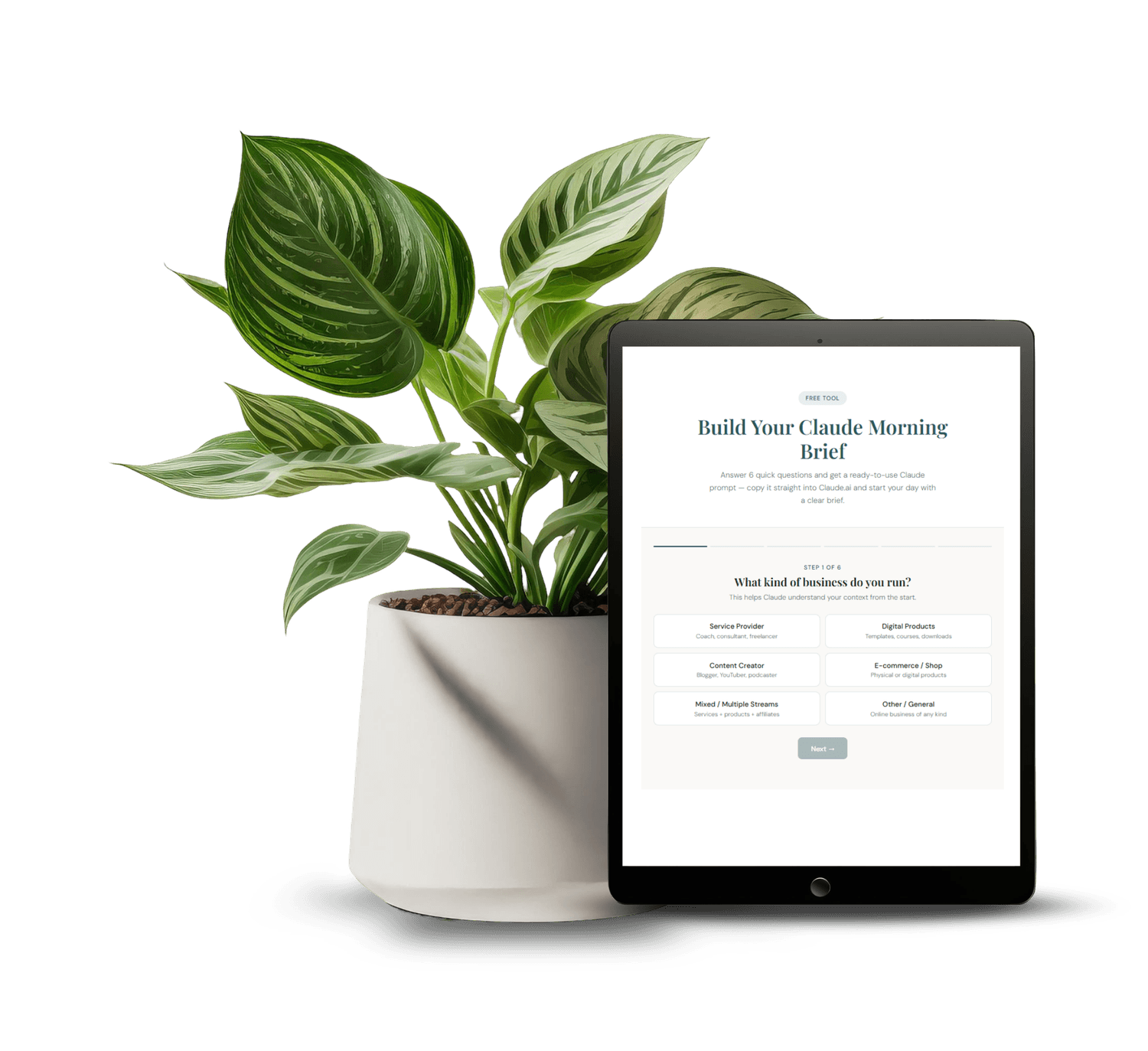
Morning Brief Claude AI Prompt
Set-up your custom morning brief for Claude
GRAB MY FREE APP
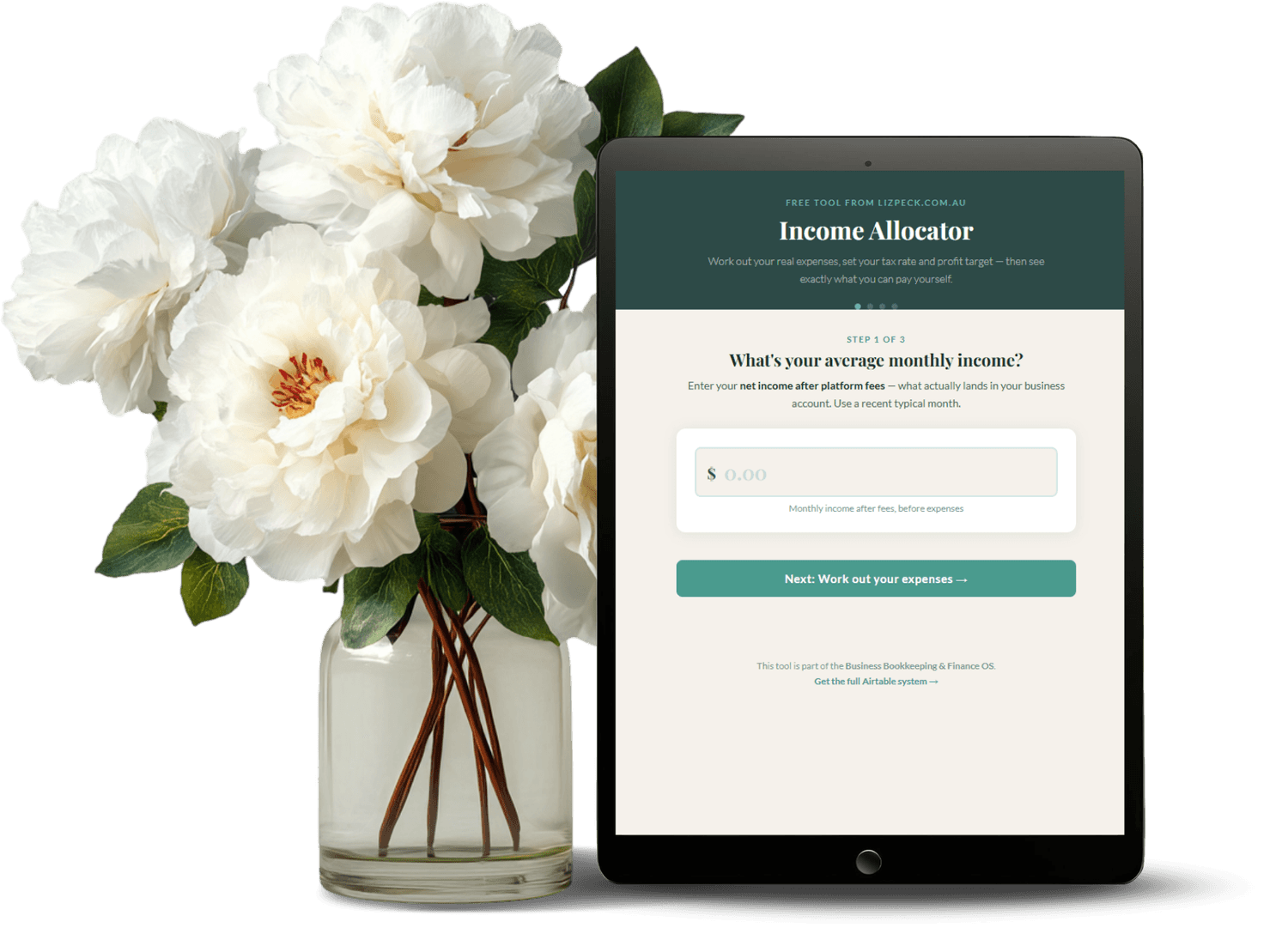
Income Allocator
Work out how to break down your income properly with percentages
How to Use AI in Your Online Business (Without Losing Your Voice)
The most common mistake people make using AI in their online business is giving it a topic and asking it to write. That’s not enough. If you want AI to produce content that sounds like you - not like everyone else - you need to train it on your voice before you ask it to do anything.
What’s Actually Going Wrong with AI Content
You’ve probably seen it. That slightly-too-polished, vaguely motivational, non-specific content that could have been written for any business in any niche. That’s what happens when AI is given a generic prompt with no real input.
It’s not a tool problem. AI writes to the middle - to the average of everything it’s trained on. Without a specific reference point, it produces average-sounding results. People refer to it as AI slop. It doesn’t help you stand out. It just adds to the noise.
What a Voice Bank Is (and Why It Works)
A voice bank is a document - or in my case, a table in Airtable - that captures how you actually write.
Not in vague terms like “casual but professional”. Those mean nothing to AI. A real voice bank includes specific phrases you naturally use, words you avoid, rules for how you structure your writing, and examples of actual sentences from your existing content.
When you reference this before any writing task, the output shifts dramatically. AI needs a specific reference point to produce specific results.
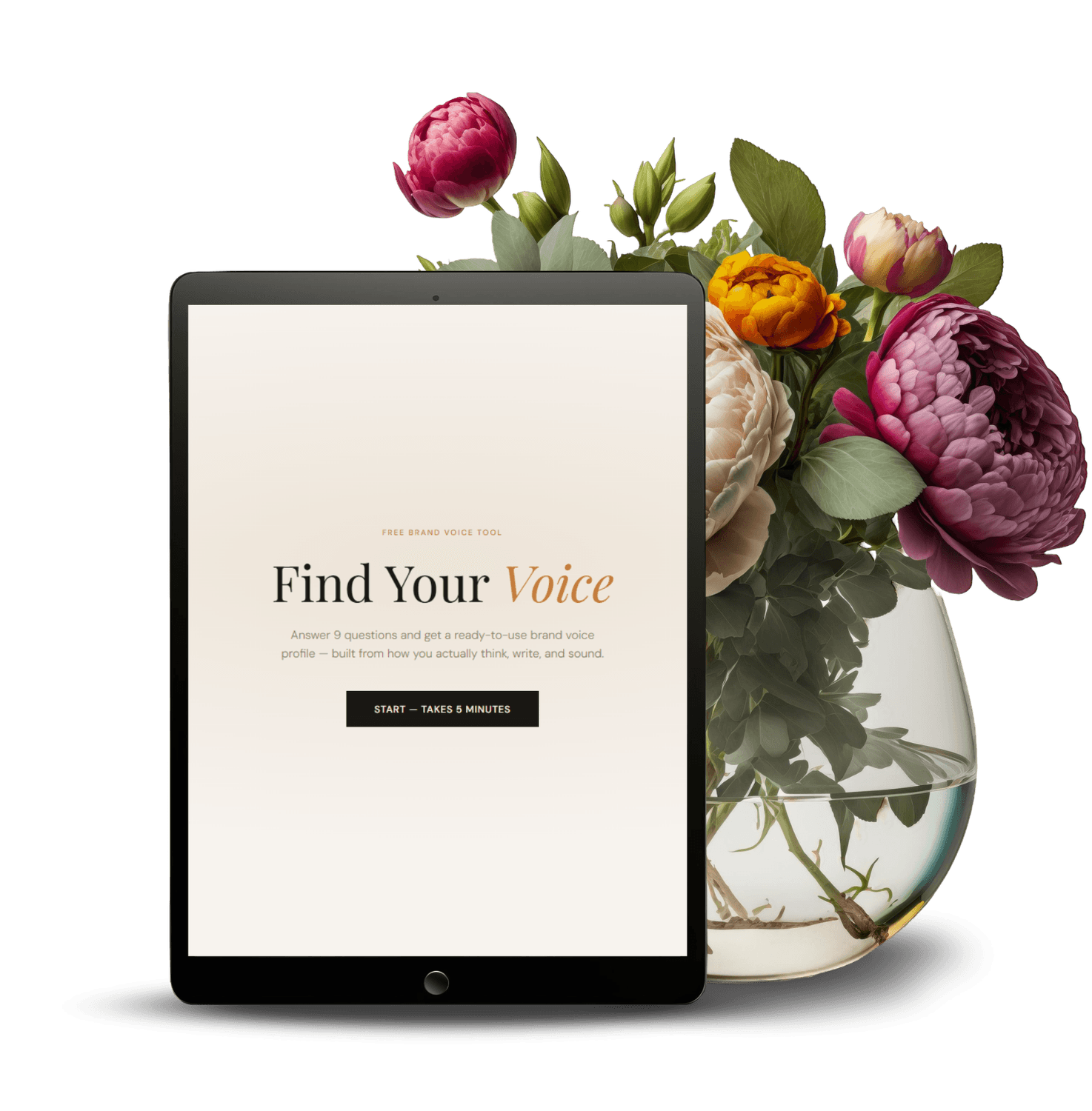
If you want to get yours sorted, I have a free tool that walks you through your brand voice and gives you something you can paste straight into any AI chat. You can access it here: lizpeck.com.au/opt-in-voice-bank
Opinions Matter More Than Tone
Tone is the surface level stuff. The part that actually makes content sound like you - the part that AI genuinely cannot replicate without your help - is your opinions.
What do you actually think about your niche? What do you push back on that most people accept? What have you seen work that nobody else is talking about?
I keep what I call a Thoughts and Opinions Library in Airtable. It’s a collection of my actual views on the topics I cover - what I’ve seen in practice, what people get wrong, why it matters. Before I ask AI to write anything, I pull from this library and drop the relevant opinions into my prompt.
The result is content that reflects what I genuinely believe, not what the AI thinks I probably believe.
Claude vs ChatGPT for Business
I use Claude for most business tasks. The honest difference between the two: ChatGPT tends to flatter you and waffle. It will tell you your idea is wonderful even when it’s not, and it can take three paragraphs to say what could be one sentence.
Claude is more direct. It gives you an opinion when you ask for one, follows detailed instructions better, and for business tasks that require precision - writing in a specific voice, following a specific format, completing a multi-step process - it outperforms.
The other difference is how memory works. Claude uses what are called skills - essentially standard operating procedures you save and reference in every session. Think of them like an employee onboarding document: you write it once, and every time Claude starts a new task, it picks up the same context. That’s how I get consistent results across every piece of content it produces.
What AI Is Actually Good For in My Business
The tasks where AI genuinely saves me time: first drafts of blog posts and emails when I’ve given it the right input, repurposing one piece of content into multiple formats, writing Airtable formulas (I describe what I want, it writes the formula), drafting replies to helpdesk tickets, and summarising research into something usable.
Where it creates more work: tasks where the brief is vague, anything that needs a specific opinion without being told what that opinion is, and anything requiring judgment calls based on context it doesn’t have.
Sometimes it’s just faster to do the task yourself. If a process is simple and short, the time spent briefing AI plus reviewing the output can exceed just doing it. AI earns its place on repetitive tasks that follow a consistent structure.
How to Set This Up Without Overthinking It
You don’t need a sophisticated system to start seeing better results. Three things make the biggest difference: a list of phrases you naturally use, a list of language you avoid (words like “game changer”, “unlock”, “skyrocket” - if they make you cringe when you read them back, write them down), and five sentences that capture your actual opinions on your niche.
That’s a functional voice brief. Paste it into your prompt before every writing task and you’ll notice the difference immediately.
When you’re ready to take it further, storing this in Airtable means it’s always accessible - you can pull it into automations with Make and connect it to Claude skills that reference it automatically. I use this setup for my entire blog and email workflow. If you’re curious about the full system, my post on building a business operating system in Airtable walks through the structure.
What Works Well (and What to Watch Out For)
What’s working well: AI removes the blank page problem - there’s always a draft to react to. Batch producing content is genuinely faster once you have good templates. Reusable prompts with voice training built in mean consistency without extra effort each time.
What to watch out for: AI will occasionally slip in language that doesn’t sound like you - always read before posting. Over-relying on AI for opinions produces content that feels thin, even if it’s technically correct. The tool is only as useful as the input you give it - shallow prompts get shallow results.
Frequently Asked Questions
Does Google penalise AI-generated content?
Google’s issue is with thin, unhelpful content - not the production method. Content that demonstrates real experience, genuine opinions, and useful information still performs well regardless of how it was produced. The voice training approach helps here because your actual views are in the content.
What’s the best AI tool for online business owners?
Claude for detailed business tasks and anything that requires following a precise brief. ChatGPT has more integrations. Try both and judge by the output quality for your specific use case.
How do I build a voice bank?
Start with phrases you naturally use, expressions you avoid, and five sentences capturing your real opinions. My free voice tool at lizpeck.com.au/opt-in-voice-bank takes you through it step by step.
Can I fully automate my content creation?
A lot of the production side, yes. But you still need to review before posting. Treat AI like a fast drafter, not a replacement for your judgment.
Do I need to know how to use automations?
No. The voice bank approach works with copy-paste prompts in any AI chat. Automations with Make are an optional upgrade. You can also read my post on using Claude AI in your online business for more practical examples.
Disclaimer:
This website may contain affiliate links. If you click a link and make a purchase, I may receive a small commission at no extra cost to you.

About Liz Peck
Liz Peck helps online business owners build the backend that runs without them - using Airtable for operations, Systeme for sales, and Claude AI for the work you hate doing twice. lizpeck.com.au
Disclaimer:
This website may contain affiliate links. If you click a link and make a purchase, I may receive a small commission at no extra cost to you.