

GRAB MY FREE TRAINING
The No Leaks Funnel

GRAB MY FREE APP
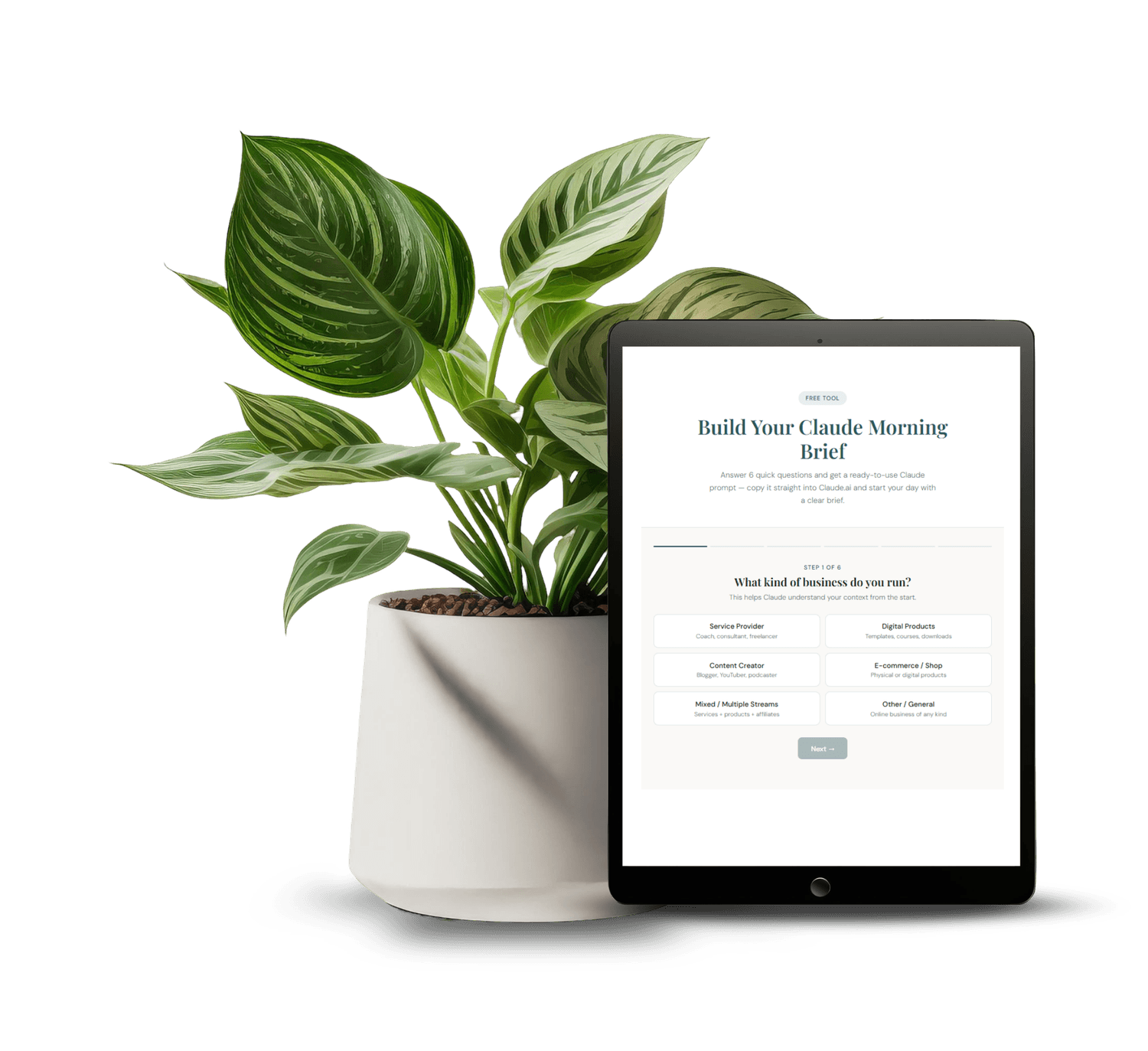
Morning Brief Claude AI Prompt
Set-up your custom morning brief for Claude
GRAB MY FREE APP
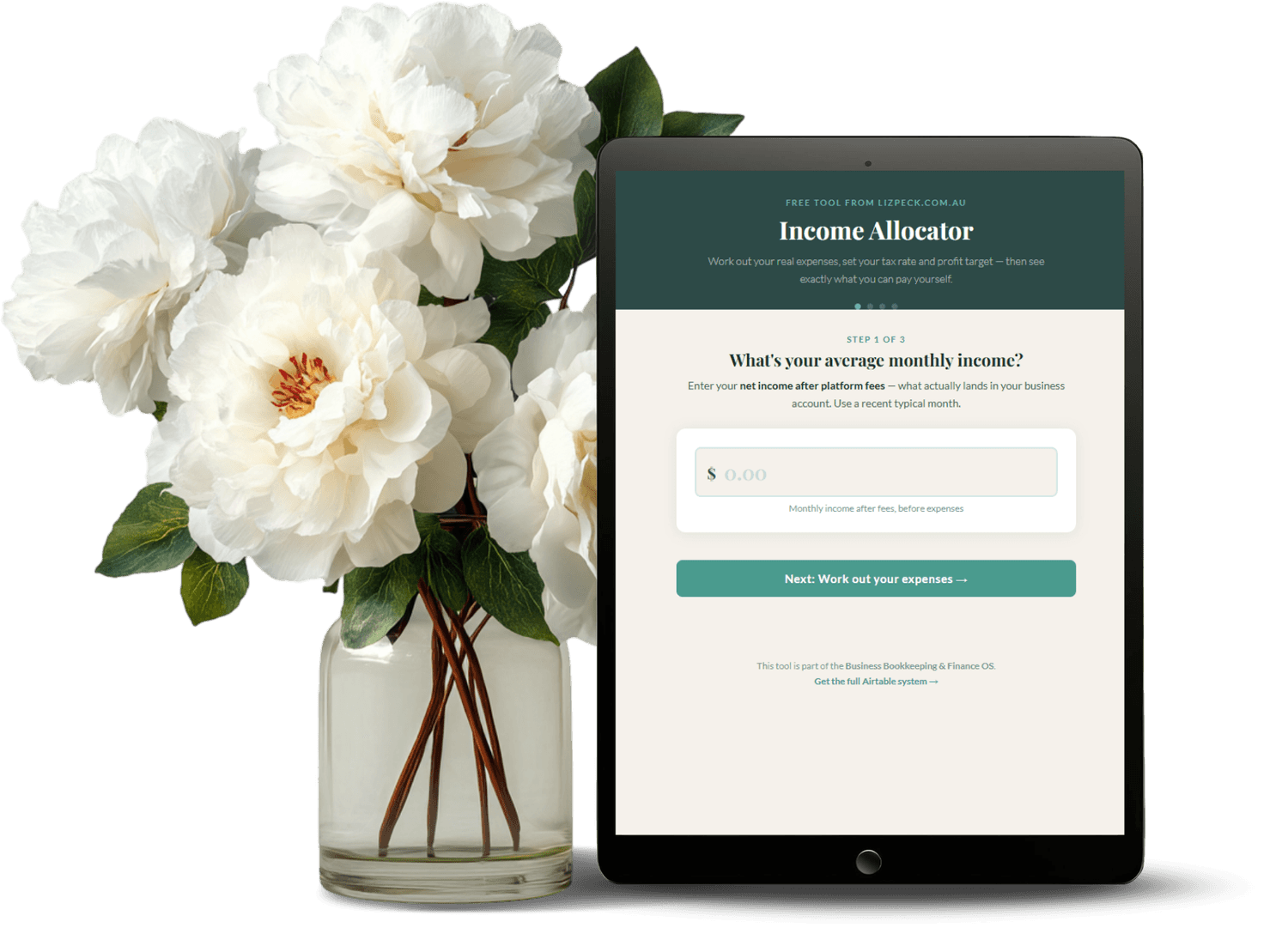
Income Allocator
Work out how to break down your income properly with percentages
How to Track Your Business Finances in Airtable (Without an Accountant)
You can track your business finances in Airtable without an accountant
You can absolutely track your business finances in Airtable without hiring an accountant. All you need is a simple set of tables for income, expenses, and profit allocations. Once it's set up, you'll have a clear picture of where your money is coming from and where it's going, without spreadsheet chaos or expensive software.
I put off tracking my finances properly for way too long. I had receipts in email, income coming in from multiple platforms, and no single place where I could see the full picture. It wasn't until I moved everything into Airtable that things actually clicked.
Why most online business owners avoid tracking finances
Most people I talk to know they should be tracking their finances better. They're not ignoring it because they don't care. They're ignoring it because the options feel overwhelming.
Accounting software like Xero or QuickBooks works, but it's designed for accountants. The interface is confusing if you're not trained in it. You end up paying for software you barely use, and then you still can't find what you're looking for.
Spreadsheets are the other option. And they work fine until they don't. Once you're tracking income from Etsy, Systeme, direct sales, affiliate commissions, and expenses across a dozen tools, a spreadsheet becomes a mess. Nothing links together. You can't filter or sort in useful ways. It just gets abandoned.
You can absolutely track your business finances in Airtable without hiring an accountant. All you need is a simple set of tables for income, expenses, and profit allocations. Once it's set up, you'll have a clear picture of where your money is coming from and where it's going, without spreadsheet chaos or expensive software.
I put off tracking my finances properly for way too long. I had receipts in email, income coming in from multiple platforms, and no single place where I could see the full picture. It wasn't until I moved everything into Airtable that things actually clicked.
You can absolutely track your business finances in Airtable without hiring an accountant. All you need is a simple set of tables for income, expenses, and profit allocations. Once it's set up, you'll have a clear picture of where your money is coming from and where it's going, without spreadsheet chaos or expensive software.
I put off tracking my finances properly for way too long. I had receipts in email, income coming in from multiple platforms, and no single place where I could see the full picture. It wasn't until I moved everything into Airtable that things actually clicked.
What I actually track in Airtable
My setup is simpler than you'd think. I have three core tables: Income, Expenses, and Profit First Allocations.
The Income table captures every sale. The date, the customer, the amount, which platform it came from, and which product it's linked to. Because Airtable is a relational database, I can link each income record to the actual product record. That means I can see total revenue per product without any manual calculation.
The Expenses table is the same idea. Date, vendor, category, amount, and whether it's been logged with my tax agent. I photograph every receipt and attach it directly to the record. No more digging through emails to find that one invoice from three months ago.
The Profit First Allocations table is where I split income into owner pay, profit, and operating expenses. This follows the Profit First method, and Airtable's formula fields handle the percentages automatically.
The part that changed everything for me
Before Airtable, I had no idea how much I was actually spending on tools. I knew the rough number, but when I added it all up properly, I was paying for things I'd forgotten about. Subscriptions I signed up for during a launch and never cancelled. Tools that overlapped with other tools. It was eye-opening.
I've noticed this pattern with a lot of online business owners. Many sellers pay for tools they barely use when Google Workspace and Canva cover most needs. A lean tech stack protects profit, especially early on. Once I could actually see what was going out each month, I cut three subscriptions in the first week.
You can absolutely track your business finances in Airtable without hiring an accountant. All you need is a simple set of tables for income, expenses, and profit allocations. Once it's set up, you'll have a clear picture of where your money is coming from and where it's going, without spreadsheet chaos or expensive software.
I put off tracking my finances properly for way too long. I had receipts in email, income coming in from multiple platforms, and no single place where I could see the full picture. It wasn't until I moved everything into Airtable that things actually clicked.
How Airtable makes finance tracking easier than spreadsheets
The main advantage of Airtable over a spreadsheet is the linking. In a spreadsheet, your income data and your product data live in separate tabs with no real connection. In Airtable, they're linked records.
That means when I click on a product, I can see every sale, every expense related to it, and the total revenue. I don't have to run a VLOOKUP or build a pivot table. The data is just there.
Airtable's views are the other thing that makes a difference. I have a view that shows me this month's expenses, sorted by category. Another view shows income by platform. A third shows everything that hasn't been logged with my tax agent yet. Each view is just a different lens on the same data.
If you haven't used Airtable before, you can sign up using my link and get started on the free plan. The interface is more like a database than a spreadsheet, but if you've ever used Excel, you'll pick it up quickly.
Connecting it to automations
Once your finance data is in Airtable, you can automate parts of the process. I use Make to pull in sales notifications from Systeme and create income records automatically. When a sale comes through, a new record appears in my Income table with the customer name, product, and amount already filled in.
You can also set up automations to remind you to log expenses weekly, or to flag when a subscription renewal is coming up. The automation side is optional, but it removes the manual data entry that makes finance tracking feel like a chore.
What to watch out for
Airtable is not accounting software. It doesn't generate tax reports or BAS statements. You'll still need an accountant or tax agent for the compliance side. What Airtable does is give you visibility. You can see exactly where your money is going, which products are profitable, and whether your expenses are creeping up.
The free plan gives you 1,000 records per base. If you're tracking every individual sale and every expense, you'll hit that limit faster than you'd expect. The paid plan removes the record limit and adds features like automations and sync. It's worth considering once your base starts filling up.
The other thing to be aware of is that you need to actually use it. This isn't something you set up once and forget. The system works because you log things as they happen. If you fall behind, the data becomes useless. I've found that keeping it simple is what makes it sustainable. If the system is complicated, you'll stop using it.
The system I use for this
I built a system called the Business Bookkeeping System that does all of this in a pre-built Airtable base. It includes the Income, Expenses, and Profit First tables, plus a subscriptions tracker and expected expenses table. Everything is linked and ready to use. If you want the structure without building it from scratch, that's what it's designed for.
FAQ
Can I track business finances in Airtable for free?
Yes. Airtable's free plan gives you 1,000 records per base, which is enough to test the setup and get started. You'll likely need a paid plan once your business grows, but you can use the free tier to see if it works for you.
Do I still need an accountant if I use Airtable?
Yes. Airtable gives you visibility into your finances, but it's not a replacement for professional tax advice or compliance reporting. Use Airtable for day-to-day tracking and hand the organised data to your accountant at tax time.
How long does it take to set up finance tracking in Airtable?
If you're building from scratch, a basic setup takes a couple of hours. If you use a pre-built template like the Business Bookkeeping System, you can be up and running in under 30 minutes.
Is Airtable better than a spreadsheet for finance tracking?
For most online business owners, yes. The linked records, views, and automation capabilities make it much easier to maintain than a spreadsheet. Once your finances involve multiple income sources and expense categories, a spreadsheet gets messy fast.
Can I automate my finance tracking in Airtable?
Yes. You can use Airtable's built-in automations or connect external tools like Make to automatically create income records when sales come in, send reminders for expense logging, or flag upcoming subscription renewals.
Disclaimer:
This website may contain affiliate links. If you click a link and make a purchase, I may receive a small commission at no extra cost to you.

About Liz Peck
Liz Peck helps online business owners build the backend that runs without them - using Airtable for operations, Systeme for sales, and Claude AI for the work you hate doing twice. lizpeck.com.au

Disclaimer:
This website may contain affiliate links. If you click a link and make a purchase, I may receive a small commission at no extra cost to you.