

GRAB MY FREE TRAINING
The No Leaks Funnel

GRAB MY FREE APP
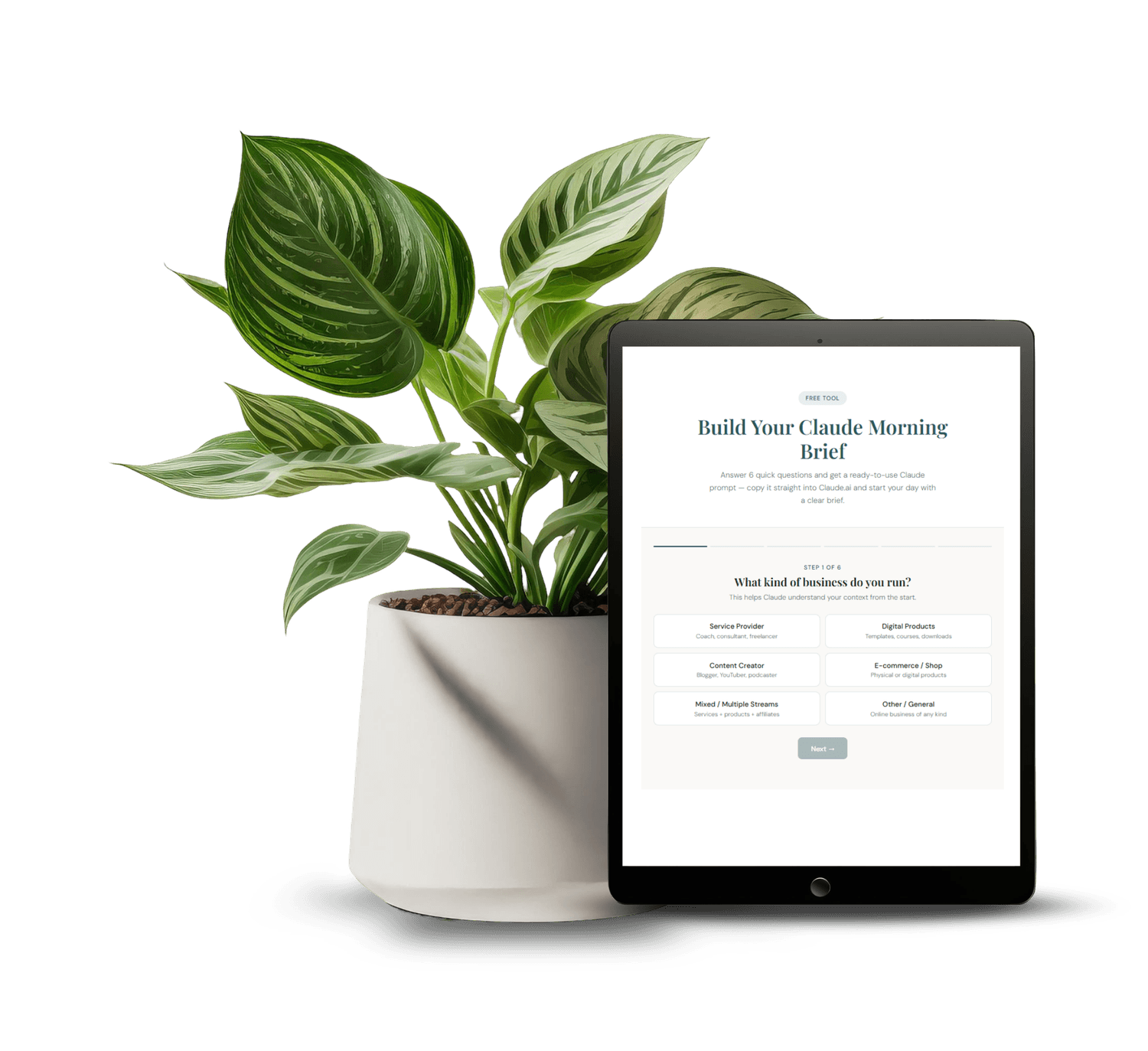
Morning Brief Claude AI Prompt
Set-up your custom morning brief for Claude
GRAB MY FREE APP
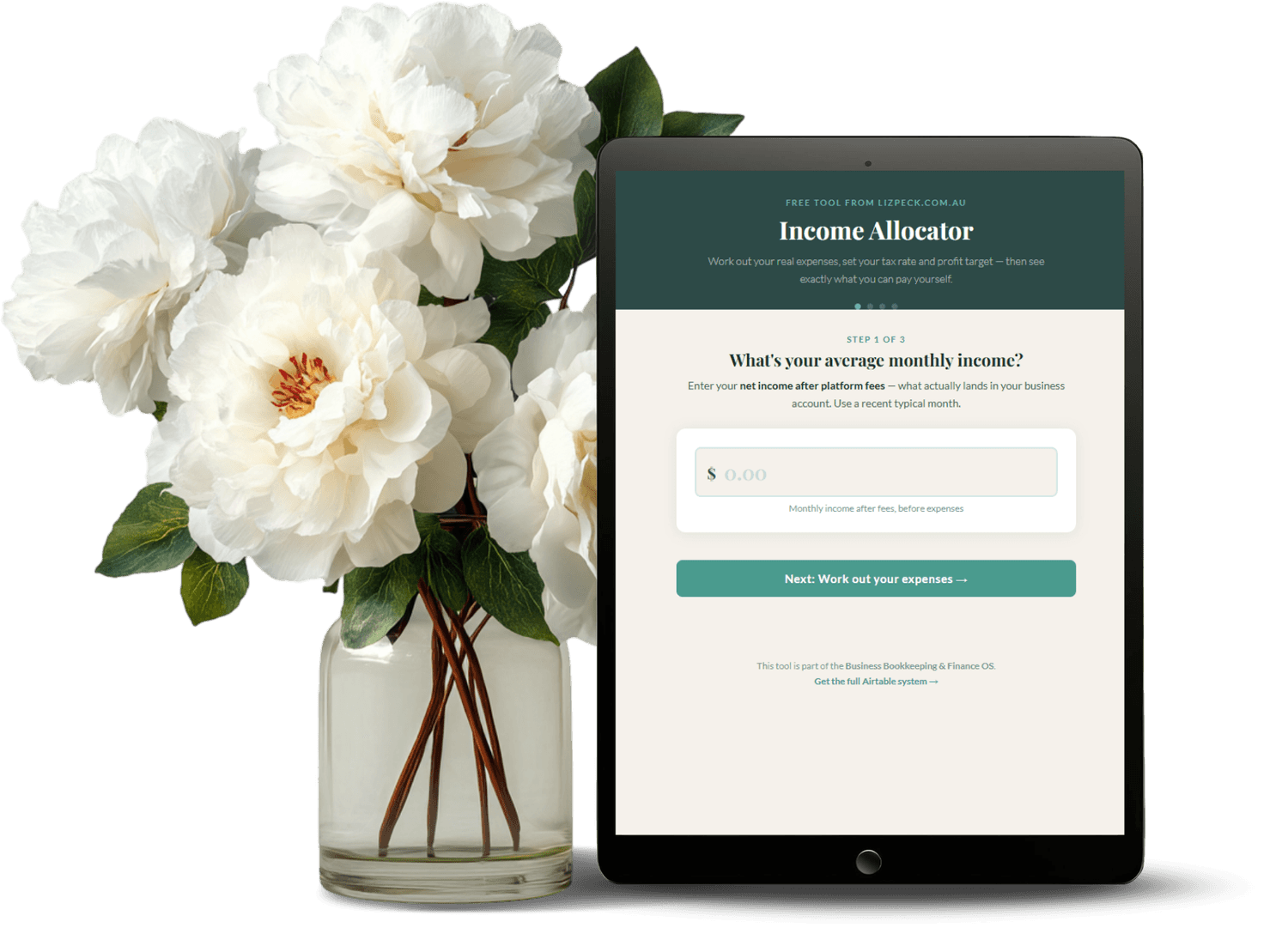
Income Allocator
Work out how to break down your income properly with percentages
How to Price Your Digital Products (Without Undercharging or Overthinking It)
Pricing is the part of selling digital products that most people get wrong in the same direction: too low. They undercharge because they're not sure what their product is worth, or because they're worried no one will buy at a higher price, or because they feel weird asking for money in the first place.
The practical answer to how to price digital products is that you are not pricing based on how long it took you to make it. You're pricing based on the value it delivers and what similar products in your market are charging.
That sounds simple. In practice, it requires you to do a bit of research and then make a decision and stick with it rather than second-guessing yourself every time you don't make a sale.
Why Low Prices Don't Always Mean More Sales
There's a common assumption that lower price equals more buyers. It's not that straightforward. A $7 product often converts worse than a $47 product because buyers at very low price points can be less committed, the perceived value is lower, and you attract people looking for the cheapest option rather than people looking for a real solution.
This doesn't mean you should price high just to look premium. It means price should reflect value, not anxiety. Underpricing doesn't just hurt your income. It can actually hurt sales.
I've watched sellers on Etsy price their templates at $2 and wonder why no one seems to value them. Then they raise the price to $15 and start getting more sales with better reviews. Price signals quality in a way that's uncomfortable to accept until you see it in your own data.
Understanding the Value Your Product Actually Delivers
Before you set a price, write down what your product actually does for the buyer. Not the features (it's a 10-page Canva template), but the outcome (they save 3 hours designing social graphics and end up with something that looks professional).
That outcome has a value. Three hours of a busy person's time is worth something. A professional-looking graphic that they couldn't create themselves is worth something. The price should reflect that value, not the cost of the Canva account you used to make it.
This is also how you talk about your product in your listing and your emails. Not here are the features but here's what this does for you. That language change alone changes how price is perceived.
Research: What Are Comparable Products Charging?
Look at what's already selling in your niche and at what price. Not to copy the price exactly, but to understand the market range. If similar products are selling at $15 to $50, pricing yours at $3 sends a signal and pricing at $200 is going to need serious justification.
You want to sit within the range of products that are similar in type and depth, with some room to charge at the top of that range if your product is more comprehensive or better presented.
On Etsy, you can also see what price points get the most sales. Look at the bestsellers in your category and note their pricing. That's market data. Use it.
Pricing Tiers: When to Offer Multiple Options
Once you have one product selling, the next question is whether to create tiers. A basic version, a complete version, and a premium bundle is a common structure that works well for digital products.
The reason tiers work is that they let buyers self-select based on how much they want to invest. The buyer who just wants a quick solution takes the basic version. The buyer who wants everything takes the bundle. Without tiers, you're leaving both types of buyers with a binary yes/no decision.
That said, don't add tiers just because you think you should. Build the core product well first. Add tiers when you have evidence that buyers want more.
Launch Pricing vs Evergreen Pricing
Your launch price and your ongoing price can be different, and that's a reasonable strategy. A lower launch price creates urgency for early buyers and gets you initial reviews and testimonials that make the evergreen price easier to justify.
If you use a launch price, be honest about it. "I'm pricing this at $27 for launch week while I collect feedback, then it goes to $47" is a real reason that buyers respect. Fake countdown timers and fake scarcity are not.
Once you've had a few successful sales at the launch price and collected some feedback, raise it. Don't leave the launch price running indefinitely. It becomes your real price and it's usually too low.s
Discounts, Bundles, and When Not to Use Them
Discounts work when there's a real reason for them. A launch discount with a set end date. A bundle that genuinely offers better value than buying separately. A seasonal promotion with a specific hook.
Discounts don't work when they're just you feeling nervous that no one will buy at full price. That kind of discount trains your audience to wait for the sale and devalues the product over time.
[The real reason most digital products never get listed or sold](https://www.lizpeck.com.au/the-real-reason-most-digital-products-never-get-listed-or-sold) often comes down to confidence in the product, not the price itself. If you don't believe the product is worth the price, your marketing will reflect that. [Consistency matters](https://www.lizpeck.com.au/why-consistency-matters-more-than-talent-on-etsy) in pricing just like it matters in posting. Keep your price stable, let the SEO work, and resist the urge to keep fiddling.
When to Raise Your Prices
The clearest signal that it's time to raise your price is when you're consistently selling at your current price with a good conversion rate. If you're selling 20 units a month of a $15 template, test whether a $25 or $30 price point affects volume. A slight drop in unit sales at a higher price often means more total revenue.
Other signals: you've got consistent 5-star reviews, your product has grown in scope, or you have proof of the outcome it delivers (customer testimonials, screenshots, results). Those things justify higher prices.
Don't wait until you feel "ready" to raise prices. You won't feel ready. Just do it and see what happens.
Pricing for Courses, Templates, and Digital Downloads
Different digital product types have different expected price ranges. Digital downloads like templates and printables usually sit between $5 and $50. Canva template packs tend to be $10 to $40. Guides and workbooks are often $15 to $47. Mini courses are typically $27 to $97. Signature courses or comprehensive systems are $97 and up.
These aren't rules. They're market norms. Your job is to know where your product fits and price accordingly, then communicate the value well enough to justify whatever price you choose.
If you're building multiple products over time, the [best Airtable templates for online business owners](https://www.lizpeck.com.au/best-airtable-templates-online-business) can help you keep everything organised in one place as your product suite grows.
The Mindset Part (Because It's Not Just Practical)
Pricing anxiety is real and it's worth naming. A lot of people who undercharge aren't undercharging because they don't know how to research market prices. They're undercharging because they feel uncomfortable asking for money, or they're not sure their product is good enough, or they're afraid of being judged for "overcharging."
None of those are pricing problems. They're confidence problems. And the only way through them is to test your pricing on real buyers and see what happens.
[Systeme.io](https://systeme.io/?sa=sa0253713462c64438853bb98ed6d79fbe19202a9a){aff} makes it easy to set up a product page and test different price points without a complicated tech setup. The [Online Business Starter Stack](https://www.lizpeck.com.au/online-business-starter-stack) includes foundational templates for getting your business set up, including a link-in-bio page and lead magnet tools that help you build the platform your products need to reach buyers.
FAQ
How do I know if my digital product is priced too high?
If you're getting consistent traffic to your listing (views, clicks) but very few purchases, that's worth investigating. Could be price, could be the description, could be the thumbnail. Look at the data before assuming price is the issue.
Should I start low and raise prices later?
A launch price strategy can work, but make sure you're clear about when and why it will increase. "Starting at $X for launch" with a real end date is fine. Indefinitely low prices become your real price.
Is it okay to charge the same as competitors?
Yes, if your product is comparable in quality and scope. You don't need to undercut to get buyers. If your product is better, charge more.
What if someone says my product is too expensive?
That's feedback, not fact. Some buyers will always want lower prices. That doesn't mean your price is wrong. Look at whether this is one person's opinion or a pattern in your data.
Do I need to offer refunds on digital products?
Etsy has its own policies, and beyond that it's up to you. Most digital product sellers have a no-refund policy because the product can be used immediately on download. Being clear about this in your listing protects you.
Disclaimer: This website may contain affiliate links. If you click a link and make a purchase, I may receive a small commission at no extra cost to you.
Disclaimer:
This website may contain affiliate links. If you click a link and make a purchase, I may receive a small commission at no extra cost to you.

About Liz Peck
Liz Peck helps online business owners build the backend that runs without them - using Airtable for operations, Systeme for sales, and Claude AI for the work you hate doing twice. lizpeck.com.au

Disclaimer:
This website may contain affiliate links. If you click a link and make a purchase, I may receive a small commission at no extra cost to you.