

GRAB MY FREE TRAINING
The No Leaks Funnel

GRAB MY FREE APP
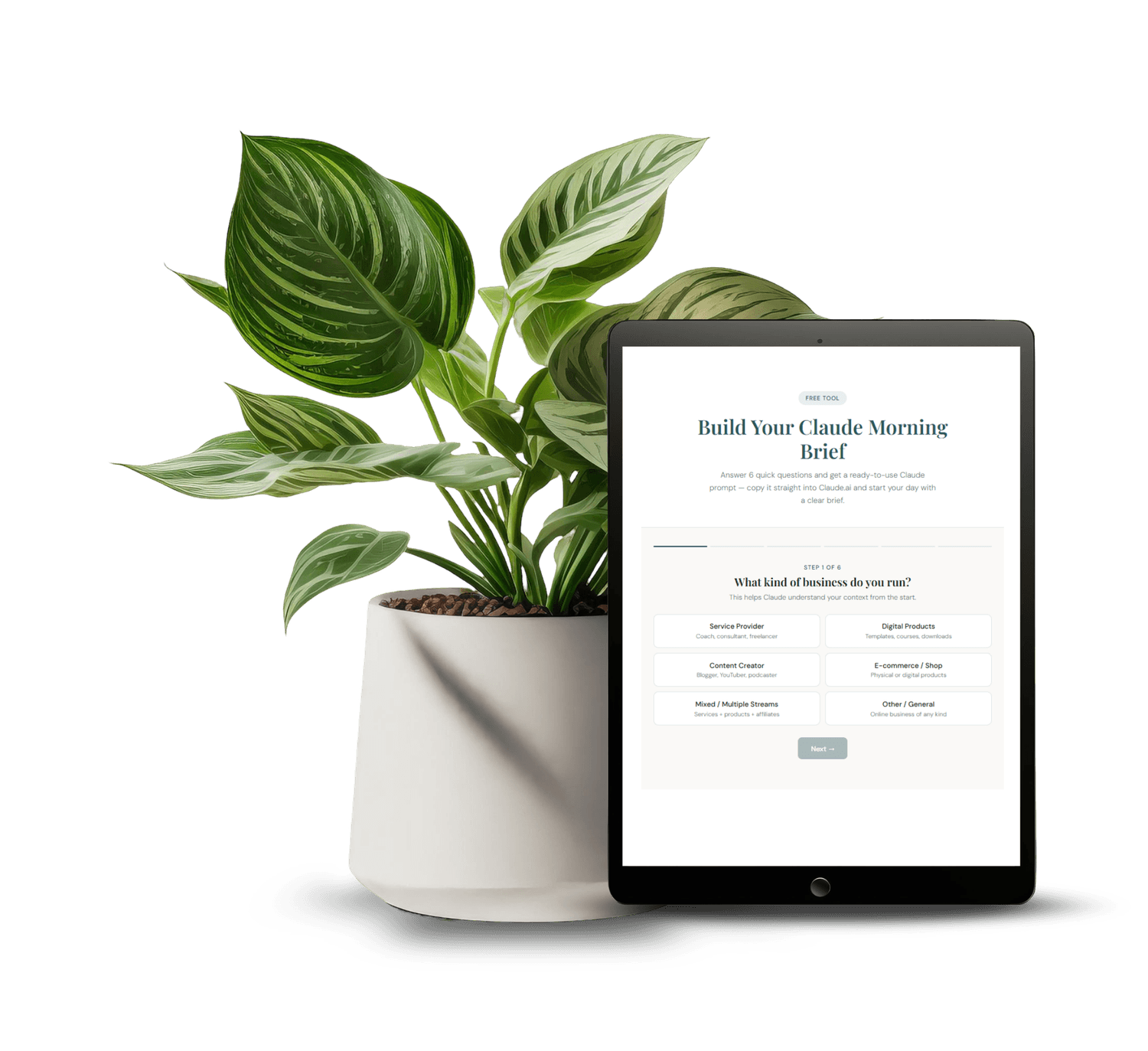
Morning Brief Claude AI Prompt
Set-up your custom morning brief for Claude
GRAB MY FREE APP
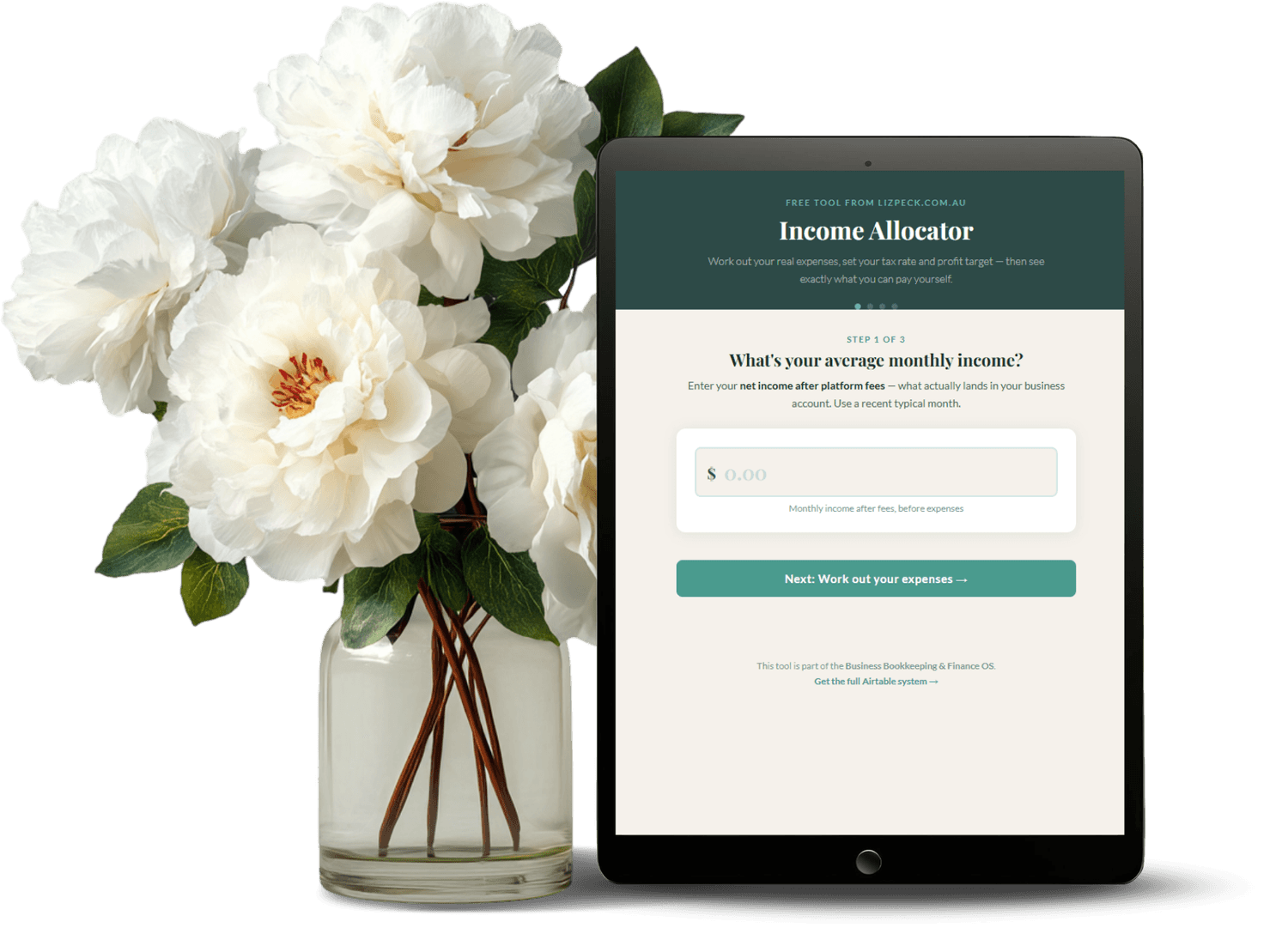
Income Allocator
Work out how to break down your income properly with percentages
How to Plan and Run a Digital Product Launch Without the Chaos
If you've ever launched a digital product and felt like you were assembling the plane while it was already in the air, you're not alone. Most first launches are chaotic not because the seller didn't work hard enough, but because there was no real plan. Just a product, a vague idea of "I'll post about it," and a lot of last-minute scrambling.
Learning how to launch a digital product properly is less about marketing tactics and more about having a structure you can follow before, during, and after the launch. The tactics matter, but structure is what makes them work together instead of feeling like a random series of stressful events.
I've run launches from inside my own business and helped people think through theirs, and the difference between a smooth launch and a chaotic one almost always comes down to whether the plan was documented or just in someone's head.
What a Digital Product Launch Actually Is (And What It Isn't)
A launch is a defined window of time where you actively promote a product to drive sales. It has a start date, an end date, and a clear structure. It is not the same as just "posting about your product."
A lot of people skip the launch model entirely because it feels complicated, and instead just list their product and share it once. That can work for evergreen products with good SEO, but it leaves a lot of sales on the table. A launch creates urgency, focuses your audience's attention, and gives you a reason to talk about the product multiple times without just repeating yourself.
The simplest launch structure: a pre-launch period to build anticipation, a launch period with a clear open/close or offer, and a post-launch review. Three phases. That's it.
Pre-Launch: What to Prepare Before You Open Cart
The week before your launch is the most important. This is where you sort out all the things that will derail you if left until launch day. Check that your sales page is complete and live. Test your checkout. Send yourself a test order and confirm the thank you page and delivery email work correctly.
Write your launch emails in advance. If your launch is 5 days, draft all 5 emails before day one. Use whatever email platform you use, Systeme handles this well as it combines your funnels, email campaigns, and checkout in one place, which removes a lot of the logistical complexity.
Also do a simple automation check. Make sure any confirmation emails, tag assignments, or welcome sequences are set up and running. The time to find a broken automation is the day before you launch, not two hours into it.
Setting a Revenue Target (Without Making It All About Money)
Having a revenue target isn't about being obsessed with money. It's about having something to measure the launch against. Without a target, you'll never know if the launch was good or not. You'll just finish it feeling vaguely uncertain.
A realistic target for a first launch is based on your list size and a conservative conversion rate, not on what you want to earn. If you have 500 subscribers and a $47 product, a 1% conversion rate is 5 sales at $235. Is that realistic? Is that your target? Knowing this upfront means you won't feel like the launch failed when it was actually on track.
Write the target down. And write down what you think will work and what you're unsure about, before the launch starts. That honesty becomes your post-launch review.
During the Launch: What to Actually Do Each Day
Most of the work in a launch happens before day one. During the launch itself, your job is to show up, answer questions, and send the emails you already wrote. Not to create new content on the fly or make changes to the sales page every day because you're nervous.
Stick to your plan. Send your emails. Post on social if that's part of your strategy. Answer comments and DMs quickly because responsiveness during a launch builds confidence in undecided buyers.
The simple automation ideas that save time during a launch are the ones you set up before it starts. Auto-tagging buyers, triggering welcome sequences, and sending abandoned cart follow-ups, if your platform supports it. Set them up once and let them run.
Handling Sales (and No Sales) During the Launch Window
Sales rarely come in a straight line. Most launches follow a pattern: a small flurry at the beginning when you open cart, a slow middle stretch where it feels like nothing is happening, and then a rush at the end when the deadline hits. If you're in the middle and it's quiet, that's normal. Keep going.
If you hit the end of the launch and sales are lower than you hoped, resist the urge to extend the deadline. Extending trains your audience that deadlines aren't real. Instead, close the cart as planned, note what happened, and use that data in your post-launch review.
If sales are strong, don't change anything. Don't add new bonuses mid-launch, don't lower the price, don't suddenly start over-communicating. Stick to the plan. Let the launch do what you designed it to do.
Wrapping Up the Launch and Transitioning to Evergreen
When the cart closes, close it. Send a final email, take the page down or redirect it, and let the launch end. Then take a day before you start analysing anything. You've been in execution mode — give yourself a breath before you go into review mode.
Once you're ready, look at what to automate first in your online business before your next launch so each one gets easier. The things that drained you this time — writing emails at midnight, manually tracking who bought, forgetting to post on close day — those are the things to systematise before you do it again.
Transitioning to evergreen doesn't mean abandoning the product. It means letting it work in the background through your content and email sequences while you build toward the next launch. A good launch plants seeds that convert for months.
The Post-Launch Review (And Why Most People Skip It)
Most people skip the post-launch review because they're tired and want to move on. That's understandable. But skipping it means you carry the same problems into the next launch — the same guesswork about what worked, the same uncertainty about your audience.
A simple review looks like this: What was the revenue? What was the conversion rate? Where did most buyers come from? What piece of content or email drove the most sales? What felt hard that doesn't have to be? Write those answers down while they're fresh.
You don't need a complicated system. A single document or Airtable record with your launch numbers and three to five key takeaways is enough to make your next launch meaningfully better than this one.
Tools and Systems That Make Launching Less Overwhelming
You don't need an elaborate launch tech stack. You need a sales page, a checkout, an email sequence, and a way to deliver the product. That's it. The real reason most digital products never get listed or sold isn't the tools — it's the lack of a clear plan for what happens before, during, and after someone buys.
For email, you need at minimum: a launch announcement, two to three emails during the window, and a close day email. For social, you need a handful of posts you write before the launch starts, not in real time. That's your whole launch content plan.
Where people overcomplicate it: adding new platforms mid-launch, building elaborate funnels they don't understand, obsessing over landing page design when the copy isn't written. Keep the system small enough that you can run it without help.
Building a Launch System So You Can Repeat It
The goal of your first launch isn't perfection. It's information. You're learning what resonates, who buys, what questions come up, and what you'd do differently. That's the data you use to build a better second launch.
After each launch, save your emails, your timeline, your sales page, and your key numbers. Build a launch folder you can pull from next time. The second launch will take half the time because you won't be building from scratch.
If you want a complete system for managing your funnels, sales pages, and launch sequences in one place, the Funnels, Sales & Launch System is built for exactly this — a structured Airtable setup that keeps your launches organised from pre-launch through to post-launch review.
FAQ
How long should a digital product launch be?
Most effective launches run between five and ten days. Shorter than that and you don't give your audience enough time to see your content and decide. Longer than that and momentum drops off. A seven-day window with a clear deadline is a good starting point.
Do I need a big audience to have a successful launch?
No. A small, warm audience can convert better than a large, cold one. Focus on nurturing the people already following you before you launch rather than trying to grow your list at the same time.
What if no one buys during my launch?
That's data, not failure. Look at your open rates, your click rates, and any conversations you had. Usually the problem is one of three things: the offer isn't clear, the audience isn't warm enough, or the timing was off. Use the post-launch review to figure out which one.
How many emails should I send during a launch?
At minimum: one to announce the launch, one mid-launch to address objections, and one on close day. Three emails is the floor. Five to seven is reasonable for a seven-day window. You will not annoy people who want to buy — you will only annoy people who were never going to buy anyway.
Can I launch a product I haven't finished building yet?
Yes, and it's often better to do it that way. Validate the offer before you build everything. Just be clear with buyers about what they're getting and when. Presales and beta launches are legitimate strategies used by experienced product creators.
Disclaimer: This post may contain affiliate links. If you click a link and make a purchase, I may earn a small commission at no extra cost to you. I only recommend tools and resources I use and trust.
Disclaimer:
This website may contain affiliate links. If you click a link and make a purchase, I may receive a small commission at no extra cost to you.

About Liz Peck
Liz Peck helps online business owners build the backend that runs without them - using Airtable for operations, Systeme for sales, and Claude AI for the work you hate doing twice. lizpeck.com.au

Disclaimer:
This website may contain affiliate links. If you click a link and make a purchase, I may receive a small commission at no extra cost to you.