

GRAB MY FREE TRAINING
The No Leaks Funnel

GRAB MY FREE APP
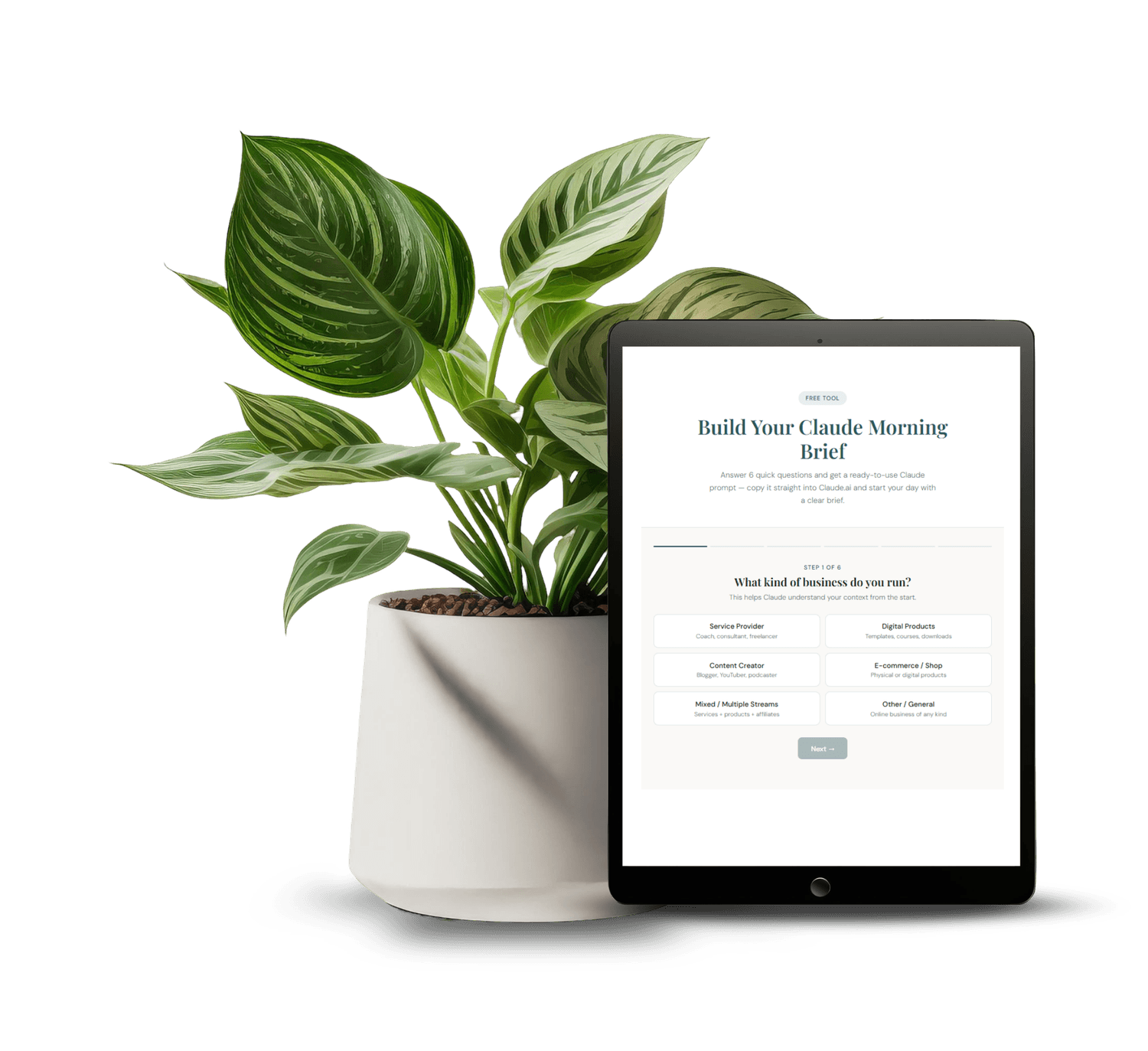
Morning Brief Claude AI Prompt
Set-up your custom morning brief for Claude
GRAB MY FREE APP
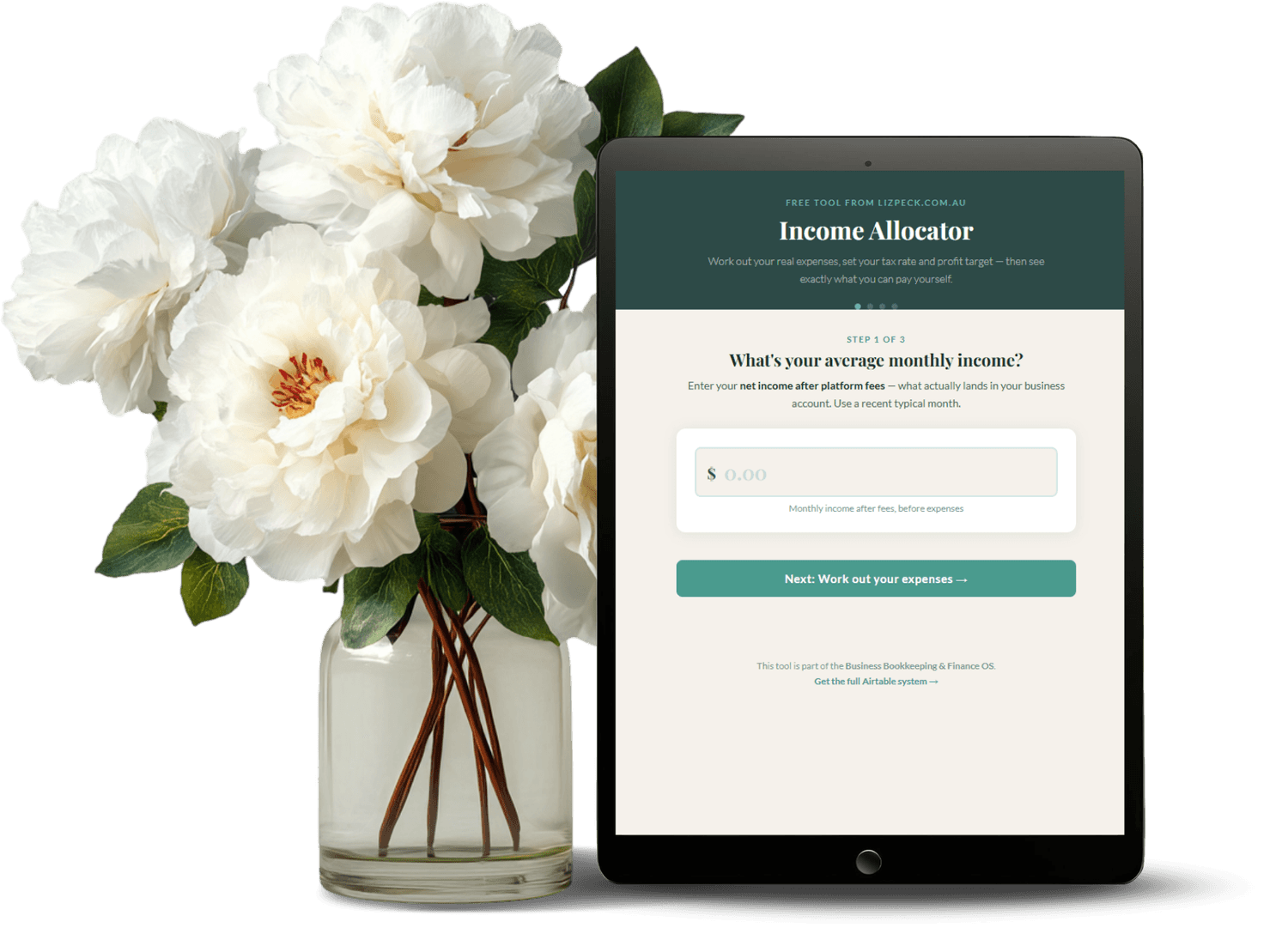
Income Allocator
Work out how to break down your income properly with percentages
How to Plan and Run a Digital Product Launch Without the Chaos
The most common way I see people launch a digital product is by posting about it on Instagram, maybe sending one email, and then wondering why sales were quiet. It is not a launch problem. It is a process problem.
I think of a digital product launch as a special invitation. Not a billboard. Not a hard sell. An invitation extended to people who are already paying attention, with a clear reason to act during the launch window.
The good news is that once you run one launch properly, you have a repeatable template for every launch after it.
Why Tiered Pricing Makes Launches Work
The most successful launches I have seen all use tiered pricing. The early birds get the best deal, which rewards the people who jump in first and creates genuine urgency without being manipulative about it.
Here is how the structure works. You set a launch window, say seven days. For the first 48 hours, the price is at its lowest. You are clear about when it goes up and by how much. After 48 hours, the price increases to the next tier. At the end of the launch window, the product moves to its regular price.
This trains your audience over time. People who buy early in your first launch will do it again in the next one because they know the deal is better at the start.
Where to Announce Your Launch
Your email list is your most important launch channel. If you don't have one yet, that is the priority to build before your next launch. People who opted in to hear from you are more likely to buy than a social media follower who is mostly scrolling.
Announce your launch to your email list on day one, remind them when the price is about to change, and send a final email at the end of the window. Three emails minimum for a launch sequence.
Social media and your website or blog are supporting channels. They can help, especially if you have an audience, but the email list is where the reliable conversions come from.
Building a Repeatable Launch Checklist
The first time you launch, you make a checklist of every step you took. Write it down in the order it happened. Next launch, you use that checklist and tick off each item as you go.
Over time you simplify. You spot what was unnecessary, what could be automated, and what should happen earlier in the process. After a few launches, you have a tight, reliable system that does not require you to reinvent anything.
This is exactly how chaos becomes calm. Not by doing less, but by documenting what works and repeating it.
What to Automate in Your Launch Process
Some parts of a launch are good candidates for automation. Order tracking and tagging buyers in your email platform, for example. Updating a spreadsheet or Airtable table with each new sale. Sending the delivery email automatically after purchase.
Tools like Make can connect your payment platform to your CRM and handle a lot of this automatically. Once you have set it up once, it runs the same way every launch without you having to touch it.
The goal is that by launch day, the admin is already handled. You focus on the promotion.
Tracking Your Launch Results
Once the launch is over, record everything. Revenue, units sold, where buyers came from, what the email open rates were, what worked and what you would change. This data is the foundation of your next launch.
Most business owners skip this step and then repeat the same mistakes or forget what worked. A launch log in Airtable makes this easy. Each launch gets a record with all the key numbers and your notes on what to improve.
If you want to get this structured properly, the Funnels, Sales and Launch System is the done-for-you Airtable system I use to plan and track every launch.
What to Do After the Launch Window Closes
After the launch ends, the product moves to its regular price and becomes an evergreen offer. This is where the real work happens. You now have a product, a price, and ideally a funnel that converts people who find it outside of launch periods.
A launch is a spike. Evergreen sales are the baseline. The spike is exciting, but it is the steady baseline that actually sustains a business over time.
For more on how this fits into a longer-term business model, why set-and-forget funnels rarely work long-term is worth reading.
Honest Pros and Cons of Product Launches
Pros: A good launch generates a meaningful amount of revenue in a short window. It creates momentum. It gives you data fast on whether the product and price are right. It also energises your audience when it is done well.
Cons: Launches require promotional energy you are not putting into other things. If you only sell during launches and never build evergreen traffic, income becomes unpredictable. And early launches are stressful even when you have a good process.
What actually helped was treating the first launch as a test rather than expecting it to be perfect. Lower the pressure, learn what you can, and use that to make the next one better.
Launch Mistakes That Kill Momentum
Launching with no audience or email list. If ten people see your announcement, ten people is your maximum reach. Build the audience before the product, not after.
Being vague about the pricing tiers. If you say the price goes up but are not specific about when or by how much, the urgency is not believable. Be exact. Day, time, time zone, new price.
Not having a clear buy link or checkout page ready. Technical problems on launch day are avoidable. Test the checkout process before you send the first email.
Making Your Next Launch Easier Than the Last
By the third or fourth launch, you have the checklist, the email templates, the automation set up, and the confidence that comes from having done it before. The chaos shrinks each time. This is the process problem most people do not realise they have. They think launching is hard because launching is inherently hard. Actually it is hard because they are figuring it out fresh each time. Document it once, repeat it, improve it. That is how it becomes something you look forward to rather than something you dread.
FAQ
How long should a digital product launch last?
Seven days is a common window. Long enough for people who see it late to still buy, short enough that the urgency feels real. Some people do shorter 3-day launches. It depends on your audience size and how much you can promote consistently.
Do I need a big audience to launch successfully?
No. But you need some audience. Even 300 engaged email subscribers can generate meaningful launch revenue if the product and pricing are right.
How many emails should I send during a launch?
At minimum: one announcement email, one mid-launch reminder, one price increase warning, one final call. Four emails over seven days is a solid foundation.
Can I launch on social media instead of email?
You can, but email converts better for paid products. Social media posts are good for visibility but direct social DMs or email is where most sales happen. Build the email list alongside any social presence.
Disclaimer: This website may contain affiliate links. If you click a link and make a purchase, I may receive a small commission at no extra cost to you.
Disclaimer:
This website may contain affiliate links. If you click a link and make a purchase, I may receive a small commission at no extra cost to you.

About Liz Peck
Liz Peck helps online business owners build the backend that runs without them - using Airtable for operations, Systeme for sales, and Claude AI for the work you hate doing twice. lizpeck.com.au

Disclaimer:
This website may contain affiliate links. If you click a link and make a purchase, I may receive a small commission at no extra cost to you.