

GRAB MY FREE TRAINING
The No Leaks Funnel

GRAB MY FREE APP
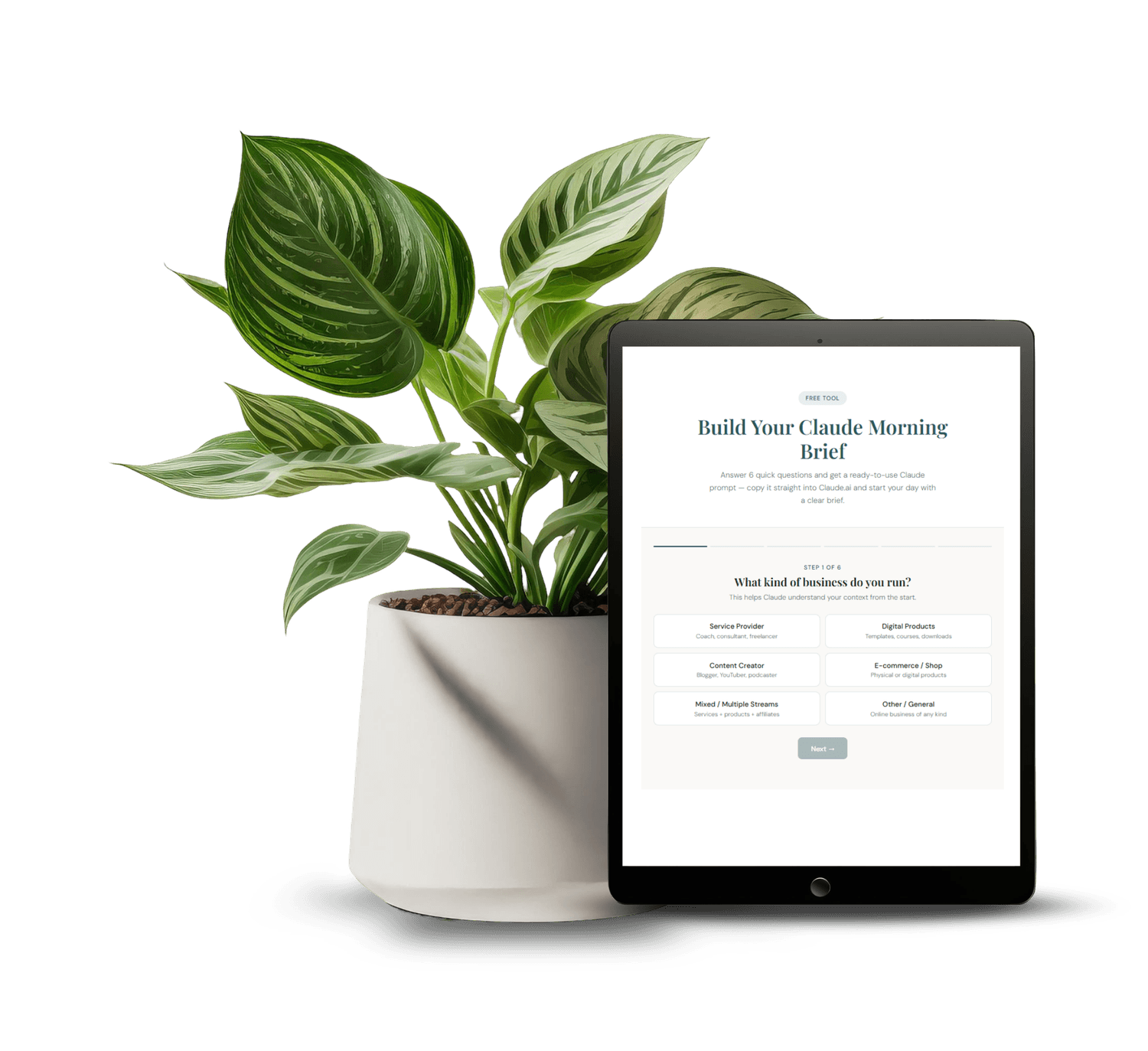
Morning Brief Claude AI Prompt
Set-up your custom morning brief for Claude
GRAB MY FREE APP
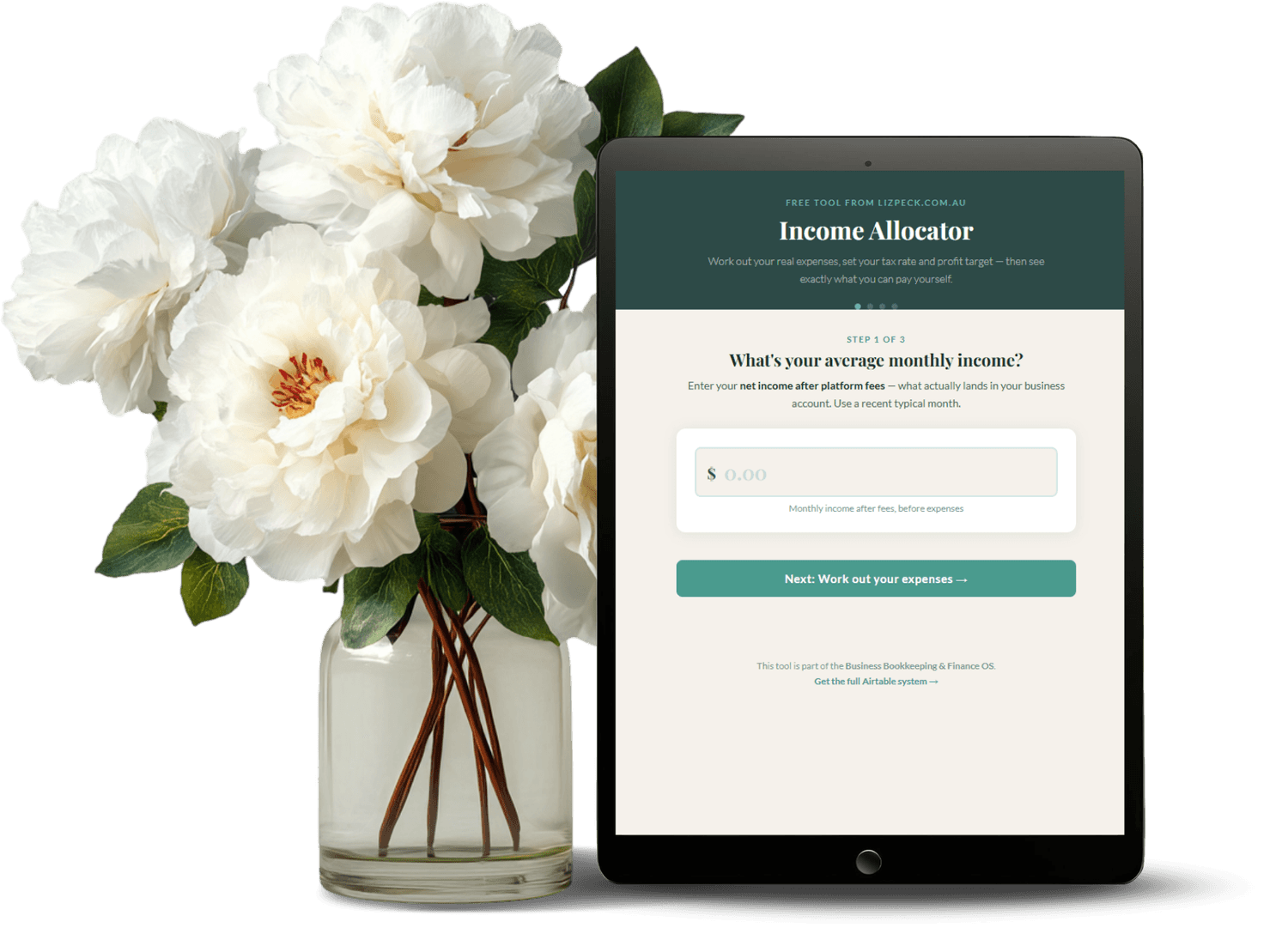
Income Allocator
Work out how to break down your income properly with percentages
What to Include in Your Digital Product Launch Plan (And How to Track It All in One Place)
Most digital products fail to launch not because they're bad products, but because the launch plan falls apart halfway through. You forget about a social content pillar. You skip the pre-launch email sequence. You launch without telling anyone because you were too focused on the technical setup.
The difference between a chaotic launch and one that actually converts is clarity. You need a single place where every step, every deadline, and every deliverable lives. Not scattered across sticky notes and Slack messages. Once you have a system, nothing gets overlooked and everything actually gets done.
Map Out Every Step Before You Start Promoting
Before you send a single email or post about your launch, write down every single thing that needs to happen. Product page creation, email sequences, social content batching, sales page copywriting, testimonial collection, tech setup, payment processing. All of it.
Doing this upfront prevents the panic that happens when you realize three days before launch that you haven't written the sales page. You see the gaps early, when you can actually plan around them.
Break Your Launch Into Four Distinct Phases
Everything from pre-launch through the first week after should have its own phase. Pre-launch (building and planning), launch week (getting people to know it exists), launch day (the actual opening), and post-launch (capturing the momentum). Each phase has different goals and different actions.
Pre-launch is about building anticipation. Launch week is about visibility. Launch day is about making the buying decision easy. Post-launch is about follow-up and converting people who were on the fence. Treating them the same leads to confusion.
Your Email Sequence Is the Backbone of Everything
If you do nothing else, get your email sequence right. A launch that relies on social media only is a launch that reaches a fraction of your audience. Email is where the conversion actually happens because it's direct and it doesn't depend on an algorithm showing your content to people.
Your pre-launch sequence builds awareness. Your launch week sequence creates urgency and answers questions. Your launch day sequence should be simple and direct. Your post-launch sequence captures people who didn't buy but are still interested.
Content Batching Saves You in the Final Days
Three weeks before launch, batch all your social content. Write the captions, create the graphics, schedule everything. This is non-negotiable. The week before and the week of your launch, you need energy for last-minute troubleshooting, not for thinking about what to post today.
When things are set up properly, your content is already scheduled while you're handling technical issues. You're not choosing between updating your sales page and posting on Instagram.
Create a Sales Page That Focuses on One Thing
Your sales page doesn't need to be fancy or long. It needs to be clear. One core benefit, a specific outcome, proof that you've done it, and a simple next step. Every sentence should answer either "Why do I need this?" or "How do I get it?"
Complexity increases abandonment. The clearest, simplest sales pages convert better than elaborate ones. Your page doesn't need to convince someone across five different angles. It needs to speak to the person who already knows they need something and is ready to buy.
Build Your Entire Plan in Airtable So Nothing Gets Lost
Create a launches table with every step mapped out. Who's responsible? What's the deadline? Is it done? Use linked records to connect emails, content pieces, and tech setup tasks so you can see the whole picture at a glance.
The Funnels, Sales and Launch System is a ready-made Airtable setup that does exactly this. You check one place instead of digging through emails or spreadsheets. Status is always clear. Nothing falls through the cracks.
Give Yourself Pre-Launch Momentum With an Early-Bird Offer
The week before official launch, open it up to a small group at an early-bird price or with a bonus. This creates momentum, gives you real testimonials to use, and means you're not starting from zero on launch day.
Early buyers are usually your warmest audience anyway. You're not giving away profit, you're buying social proof and momentum.
Use the Right Tools for Email and Planning
Your email sequences live in Systeme where they actually deliver the messages. Your launch plan lives in Airtable where you can see every step, deadline, and dependency. The two systems work together. Airtable is the roadmap, Systeme is the engine.
With a proper plan mapped and tracked, every launch gets better because you can look back and see exactly what worked and what you'd do differently.
Run a Final Checklist 48 Hours Before Launch
Two days before launch, go through your Airtable and verify everything is actually done. Sales page is live? Check. Email sequences are scheduled? Check. Payment processing is working? Check. Social content is scheduled? Check.
This is where you catch the small things that would otherwise become big problems. By launch day, you should feel calm because you've already verified everything works. You're not troubleshooting while trying to promote.
FAQ
Q: How long should I plan before a launch?
A: Ideally 4-6 weeks. Three weeks minimum to get emails written and content batched. Less than that and you're rushing, which is when details get missed.
Q: Should I launch to my existing audience first or cold audience?
A: Start with existing audience. They already know you and are most likely to buy. That success and momentum makes it easier to then promote to cold audiences.
Q: What if something goes wrong right before launch?
A: Build in a 48-hour buffer before your official launch day. This gives you time to fix technical issues without canceling or delaying publicly.
Q: How do I know if my launch plan is working?
A: Track everything in your system. Email opens, click-through rates, sales, social engagement. A week after launch, you'll have clear data on what worked.
Q: Do I need to do a big launch or can it be quiet?
A: Your product determines this. But having the plan means you can execute either way without things falling apart.
Disclaimer: This website may contain affiliate links. If you click a link and make a purchase, I may receive a small commission at no extra cost to you.
Disclaimer:
This website may contain affiliate links. If you click a link and make a purchase, I may receive a small commission at no extra cost to you.

About Liz Peck
Liz Peck helps online business owners build the backend that runs without them - using Airtable for operations, Systeme for sales, and Claude AI for the work you hate doing twice. lizpeck.com.au
Disclaimer:
This website may contain affiliate links. If you click a link and make a purchase, I may receive a small commission at no extra cost to you.