
GRAB MY FREE TRAINING
The No Leaks Funnel
GRAB MY FREE APP
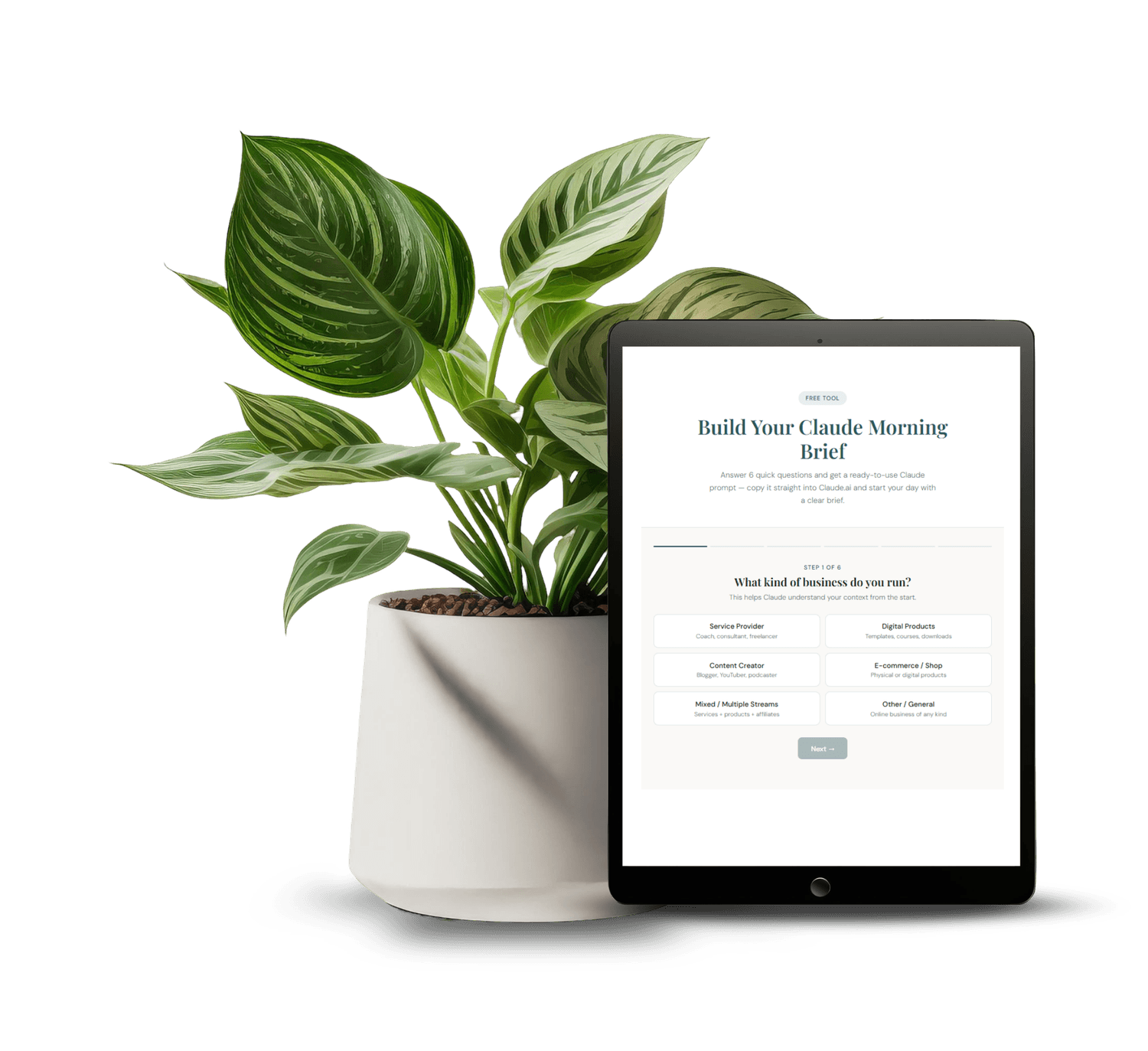
Morning Brief Claude AI Prompt
Set-up your custom morning brief for Claude
GRAB MY FREE APP
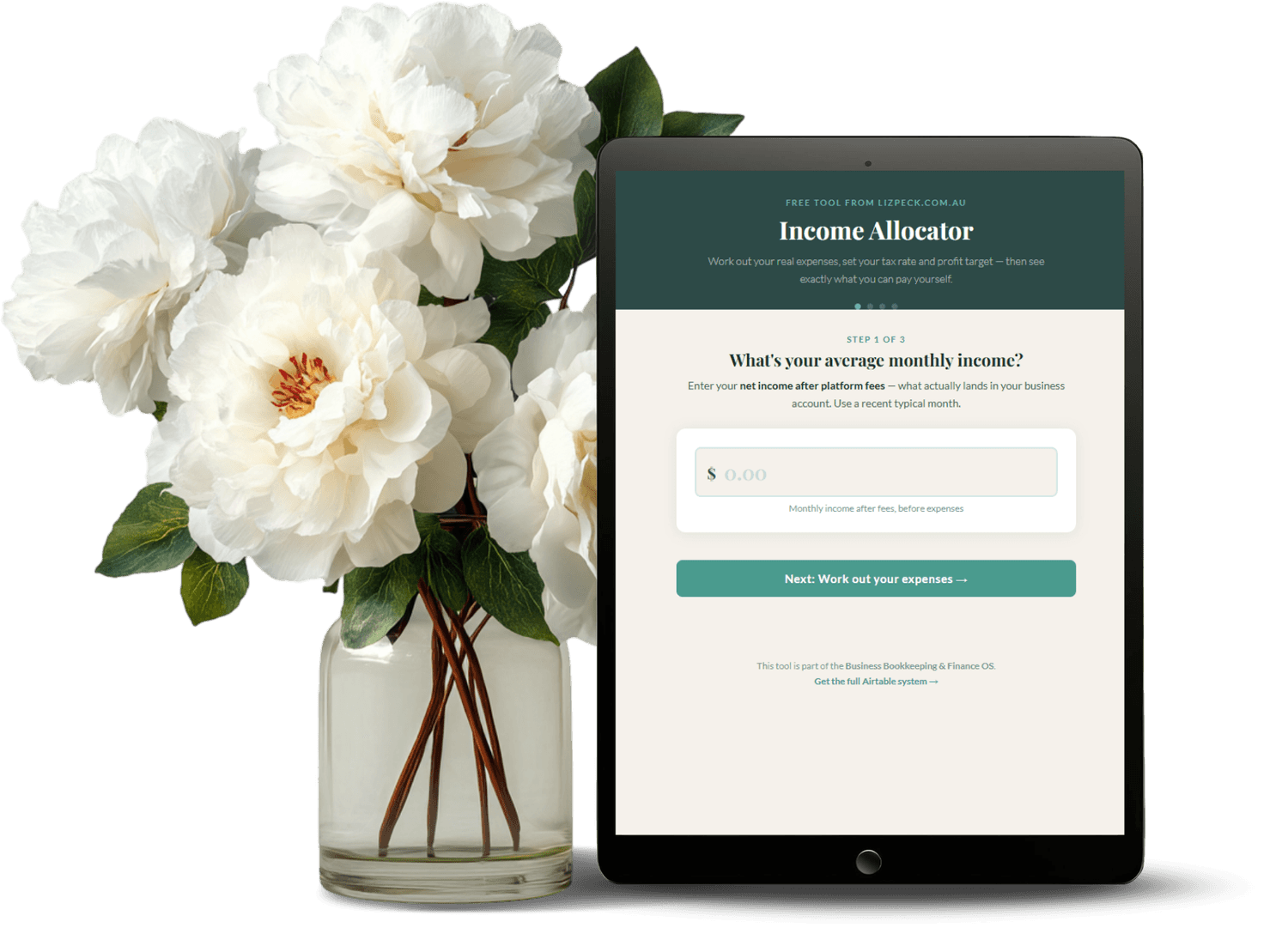
Income Allocator
Work out how to break down your income properly with percentages
Claude AI vs ChatGPT for Running an Online Business (An Honest Comparison)
Most people treat Claude and ChatGPT as the same thing. They are both AI, they both have a chat interface, they both answer questions. But if you are using AI to actually run a business rather than just get answers, they are very different.
I have used both. I have a strong opinion about which one is better for running an online business. And it is not just which one writes better copy or gives better answers. It is which one can actually integrate with your tools and do the work.
Here is how they compare, where each one is genuinely stronger, and which one I use and why.
The Most Obvious Difference in Personality
ChatGPT will tell you your idea is brilliant even when it is not. It is very complimentary, very encouraging, and it tends to give you a lot of words without a lot of substance. If you are looking for validation, you will get it.
Claude is more direct. It gives you an actual opinion based on information rather than just agreeing with you. It is also more concise. It does not waffle on or pad out responses to seem more helpful.
For business use, I find Claude more useful because I want feedback and analysis, not encouragement. If I ask Claude whether my sales page is weak, it will tell me specifically what is wrong rather than leading with how great it is.
Memory and Context
ChatGPT remembers more between conversations by default. If you tell it something about your business, it is more likely to recall it in a future session. This is genuinely useful for casual use.
Claude works differently. It uses skills as its memory. A skill is a saved set of instructions that Claude follows every time it runs a particular task. You might have a skill for writing blog posts, one for your morning business briefing, one for processing invoices. Each skill carries all the context Claude needs to do that specific job.
This is actually more powerful for business use because the memory is structured and reliable. It does not drift or get confused by unrelated conversations. Claude reads the skill and executes.
What Claude Does That ChatGPT Does Not
Claude can connect to external tools and actually do tasks, not just describe them. Through its Cowork mode, Claude can access your files, run scripts, interact with external platforms, and complete multi-step workflows.
This means instead of asking Claude 'how do I update my Airtable records', you can just tell Claude to update them and it does. Instead of asking 'what should I include in a blog post', you run a blog skill and it writes and saves the post to your Airtable base directly.
This is the difference between AI as a consultant and AI as an assistant. For running a business, an assistant is more valuable.
What ChatGPT Does Better
ChatGPT has a larger knowledge base for general questions and tends to be better for creative brainstorming where you want a lot of ideas quickly without much filtering.
It also handles image generation natively through DALL-E, which Claude does not. If you need to create images through AI directly in your chat interface, ChatGPT has an advantage there.
For long back-and-forth conversations that build on each other over time, ChatGPT's memory can be a genuine advantage. If you are using it as a thinking partner over months without structured skills, it tends to hold context better.
Why Claude Is Better for Business Operations
The skills system is the reason I use Claude for almost everything business-related. Each skill is essentially a standard operating procedure that Claude follows every time. My morning brief skill reads my Airtable CEO dashboard and tells me what is on today. My invoice processor reads a receipt and logs it to my expenses table. My blog skill writes a post and saves it directly to the right fields.
None of this requires me to explain the context every time. The skill carries it. Claude just executes.
For more on how this works, how to use Claude AI for your online business goes through real examples of what this looks like in practice.
Skills vs Memory: A Key Distinction
ChatGPT's memory is conversational. It picks up things you mention and tries to remember them across sessions. This is convenient but it can also be inconsistent, and when it gets something wrong about you, you have to correct it.
Claude's skills are intentional. You write exactly what you want Claude to know and do, and it follows those instructions every time. You have full control over what it remembers and how it behaves.
For business tasks that need to be repeatable, reliable, and consistent, intentional structured memory beats conversational memory.
Which One Should You Start With
If you want to chat, brainstorm, and get general answers, either will do. ChatGPT is slightly more approachable for pure conversation.
If you want AI to actually help you run your business, do tasks, connect to your tools, and follow your exact workflows, Claude is significantly better. The skills system combined with Cowork mode is the closest thing to having an AI assistant that actually knows your business.
I use Airtable as my business operating system and Claude as the AI layer on top. The two together handle more of my business admin than any human assistant I have ever had.
The Downside of Each
Claude's biggest weakness is cost of usage for heavy automation work. When it is running browser-based tasks or multi-step workflows, it can consume credits quickly. Sometimes a task takes longer than expected and the cost adds up.
ChatGPT's biggest weakness for business is that it gives you conversation, not execution. You can get great advice from it, but you still have to do the work yourself. For some people that is fine. For people who want to delegate tasks, it is limiting.
Both are imperfect tools. The question is which imperfections are more tolerable for what you are actually trying to do.
What Using Both Actually Looks Like
Some business owners use both depending on the task. ChatGPT for casual brainstorming, content ideation, or long research conversations. Claude for actual business operations, systems work, and anything that needs to touch their real business tools.
That is a reasonable approach. The mistake is treating them as interchangeable and expecting the same outputs from both. They are built differently, they think differently, and they are optimised for different kinds of work.
For running an online business with systems and tools, Claude is where the real leverage is.
FAQ
Is Claude AI or ChatGPT better for writing content?
Both can write good content. Claude tends to follow specific voice guidelines more precisely, which is important when you have a brand voice you need to maintain. ChatGPT generates more varied ideas faster.
Can Claude integrate with my business tools?
Yes. Through skills and Cowork mode, Claude can interact with tools like Airtable, read files, run scripts, and complete multi-step tasks. This is where it has a significant advantage over ChatGPT.
Does Claude remember my business details?
Claude uses skills to carry context across sessions. You write what you want it to know into a skill file and it uses that every time it runs. This is more structured than conversational memory.
Is Claude more expensive than ChatGPT?
The monthly subscription costs are similar. Claude Pro and ChatGPT Plus are both around $20 per month. The difference is in what you get for that cost in terms of business utility.
Disclaimer:
This website may contain affiliate links. If you click a link and make a purchase, I may receive a small commission at no extra cost to you.

About Liz Peck
Liz Peck helps online business owners build the backend that runs without them - using Airtable for operations, Systeme for sales, and Claude AI for the work you hate doing twice. lizpeck.com.au
Disclaimer:
This website may contain affiliate links. If you click a link and make a purchase, I may receive a small commission at no extra cost to you.