

GRAB MY FREE TRAINING
The No Leaks Funnel

GRAB MY FREE APP
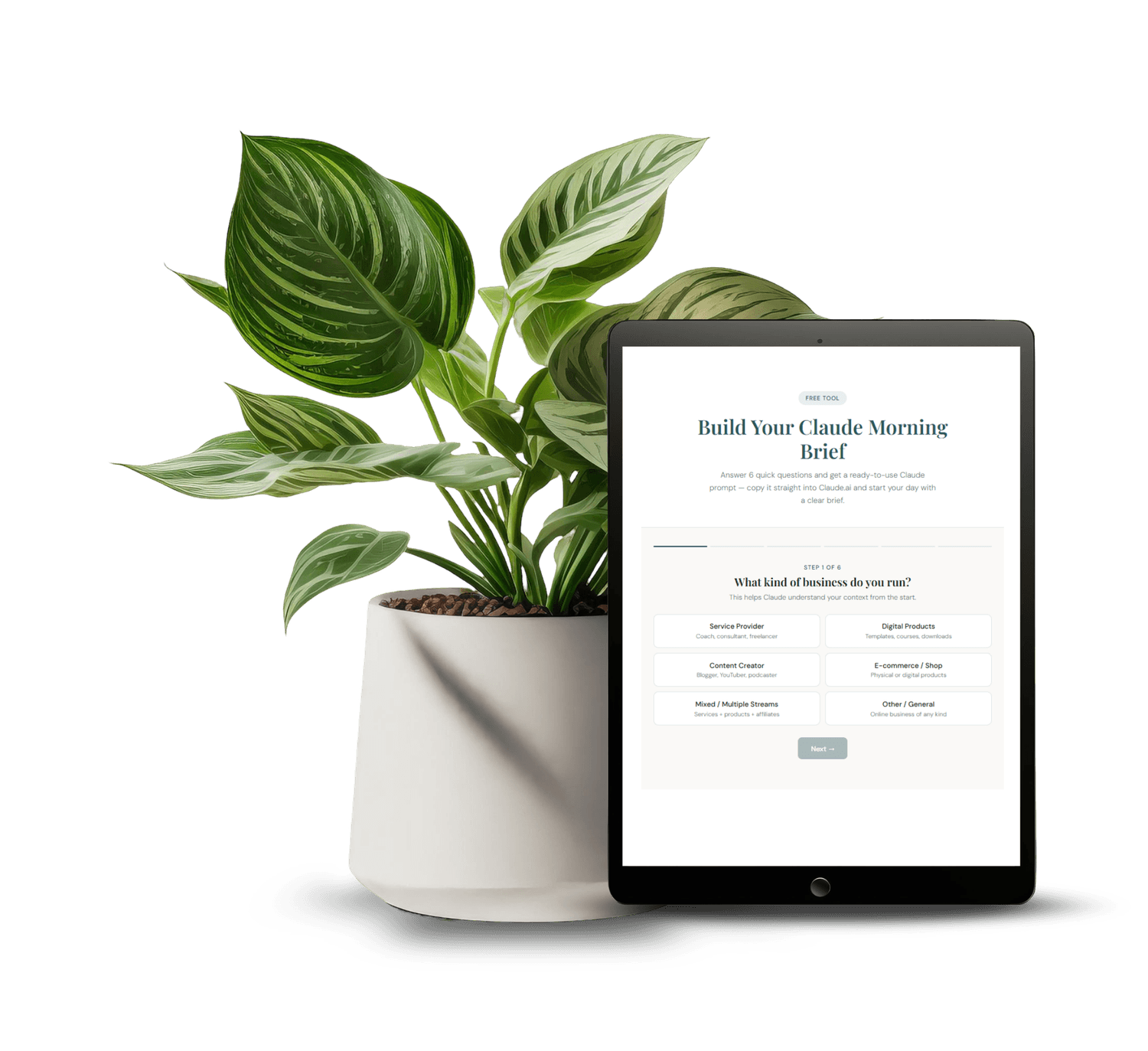
Morning Brief Claude AI Prompt
Set-up your custom morning brief for Claude
GRAB MY FREE APP
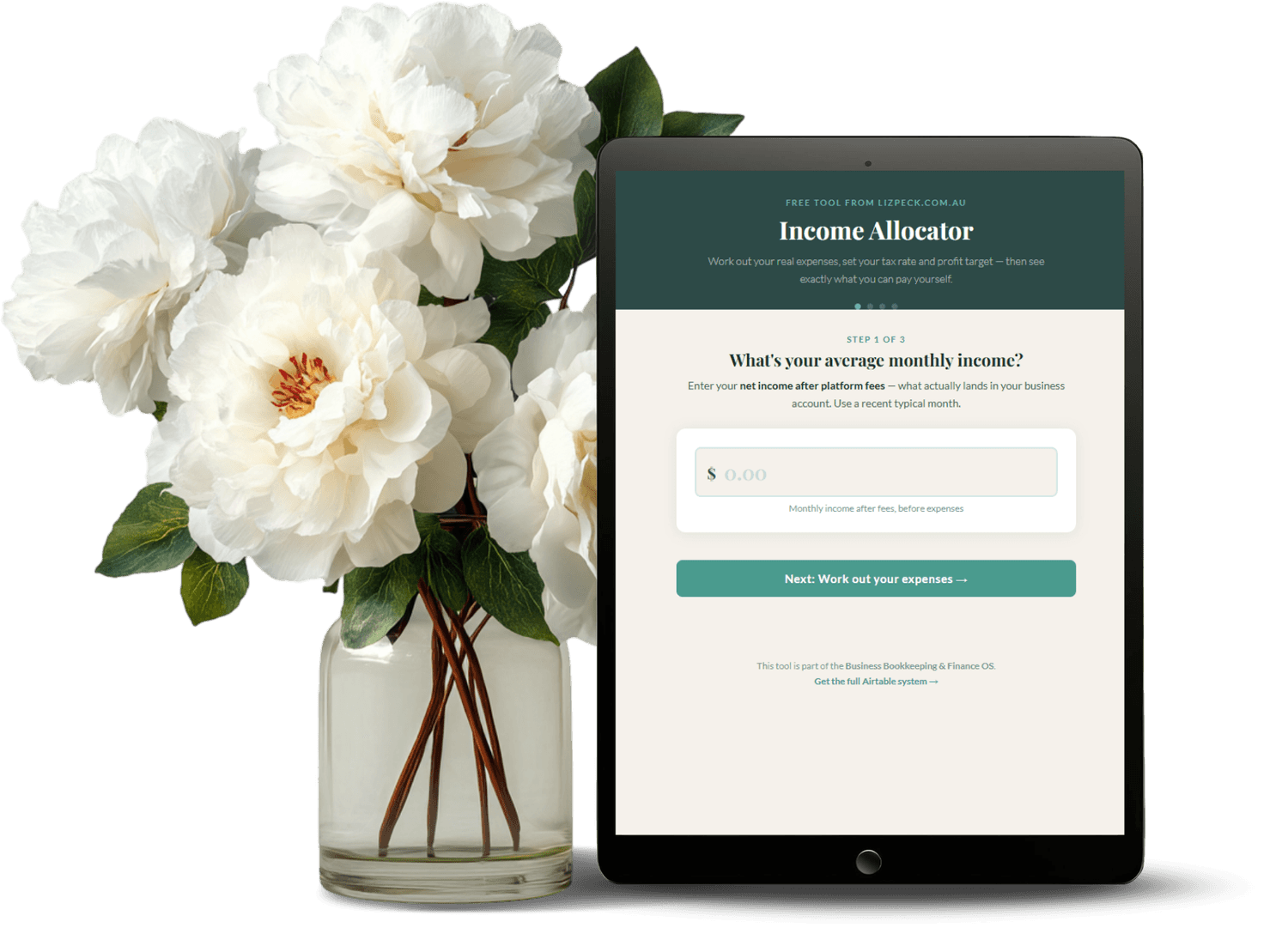
Income Allocator
Work out how to break down your income properly with percentages
Airtable vs Notion for Online Business: Which One Sould You Use?
Why I Switched from Notion to Airtable
If you're trying to decide between Airtable and Notion for running your online business, go with Airtable. I've used both extensively and Airtable is the better choice for most online business owners who want a system that works without constant tweaking.
That said, the answer does depend on where you are and what you need. Here's what I've found after running my entire business on both platforms.
I was a Notion girlie. I loved the look of it, the flexibility, the way you could make everything pretty. But what I found was that I spent more time making it look nice than actually using it.
Every time I opened Notion, I'd end up changing a layout, adjusting a view, or tweaking how something looked. It became a distraction rather than a tool. I'd give up using it because maintaining it felt like work on top of work.
When I moved to Airtable, that stopped. Airtable doesn't tempt you to redecorate. It's more like something you'd work with in a professional environment. It's clean, functional, and once it's set up, you just use it.
How They Actually Compare
Notion is a workspace. It combines documents, databases, wikis, and project management into one flexible tool. You can build almost anything in it, which is both its strength and its weakness.
Airtable is a database. It looks like a spreadsheet but works like a relational database underneath. You create tables, link them together, build views and interfaces to show you exactly what you need to see.
The core difference: Notion gives you a blank canvas. Airtable gives you a structured system. If you like designing how things look, Notion is appealing. If you want something that just works and stays working, Airtable tends to be the better fit.
Where Airtable Wins
Linking is clean. In Airtable, linking records between tables is straightforward and reliable. You can see a customer's orders, their support tickets, and their projects all connected. In Notion, relations work but they're clunkier to set up and maintain.
Formulas are easier. Airtable's formula system is more intuitive than Notion's. If you've ever tried to write a formula in Notion, you know it can get complicated fast. Airtable formulas feel more like what you'd expect from a spreadsheet.
Views and interfaces are streamlined. You can create filtered views, Kanban boards, calendars, and gallery views without redesigning anything. Interfaces let you build clean dashboards that show exactly the data you need.
Automations are built in. Airtable has native automations that trigger actions when records change. You can send emails, update fields, or create records automatically. Notion doesn't have this built in.
It connects well to other tools. Airtable works natively with Make for automations and connects cleanly to Claude AI. My entire AI assistant setup runs through Airtable because it's designed to be a data layer that other tools can interact with.
Where Notion Wins
Documentation and notes. If you need a place to write long-form content, SOPs, or team wikis, Notion is better. Airtable stores data well but it's not built for rich text documents.
Visual customisation. If you want your workspace to look a certain way, Notion gives you that control. Some people genuinely work better in a visually customised environment.
Lower learning curve for beginners. Notion feels more intuitive when you first start. You can drag blocks around, create pages, and it feels like building with Lego. Airtable's power shows up once you understand tables and relationships, which takes a bit more upfront learning.
All-in-one workspace. If you want notes, tasks, databases, and documentation in one tool, Notion handles that. Airtable focuses on structured data and does that really well, but it's not trying to be everything.
The Real Difference in Practice
People think Airtable is just spreadsheets. It's not. It's a database, and once you link your different tables together, the power becomes obvious.
In my setup, I have tables for products, projects, tasks, clients, invoices, expenses, content, and more. They all connect. When I look at a product, I can see every blog post that mentions it, every support ticket related to it, and every sale. That's the relational database working.
Notion can do some of this with relations and rollups, but it takes more effort to set up and maintain. And the formulas to pull data across relations in Notion are genuinely harder to master.
To me, Airtable is like the grown-ups database. Once you start using it, everything feels more polished, more interactive, and more productive.
When Notion is the Right Choice
If you're just starting out and want to keep your tech stack small, Notion is a solid choice. You can run a simple business from Notion without paying for multiple tools.
If your business is mostly client work and you need a place to store SOPs, project notes, and client information, Notion handles that well.
If you're not ready to invest in a paid Airtable account and you need something free that does a bit of everything, Notion's free tier is generous.
When Airtable is the Right Choice
If you sell digital products and need to track inventory, orders, customer data, and content across multiple channels, Airtable handles that complexity better.
If you want to automate parts of your business, Airtable's native automations and its connection to tools like Make give you far more options.
If you want to connect AI tools like Claude to your business data, Airtable is the natural choice. The combination of Airtable storing your data and Claude acting on it is what makes workflows like automated invoice processing and AI-powered helpdesk replies possible.
If you want a system that you'll actually stick with long-term, Airtable's lack of visual customisation is actually an advantage. You won't waste time redesigning it every month.
If you're curious about how to get started with Airtable, I wrote a step-by-step guide on building your first Airtable base from scratch.
The Cost Comparison
Notion has a generous free tier. For a solo business owner, you can get a lot done without paying.
Airtable's free tier is more limited. You get 1,000 records per base, which fills up fast if you're tracking orders, content, and customer data. The paid plans start at around $20 USD per month.
For most growing businesses, the paid Airtable plan is worth it. But if you're in the early stages and watching every dollar, Notion's free tier gives you more room.
Can You Use Both?
Yes, some people do. They use Notion for documentation and notes, and Airtable for structured business data.
Personally, I'd rather keep everything in one place. Having data split across two platforms means you're always switching between tools and trying to keep things in sync. For me, Airtable handles everything I need for operations, and I use Google Docs for any long-form writing.
FAQ
Is Airtable hard to learn?
Not really. If you can use a spreadsheet, you can use Airtable. The main concept to grasp is linking tables together, which takes maybe an afternoon to understand. After that, it's intuitive.
Can I migrate from Notion to Airtable?
Yes, but it's manual work. There's no one-click migration. You'll need to recreate your structure in Airtable and move your data over. It's worth doing properly rather than trying to replicate your Notion setup exactly.
Do I need the paid version of Airtable?
For a business that's actively tracking data, yes. The free tier's 1,000 record limit is too restrictive once you start tracking orders, content, expenses, and customer interactions. The paid plan removes that limit.
Which one is better for a team?
Both work for teams. Notion is often preferred for team documentation and knowledge bases. Airtable is better for operational workflows where multiple people need to interact with structured data.
Can I connect Claude AI to Notion?
You can to some extent, but the integration isn't as clean as with Airtable. Airtable's structured data format makes it much easier for Claude to read, write, and act on your business data.
Disclaimer:
This website may contain affiliate links. If you click a link and make a purchase, I may receive a small commission at no extra cost to you.

About Liz Peck
Liz Peck helps online business owners build the backend that runs without them - using Airtable for operations, Systeme for sales, and Claude AI for the work you hate doing twice. lizpeck.com.au

Disclaimer:
This website may contain affiliate links. If you click a link and make a purchase, I may receive a small commission at no extra cost to you.