

GRAB MY FREE TRAINING
The No Leaks Funnel

GRAB MY FREE APP
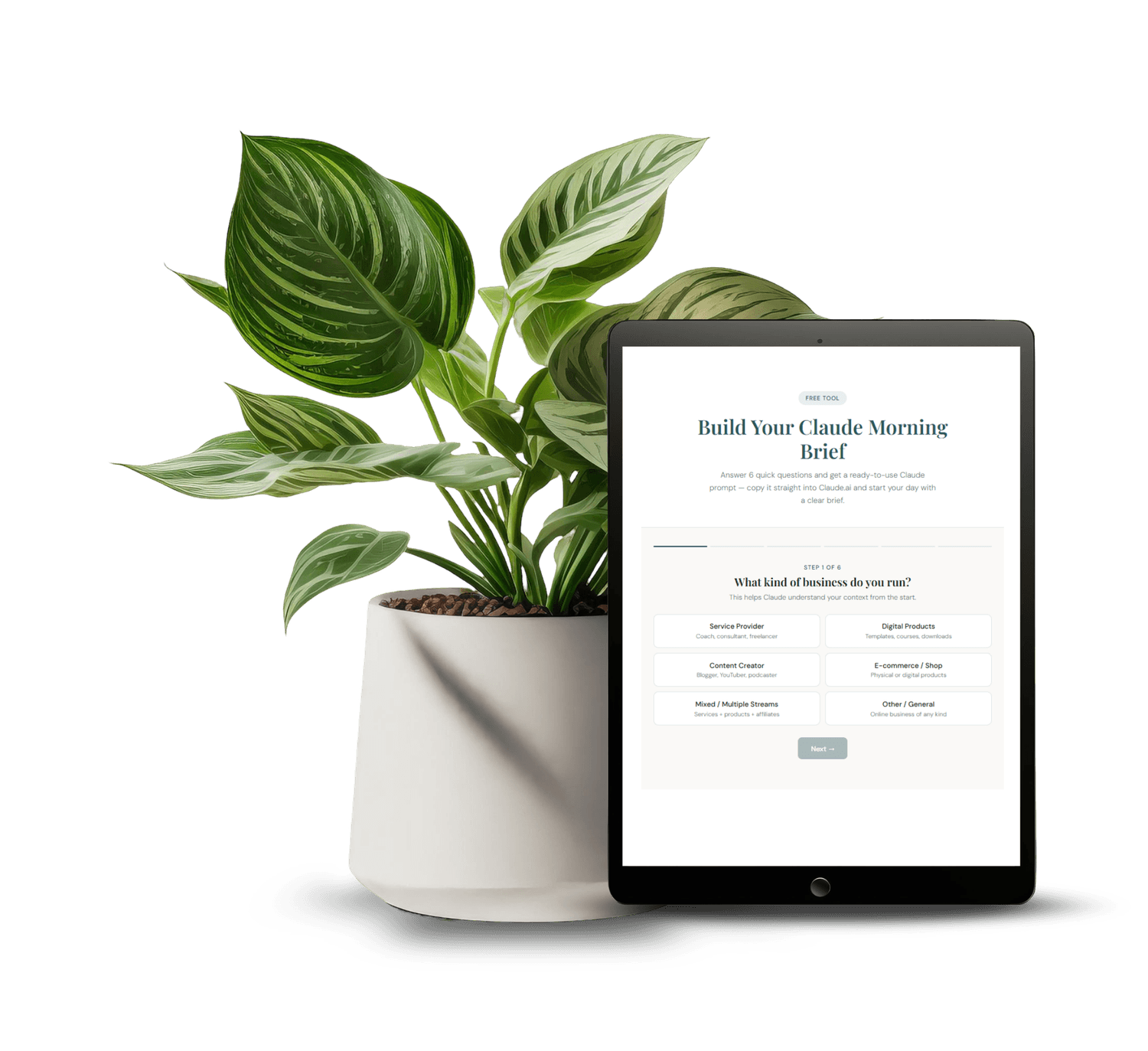
Morning Brief Claude AI Prompt
Set-up your custom morning brief for Claude
GRAB MY FREE APP
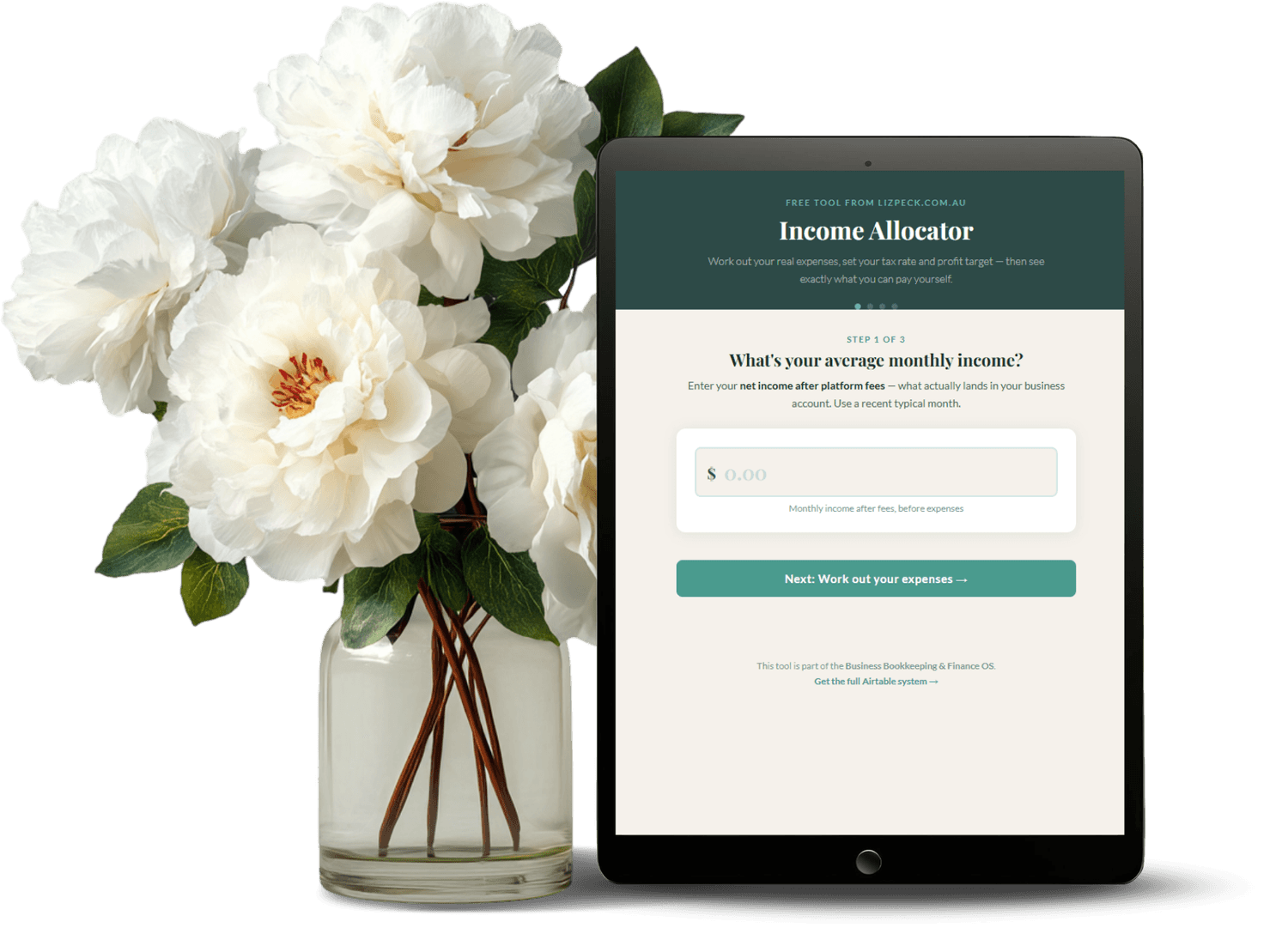
Income Allocator
Work out how to break down your income properly with percentages
How to Build Your First Airtable Base from Scratch
Most people who start with Airtable make the same mistake. They open a new base, create a bunch of tables that feel logical in isolation, and then realise after a few weeks that nothing connects properly and they are not quite sure why.
I did this too. The difference between an Airtable base you actually use and one you abandon is almost always the structure you set up at the beginning.
This is how I would approach building a first Airtable base for an online business from scratch, based on what I have learned running mine.
Start With Understanding the Building Blocks
Before you add a single table, it helps to know how Airtable actually works.
A base is a container. Inside a base, you have tables. Tables are like individual spreadsheets, but connected to each other. Each table has records (rows) and fields (columns).
The key difference between Airtable and a regular spreadsheet is the linked record field. This is what lets you connect records from one table to records in another. A task can link to a project. A blog post can link to the content topic it came from. A timesheet entry can link to an invoice.
When you build with linked records in mind from the start, everything holds together.
Decide What Goes in One Base vs Multiple Bases
Bases are completely separate from each other. You cannot easily link records between bases.
If you are a one-person business, put everything in one base. The benefit of having your tasks, clients, products, and content in the same base is that everything can connect. One linked record field and your task links to the project it belongs to.
If you are running multiple separate businesses or departments that genuinely do not need to talk to each other, separate bases make sense. Otherwise, keep it together.
Start With a Knowledge and Resources Library
This is the table I recommend to every business owner building in Airtable for the first time.
A Knowledge and Resources Library is exactly what it sounds like. A table where you store everything that supports the running of your business. SOPs, templates, product documentation, useful links, reference documents, research, anything you might need to find later.
Fields to include: Name, Type (SOP, template, reference, etc.), Purpose, URL or attachment, Notes, and links to whatever other tables this resource relates to.
Once this table exists, everything else can link to it. A task can link to the SOP for completing it. A product can link to its documentation. A project can link to its research.
It becomes the foundation that everything else references.
Build Projects and Tasks Next
These two tables go together and they need a linked record between them.
The Projects table tracks what you are working on at a higher level. Each project is a record. Fields: Project Name, Status, Due Date, Why It Matters, Success Criteria, Notes.
The Tasks table tracks individual actions. Each task is a record. Fields: Task Name, Status, Due Date, Effort, Definition of Done, Next Action, Notes. Most importantly: a linked record field pointing to Projects.
Now any task can link to the project it belongs to. In the Projects table, Airtable will automatically show you every task associated with a project through the linked record.
This one structure is enough to manage most of a solo business's operational work.
Only Add Tables When You Have a Real Use Case
This is the part most people get wrong.
It is tempting to build out every table you might ever need. An email list table, a sales tracker, a social content planner, a competitor research table. All of it upfront.
Do not do it.
Build the tables you are actively going to use in the next few weeks. Add tables when you hit a real need. Every empty table is something you have to maintain and navigate around.
A base with three well-used tables is more valuable than a base with fifteen partially filled ones.
Understand Views Before You Set Them Up
A view is just a different way of looking at the same table data. You can have a Grid view showing all records like a spreadsheet, a Gallery view showing them as cards, a Calendar view if there are date fields, and a Kanban view if you want to drag records between status columns.
The important thing is that views do not duplicate data. They are just different ways of looking at the same records.
Set up the views that match how you actually work. If you manage tasks by status, a Kanban view on your Tasks table makes sense. If you mostly need a clean list, a filtered Grid view is fine.
The Interface Layer Is for Later
Airtable has an Interface feature. It lets you build visual dashboards and entry forms that sit on top of your data.
If you are just starting out, ignore this for now.
Build your base. Use it. Figure out what data you need and how you work with it. Once you have used the base for a few weeks and have a clear picture of how you want to see your data, then think about interfaces.
Building a beautiful interface before the underlying structure is solid just adds complexity to something that is not working yet.
When to Add Automations
Airtable has a built-in automations feature. You can trigger actions when a record status changes, when a date arrives, when a form is submitted.
Same advice as interfaces. Use the base manually first. Notice the repetitive parts of your workflow. Add an automation when you have done something manually at least five times and you are confident about the trigger and outcome.
The most common early automation I would recommend is a notification when a task is approaching its due date. Simple, immediately useful, not fragile.
Getting From a Spreadsheet to a Database
If you are coming from Google Sheets or Excel, the mental shift takes a bit of time.
In a spreadsheet, every cell is independent. In Airtable, you are working with records that have defined field types. Text fields, number fields, date fields, single select, multiple select, linked records. Each field type has rules about what it stores.
The key insight is that this structure is what makes the data useful. A single select Status field means every record has a consistent, searchable status. A linked record to Projects means every task is properly associated with its project. The structure creates the intelligence.
Once that clicks, the way you think about setting up Airtable changes completely. You stop thinking in rows and columns and start thinking in records and relationships.
Frequently Asked Questions
Do I need a paid Airtable account to build this?
The free plan is enough to build and use a base with multiple tables, linked records, and basic views. Some features like charts and advanced automations require a paid plan. For a solo business starting out, the free plan is a good place to begin.
How many bases should I have?
As few as possible. One base for your main business is the right starting point. Add a second only if you have a genuinely separate operation that does not need to connect to the first.
How long does it take to set up?
A basic base with three to five tables takes a few hours to build properly, including setting up views and linked records. The initial setup time pays back quickly once you are using it consistently.
Is Airtable better than Notion?
Different tools for different ways of working. Notion is more visual and document-focused. Airtable is more data and database-focused. If you want to store and query structured data across linked tables, Airtable is the stronger choice.
Can I connect Airtable to other tools?
Yes. Airtable connects to Make, Zapier, and has its own API. The automations I use to handle listing workflows and invoice processing all run through Airtable connected to Make and Claude. It is genuinely extensible once you have the foundation in place.
Disclaimer: This website may contain affiliate links. If you click a link and make a purchase, I may receive a small commission at no extra cost to you.
Disclaimer:
This website may contain affiliate links. If you click a link and make a purchase, I may receive a small commission at no extra cost to you.

About Liz Peck
Liz Peck helps online business owners build the backend that runs without them - using Airtable for operations, Systeme for sales, and Claude AI for the work you hate doing twice. lizpeck.com.au

Disclaimer:
This website may contain affiliate links. If you click a link and make a purchase, I may receive a small commission at no extra cost to you.