

GRAB MY FREE TRAINING
The No Leaks Funnel

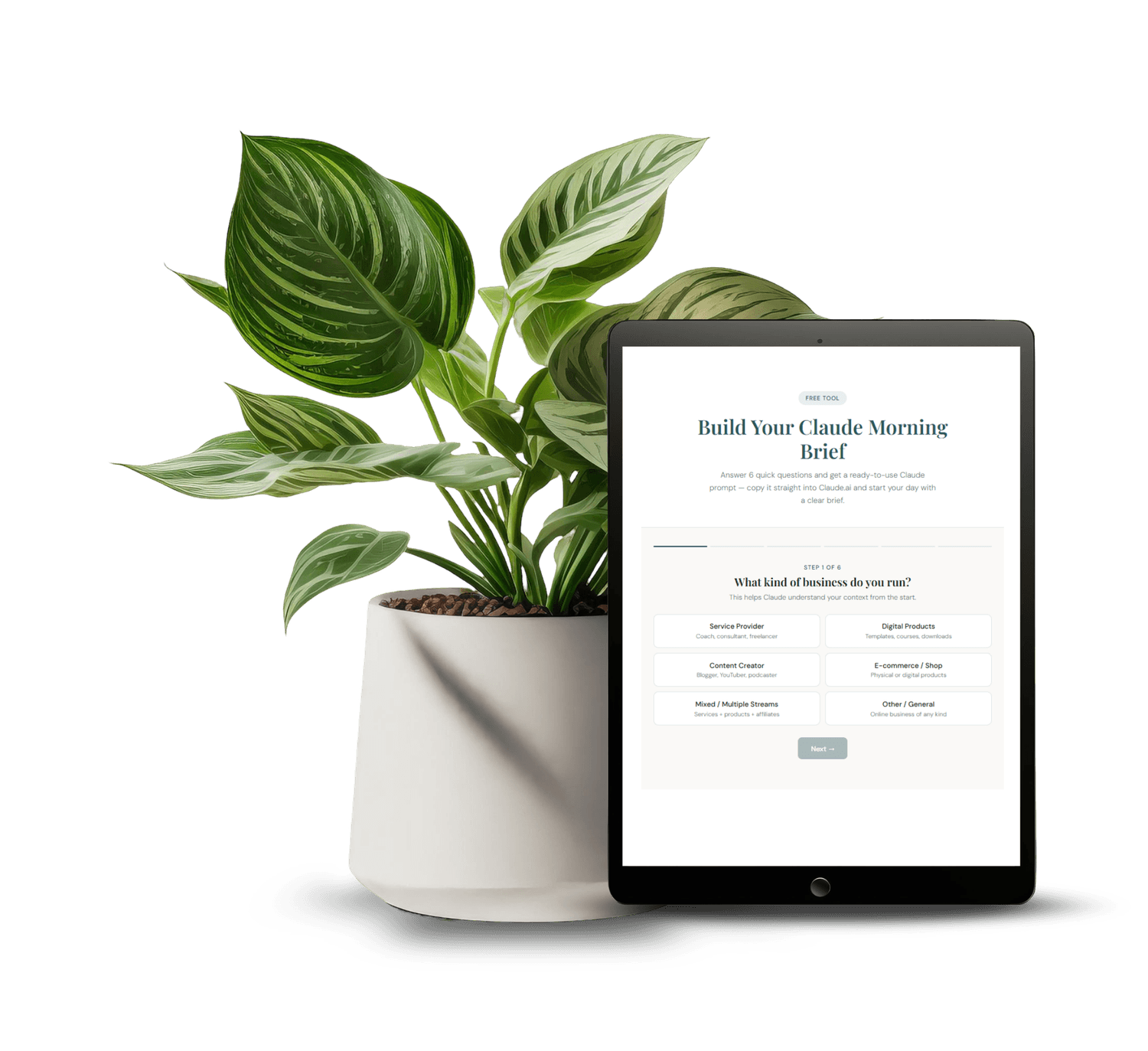
GRAB MY FREE APP
Morning Brief Claude AI Prompt
Set-up your custom morning brief for Claude

GRAB MY FREE APP
Income Allocator
Work out how to break down your income properly with percentages
How to Create a Repeatable Etsy Listing Workflow That Actually Sticks
Creating New Listings Always Feels Messier Than It Should
When I first started listing digital products on Etsy, I thought the hard part would be making the products. Turns out, the real mess was everything that came after. I’d get an idea, make the thing, and then… stall. The listing part felt like a pile of tiny decisions and half-finished drafts. I’d open Etsy, start a new listing, get distracted, and forget what I’d already done. Sometimes I’d find half-written titles or images I’d uploaded but never used. It was like my brain just scattered the minute I tried to get organized.
The Myth That Planning Kills Creativity
I used to think that if I planned too much, I’d lose the spark. I’d tell myself that creativity needed space, not structure. But what actually happened was the opposite. When I didn’t have a plan, I’d lose track of ideas. I’d forget which product was ready to list and which one still needed a description. My mood decided what got listed, not any kind of system. Some days I’d list three things, then nothing for weeks. It felt random, and it showed.
Ideas Pile Up Faster Than Listings
There’s this weird thing that happens when you make digital products. You can create them quickly, but listing them takes longer. I’d have folders full of finished designs, mockups, and files, but only a handful actually live on Etsy. The backlog just grows. It’s not that I didn’t want to list them. It’s just that every listing felt like starting from scratch. I’d forget what I’d already done, or I’d get stuck on a detail and move on to something else. The pile of unlisted products just sat there, quietly nagging at me.
Not Having a Workflow Means Progress Depends on Mood
I’ve noticed that when I don’t have a workflow, everything depends on how I feel that day. If I’m in the mood, I’ll power through a few listings. If I’m tired or distracted, nothing happens. There’s no rhythm. It’s easy to lose track of what’s done and what’s not. I’d start a listing, get interrupted, and then have to figure out where I left off. Sometimes I’d redo work I’d already done, just because I couldn’t remember if I’d finished it. It’s not efficient, and it’s definitely not fun.
Writing Things Down Changes Everything
The first time I actually wrote down my listing steps, it felt almost too simple. I made a checklist: title, description, images, tags, price, upload files. That was it. But suddenly, I could see exactly what needed to be done for each product. If I got interrupted, I could come back and pick up where I left off. I stopped losing track of half-finished listings. I could see at a glance what was ready and what still needed work. It wasn’t fancy, but it worked.
Consistency Shows Up When You Track Status
Once I started tracking the status of each product, things got a lot more consistent. I’d jot down which ones were ready to list, which ones needed images, and which ones were live. It wasn’t about being perfect. It was just about not losing track. I noticed that when I kept up with this, I listed more products. Sales followed, but that wasn’t even the main thing. It just felt calmer. I wasn’t guessing anymore.
Automating the Boring Parts Makes Space for the Fun Stuff
After a while, I started looking for ways to automate the parts I kept repeating. Filling in the same details, copying tags, uploading files. It’s not hard, but it’s tedious. I set up a few templates in Google Sheets. I tried out some automation tools. Suddenly, the listing process felt lighter. I could focus on the creative parts, not the admin. The workflow ran in the background, and I didn’t have to think about every tiny step.
Planning Doesn’t Kill Creativity, It Protects It
I used to worry that too much planning would make things boring. What I’ve noticed is that having a workflow actually protects my creative energy. I don’t have to hold everything in my head. I can jot down ideas, park them for later, and come back when I’m ready. The workflow catches the details so I don’t have to. I can stop in the middle of a task and not lose my place. It’s not about being rigid. It’s about making space for the parts I actually enjoy.
The Backlog Feels Different When There’s a System
There’s always going to be a backlog. That’s just how it goes with digital products. But when there’s a workflow, the backlog doesn’t feel overwhelming. It’s just a list of things to work through, not a pile of forgotten ideas. I can see what’s next, what’s waiting, and what’s done. It’s not about getting everything listed at once. It’s about having a way to keep moving, even when I’m busy or distracted.
Some People Like to Build Their Own Systems
I know some sellers love tinkering with spreadsheets and automations. They’ll spend hours making the perfect workflow. I get it. There’s something satisfying about building your own system. But not everyone wants to do that. Sometimes you just want something that works, so you can get back to creating.
I Use a System That Automates Most of This
For a while now, I’ve been using a setup that combines Google Sheets and Make to automate most of my Etsy listing process. It’s called Digital Product Etsy Shop Automated. It’s not fancy, but it does the job. I can track ideas, see what’s ready, and push listings live without all the manual steps. It’s for digital product sellers who want to list more consistently without hiring help. I like that it just runs in the background.
The Workflow Is What Makes It Possible to Keep Going
I’ve noticed that when I have a repeatable workflow, I don’t get stuck as often. I can stop and start without losing my place. The ideas don’t get lost. The backlog doesn’t feel like a problem. It’s just part of the process. I can focus on creating, knowing the rest is handled. That’s the part that makes it feel sustainable.
Disclaimer:
This website may contain affiliate links. If you click a link and make a purchase, I may receive a small commission at no extra cost to you.

About Liz Peck
Liz Peck helps online business owners build the backend that runs without them - using Airtable for operations, Systeme for sales, and Claude AI for the work you hate doing twice. lizpeck.com.au
Disclaimer:
This website may contain affiliate links. If you click a link and make a purchase, I may receive a small commission at no extra cost to you.