

GRAB MY FREE TRAINING
The No Leaks Funnel

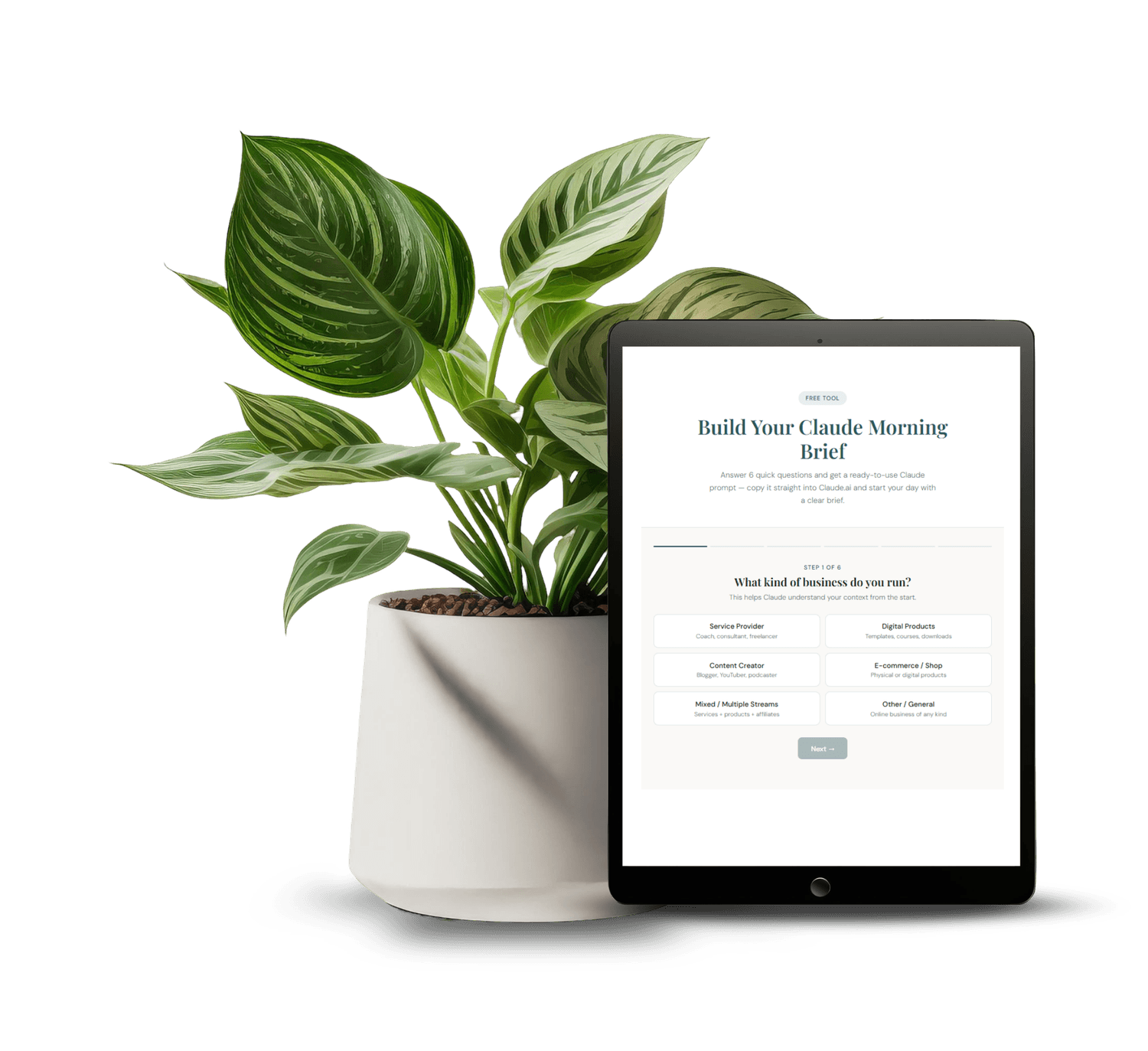
GRAB MY FREE APP
Morning Brief Claude AI Prompt
Set-up your custom morning brief for Claude

GRAB MY FREE APP
Income Allocator
Work out how to break down your income properly with percentages
How to Automate an Etsy Digital Product Shop (Without Breaking the Rules)
If you’ve ever thought about automating your Etsy shop but stopped yourself because you weren’t sure whether it was allowed, you’re not alone.
For a long time, I sat in exactly the same place – frustrated by repetitive listing tasks, drowning in admin, but hesitant to automate anything because I didn’t want to risk my shop.
What I eventually realised is this:
Etsy doesn’t just allow automation – it quietly expects sellers to use it responsibly.
What Etsy automation actually allows (and doesn’t)
Why manual listing is one of the biggest growth blockers for digital product sellers
The mistake I see most Etsy sellers making with unused designs
Why speed of listing matters more than constant tweaking
When automation becomes a smarter option than hiring help
This isn’t about shortcuts or spammy tactics.
It’s about building a scalable digital product Etsy shop that doesn’t burn you out!
Is Etsy automation actually allowed?
This is the first question most sellers have – and for good reason.
I was worried about automating my Etsy shop because I genuinely wasn’t sure where Etsy stood on it. I didn’t want to put months or years of work at risk by doing something that crossed a line.
The turning point came when someone pointed out something very simple:
Etsy provides access to third-party apps.
That alone tells you a lot.
Etsy wouldn’t offer an API or integrations with third-party tools if automation itself was forbidden. So instead of relying on opinions in Facebook groups, I went straight to the source and read through Etsy’s terms.
Here’s what matters.
Automated messaging that could be considered spam
Bots that manipulate buyers or engagement
Anything deceptive or abusive
Adding listings is not a problem.
Automating backend admin is not a problem.
The issue isn’t automation itself – it’s how it’s used.
Once I understood that distinction, everything clicked.
Why manual listing becomes a growth problem
I hate repetitive tasks. Always have.
And Etsy listing creation is one of the most repetitive admin tasks you can do as a digital product seller.
Think about what’s involved in listing just one product:
Creating or updating a download instruction file
Uploading mockup images
Writing a title
Writing a description
Creating tagsMaking sure everything is formatted correctly
Publishing or saving to drafts
Now multiply that by 10, 20, or 50 products.
It’s not difficult work – it’s draining work.
And because it’s draining, it’s the task most sellers procrastinate on.
The biggest mistake I see digital product Etsy sellers making
This is the mistake I see over and over again...
Sellers have a huge supply of designs sitting on their computer that have never made it into their Etsy store.
Not because the designs aren’t good.
Not because they don’t want to grow.
But because listing feels time-consuming and mentally heavy – especially when life gets busy.
And here’s the hard truth:
A product that isn’t listed can never earn you money.
It doesn’t matter how good the design is.
It doesn’t matter how “on trend” it is.
If it’s not in your Etsy shop, it’s invisible.
This is where manual processes quietly sabotage growth.

Why I stopped obsessing over tweaks and focused on listing more
There’s a lot of noise in the Etsy space.
Everyone has an opinion about:
SEO formulas
How often you should tweak listings
When to refresh tags
How many photos you need
In my experience, most Etsy sellers listen to too many opinions.
Here’s what I actually believe you need to focus on:
1. Creating Good Products
2. Making the Products look appealing (your mockup images)
3. Listings described the way a real person would search for them
4. A reliable way to deliver the product
That’s it.
The biggest lever for growth, especially for newer stores, is creating and listing more digital products – not endlessly tweaking the same ones.
When it comes to a digital product Etsy shop, traction comes from:
Creating relevant, trending products
Getting them into your store quickly
Letting the marketplace do its job
Speed matters more than perfection.
Why I decided to automate my Etsy listing process
Before automation, I already kept everything off Etsy.
I had:
A product plan
My designs organised
Mockups ready
Clear ideas about titles and descriptions
The problem wasn’t what I needed to do – it was having to manually stitch everything together every single time.
So I asked myself a simple question:
Why not automate the parts that annoy me?
Specifically:
Creating download instruction files
Attaching mockup images
Generating titles, descriptions, and tags
Pulling everything together into a listing automatically
That’s what I set out to build.

The reality of building a proper Etsy automation
I won’t sugarcoat this.
It took a long time.
I spent about 6 to 8 weeks of ALL my spare time working through all the kinks:
Things breaking
Edge cases
Etsy-specific requirements
Making sure it worked consistently
There were plenty of moments where it would have been easier to give up and go back to manual listings.
But I was determined to figure it out because I could see what was on the other side:
Less mental load
Faster listing
A repeatable system
More time creating products
And once it worked, the difference was immediate.
What automation actually changes in your Etsy business
Automation doesn’t replace creativity.
It protects it.
When your listing process is systemised:
You don’t dread listing new products
You don’t avoid publishing because you’re tired
You don’t get stuck staring at a blank screen wondering what tags to use
You don’t put off creating instruction files
You can:
List one product at a time
Or batch-create and upload dozens
Publish immediately or save to drafts
All without repeating the same admin steps.
One of the most powerful shifts is psychological.
Imagine working from a single place – like a Google Sheet – where you:
Add your product details
Change a status
And the next step is completed for you
No jumping between tools.
No mental friction.

When automation makes more sense than hiring help
A lot of sellers reach a point where they think:
“I need an assistant.”
And sometimes that’s true.
But often, what they really need is a system.
Hiring help means:
Ongoing costs
Training someone else
Managing mistakes
Coordinating schedules
Automation, on the other hand:
Is a one-time setup
Runs consistently
Doesn’t need managing
Frees up your time without adding payroll pressure
If you’re feeling like admin is the thing holding your shop back, that’s usually a sign you’re ready for automation – not another person.
Why automation helps new shops gain traction faster
For newer Etsy shops especially, speed matters.
Being able to:
Create trending products
Get them into your store quickly
Respond to demand without burnout
…is one of the best ways to build momentum.
Automation allows you to focus your limited time on:
Product creation
Research
Improving quality
Instead of draining it on repetitive admin.
Automating an Etsy digital product shop isn’t about gaming the system.
It’s about:
Respecting your time
Reducing friction
Building a backend that supports growth
If you find yourself avoiding listing, drowning in admin, or feeling like you need help just to keep up – that’s not a failure.
It's a signal.
And often, the solution isn’t working harder – it’s working once, properly.
After spending weeks building and refining my own automation, I turned it into a structured system called Digital Product Etsy Shop Automated – designed specifically for digital product Etsy sellers who want to replace repetitive listing admin with a repeatable backend process.
It’s built around the exact frustrations I’ve described here, and it exists to help sellers focus on creating and listing more products instead of burning out on admin.
Disclaimer:
This website may contain affiliate links. If you click a link and make a purchase, I may receive a small commission at no extra cost to you.

About Liz Peck
Liz Peck helps online business owners build the backend that runs without them - using Airtable for operations, Systeme for sales, and Claude AI for the work you hate doing twice. lizpeck.com.au

Disclaimer:
This website may contain affiliate links. If you click a link and make a purchase, I may receive a small commission at no extra cost to you.