

GRAB MY FREE TRAINING
The No Leaks Funnel

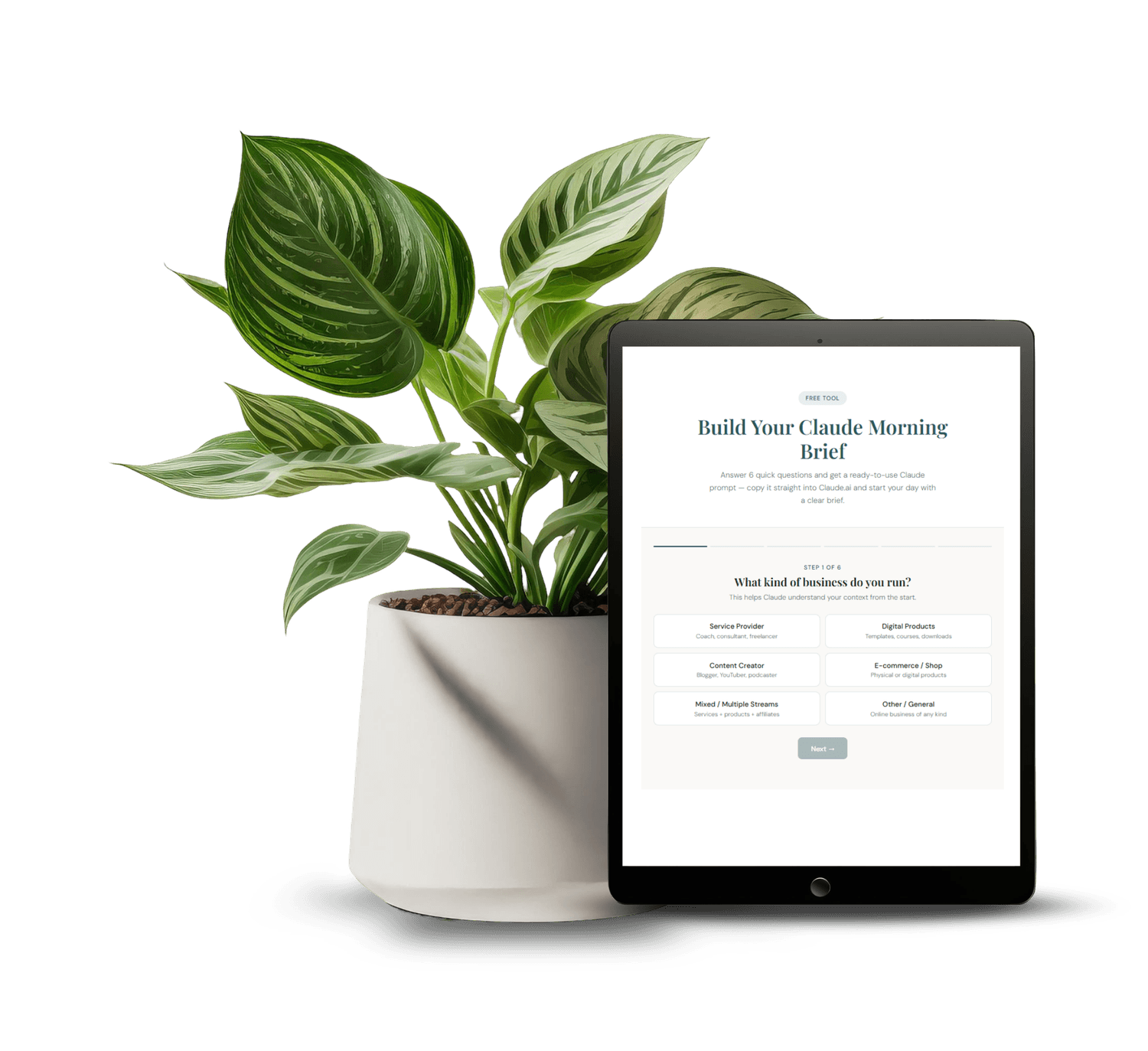
GRAB MY FREE APP
Morning Brief Claude AI Prompt
Set-up your custom morning brief for Claude

GRAB MY FREE APP
Income Allocator
Work out how to break down your income properly with percentages
Common Automation Mistakes That Create More Chaos (Not Less)
Automations That Get Out of Hand
I see it all the time. Someone gets excited about automating a process, and before they know it, they’re building something that tries to do everything at once. It’s like watching someone try to build a Rube Goldberg machine out of their inbox. One trigger, ten steps, three branches, and suddenly the whole thing is tangled.
I’ve noticed that the bigger the automation, the more likely it is to break. Not in a dramatic way, just in that slow, annoying way where you can’t figure out which part is actually failing. It’s usually easier to break things up. One automation for one thing. Let it run its course, then hand off to the next. It’s less glamorous, but it works.
The Quiet You Need for This
There’s something about setting up automations that demands quiet. Not just physical quiet, but mental quiet. I’ve tried to build automations with Slack pinging and emails coming in, and it never goes well. I miss a step, or I forget to map a field, and then I’m staring at an error message that makes no sense.
It’s not that the tech is complicated. It’s that it needs your full attention. I’ve learned to block off time, close everything else, and just focus. Otherwise, I end up frustrated, clicking around, wondering why nothing is working. It’s not a good feeling.
Automating Messy Stuff Just Makes More Mess
I’ve seen people try to automate things that are already a mess. The logic is usually, “If I automate this, it’ll be easier.” But if the process is unclear or the data is all over the place, automation just multiplies the chaos.
Manual systems have a way of showing you what’s actually happening. You see the friction points. You notice what’s worth automating and what isn’t. Jumping straight to tools skips that step. I’ve wasted time and money on automations that just made things harder. Now I try to get the manual version working first. If it feels smooth, then I look at automating.
The Temptation to Automate Everything
There’s a kind of excitement that comes with new automation tools. It’s easy to start thinking, “I could automate this, and this, and this.” But not everything needs it. Some things are better left manual, at least for a while.
I’ve found that the best automations are the ones that solve a real bottleneck. Not just something that’s annoying, but something that actually slows things down. If I can’t point to the exact step that’s causing trouble, I leave it alone.
When Listing Products Becomes the Bottleneck
I’ve noticed a pattern with digital product sellers, especially on Etsy. They create products faster than they can list them. The backlog grows. The shop looks the same for weeks, even though there’s a folder full of new stuff ready to go.
Listing is repetitive. It’s not hard, but it’s tedious. I’ve seen people try to automate the whole thing in one go, and it usually ends up more complicated than it needs to be. Breaking it down into smaller steps helps. One automation for prepping files, another for uploading, another for publishing. It’s less likely to break, and it’s easier to fix if it does.
The System That Actually Helped
I built a system for my own Etsy shop that uses Google Sheets and Make to handle the repetitive parts of listing. It’s not flashy, but it means I can list products without getting bogged down. The backlog shrinks, and I don’t have to think about every little step.
Digital Product Etsy Shop Automated is what I ended up calling it. It’s just a way to keep things moving without hiring help or spending hours on the same task.
My thoughts on automations & systems
I don’t think automation is about doing less work. It’s about making the work less annoying. If something feels heavy or frustrating, it’s usually a sign that the process needs to change. Sometimes that means automating. Sometimes it just means getting quiet and looking at what’s actually happening.
I’ve noticed that the best systems are the ones you barely notice once they’re running. They don’t feel clever. They just work.
Disclaimer:
This website may contain affiliate links. If you click a link and make a purchase, I may receive a small commission at no extra cost to you.

About Liz Peck
Liz Peck helps online business owners build the backend that runs without them - using Airtable for operations, Systeme for sales, and Claude AI for the work you hate doing twice. lizpeck.com.au
Disclaimer:
This website may contain affiliate links. If you click a link and make a purchase, I may receive a small commission at no extra cost to you.