

GRAB MY FREE TRAINING
The No Leaks Funnel

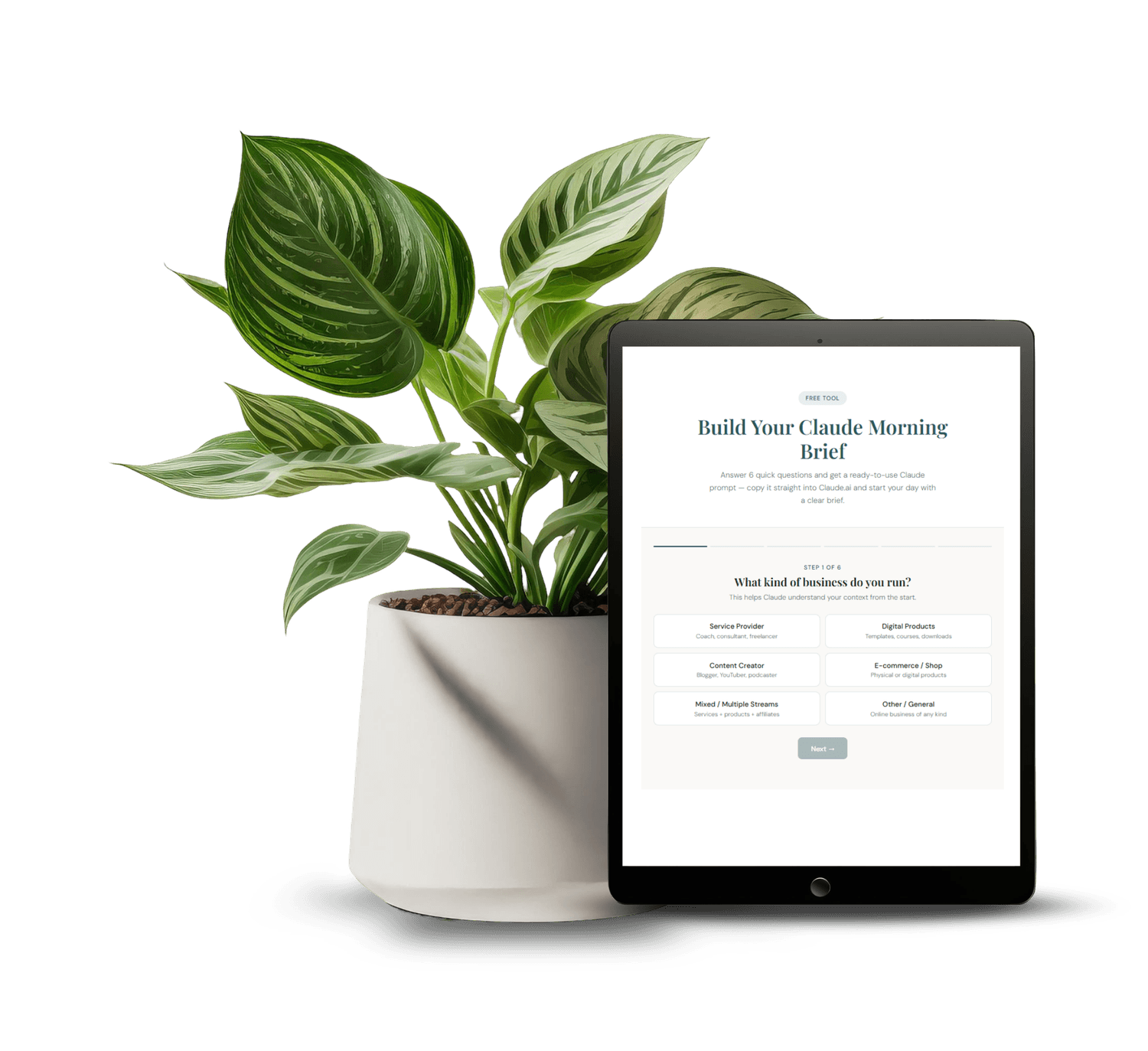
GRAB MY FREE APP
Morning Brief Claude AI Prompt
Set-up your custom morning brief for Claude
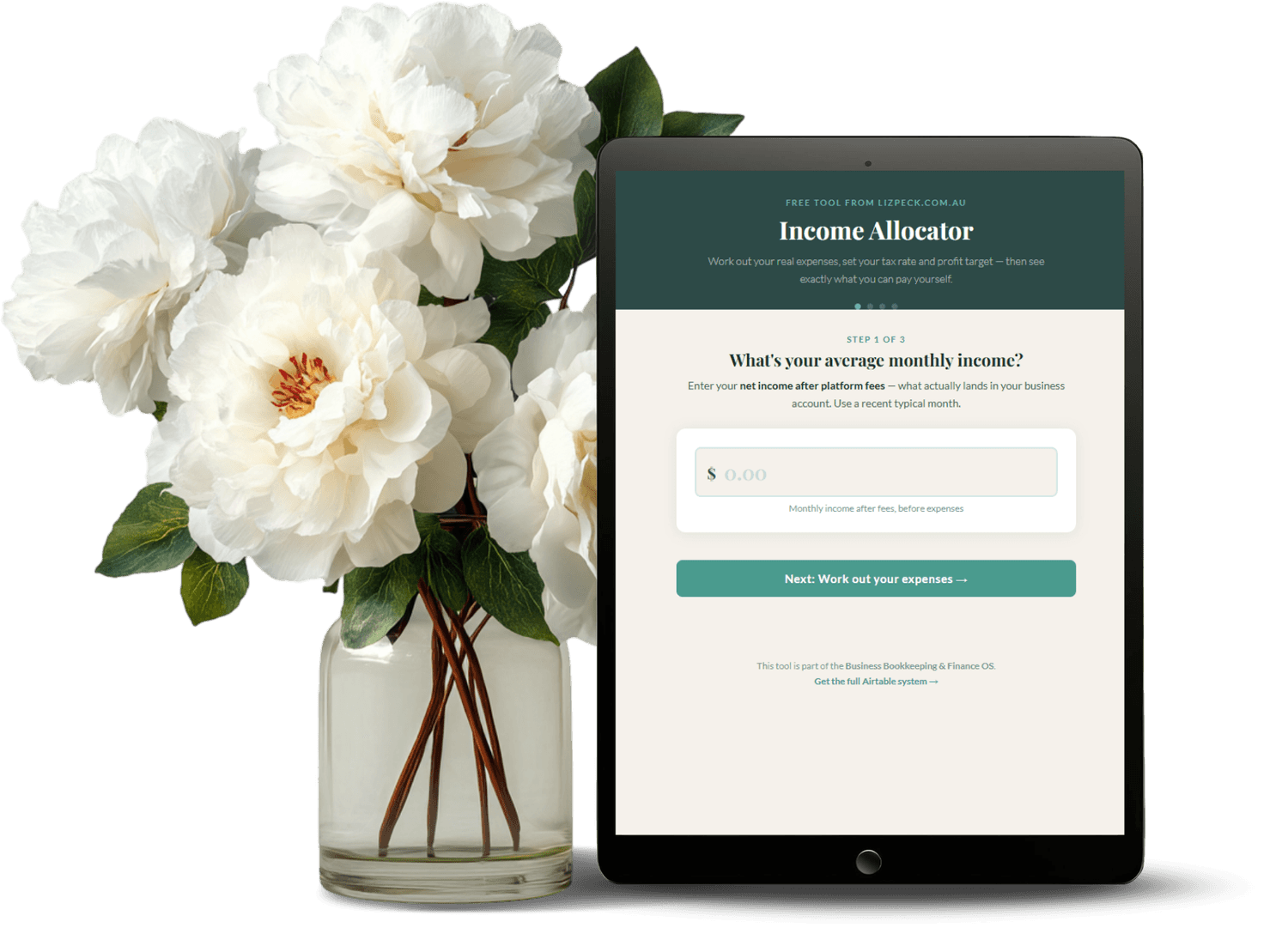
GRAB MY FREE APP
Income Allocator
Work out how to break down your income properly with percentages
5 Reasons Your AI Isn't Actually Saving You Time (And How to Fix Each One)
Everyone said AI would save you hours. So why does it feel like you're spending more time than ever prompting, re-prompting, and second-guessing what comes out?
You're not doing it wrong. But there are some very specific reasons AI isn't delivering the time savings it promised — and most of them are fixable once you know what to look for.
I've been using AI across my business for a while now, and the shift from "this is kind of helpful" to "this is genuinely changing how I work" came down to a handful of things. Here's what I found.
Reason 1: You're Starting Every Prompt From Scratch
This is the biggest one. If you open a new chat and type out your context every single time, you're not saving time — you're just outsourcing the typing.
AI doesn't have memory between sessions unless you build it in. That means every time you start fresh, you're re-explaining who you are, what your business does, who your audience is, and what tone you write in.
The fix is to create a master context document you paste in at the start of any serious session — or better yet, build that context into a system prompt or template so it loads automatically. Once I stopped re-explaining myself every time, the output quality jumped significantly.
Reason 2: You're Using AI Only for One-Off Tasks
Writing one email. Generating one caption. Answering one question. That's not automation — that's just a slightly faster way to do manual work.
The real time savings come when AI is woven into repeating processes. Weekly emails, blog post outlines, client onboarding messages — anything you do more than once is a candidate for a repeatable AI workflow.
I built out a library of prompts tied to tasks I do every week. Now instead of thinking through how to write a new blog intro, I run the same prompt with the new topic dropped in. It takes me a fraction of the time.
Reason 3: Your AI Isn't Connected to Your Actual Data
General AI tools give general answers. If your AI doesn't know anything about your specific clients, your products, your content, or your past work — it can't help you move faster on things that actually matter.
This is where tools like Airtable come in. When your business data lives somewhere structured, you can pull it into AI workflows and get outputs that are actually relevant to your situation — not just generic advice.
Once I connected my product details, voice notes, and client context to my AI workflows, the outputs stopped needing so much editing. The AI had something real to work with.
Reason 4: You're Over-Engineering Before You Have a Use Case
Some people spend weeks building elaborate AI systems before they've actually identified what they need AI to do. They're automating phantom problems.
Start with the tasks that eat your time right now. Not the tasks you imagine you'll have. Not some theoretical workflow. The actual stuff you did last week that felt tedious and repetitive.
Pick one. Build a simple prompt or workflow around it. Use it five times. Then improve it. That's how you actually get faster — not by building an entire AI infrastructure before you've tested a single use case.
Reason 5: You're Expecting AI to Think for You
AI is excellent at executing. It's not great at deciding what matters, what your audience needs to hear, or what your brand actually stands for. When you hand those decisions to AI without input from you, the output is flat.
The fastest workflow I've found is this: I make the decision, I bring the context, and AI does the production work. I decide what the blog post is about and what angle we're taking. AI writes the draft. I make it sound like me.
When I try to skip the decision-making step and just ask AI to figure out what I should say, I spend more time editing than if I'd written it myself. The model needs direction — that's your job.
What Productive AI Use Actually Looks Like
For context — I run a business that runs on AI across content creation, client work, admin, and backend operations. It didn't happen overnight, but it also didn't require months of setup.
The pattern is consistent: identify a repeating task, build a prompt or workflow for it, test it on real work, and refine once you've run it a few times. That's it.
The businesses saving the most time with AI aren't the ones with the most sophisticated setups. They're the ones who've been disciplined about applying AI to the same kinds of tasks week after week, and slowly expanding from there.
The Tools That Actually Make This Work
You don't need a lot of tools. I use Claude for writing and thinking tasks, Make for automations that connect apps together, and Airtable as the database that holds all my business data in one place.
The combination means AI can pull real information, do real work, and push outputs to the right place — without me manually copying things between tabs.
You don't need all three on day one. Start with one AI tool and one clear use case. The infrastructure grows naturally once you've got the basics working.
How to Audit Your Current AI Setup
If you're not sure where the time savings are getting lost, here's a quick way to figure it out. Track every time you use AI this week. Write down the task, how long it took, and whether the output needed significant editing.
At the end of the week, look at which tasks were genuinely faster and which ones still took ages. That's your data. Focus your next month on improving the slow ones — better prompts, more context, or a different approach entirely.
Most people find two or three specific tasks where AI is a clear win, and a handful where they've been overcomplicating it. Fixing the complicated ones usually just means simplifying the process.
Is the Investment Worth Making?
Honestly — yes. But not because AI is magic. Because building even a basic system of repeatable prompts and workflows forces you to think clearly about what you actually do each week, and that clarity alone is worth something.
The time savings are real when AI is applied consistently to the right tasks. My content output is higher than it's ever been. My backend runs without me touching it every day. And most of that happened because of intentional AI use, not just having a subscription.
If you want a structured way to build this out, the CEO Control Centre has the framework I use to run my own business — including the AI workflows that power the weekly content machine.
FAQ
Why isn't AI saving me time even though I use it every day?
Daily use doesn't automatically mean time savings. If you're starting every session from scratch or using AI only for one-off tasks, you're not building compounding efficiency. Focus on repeating tasks and build reusable prompts around them.
How do I get AI to sound more like me?
Give it more context. A strong voice document — with phrases you use, phrases to avoid, and examples of your writing — makes a huge difference. Paste this in at the start of any writing session.
Do I need to be technical to use AI effectively in my business?
Not at all. The most effective AI users I've seen are not technical people. They're clear thinkers who know what they want and can give AI specific direction. That's the actual skill.
What should I use AI for first?
Start with whatever you do most often that feels tedious. Weekly emails, social captions, client summaries — anything you repeat. That's where you'll see the fastest return.
How long does it take to build an AI-powered business?
You can have meaningful time savings within a week if you pick one good use case and actually use it. Building out a full AI-powered operation takes a few months, but the early wins come fast.
Disclaimer: This website may contain affiliate links. If you click a link and make a purchase, I may receive a small commission at no extra cost to you.
Disclaimer:
This website may contain affiliate links. If you click a link and make a purchase, I may receive a small commission at no extra cost to you.

About Liz Peck
Liz Peck helps online business owners build the backend that runs without them - using Airtable for operations, Systeme for sales, and Claude AI for the work you hate doing twice. lizpeck.com.au
Disclaimer:
This website may contain affiliate links. If you click a link and make a purchase, I may receive a small commission at no extra cost to you.